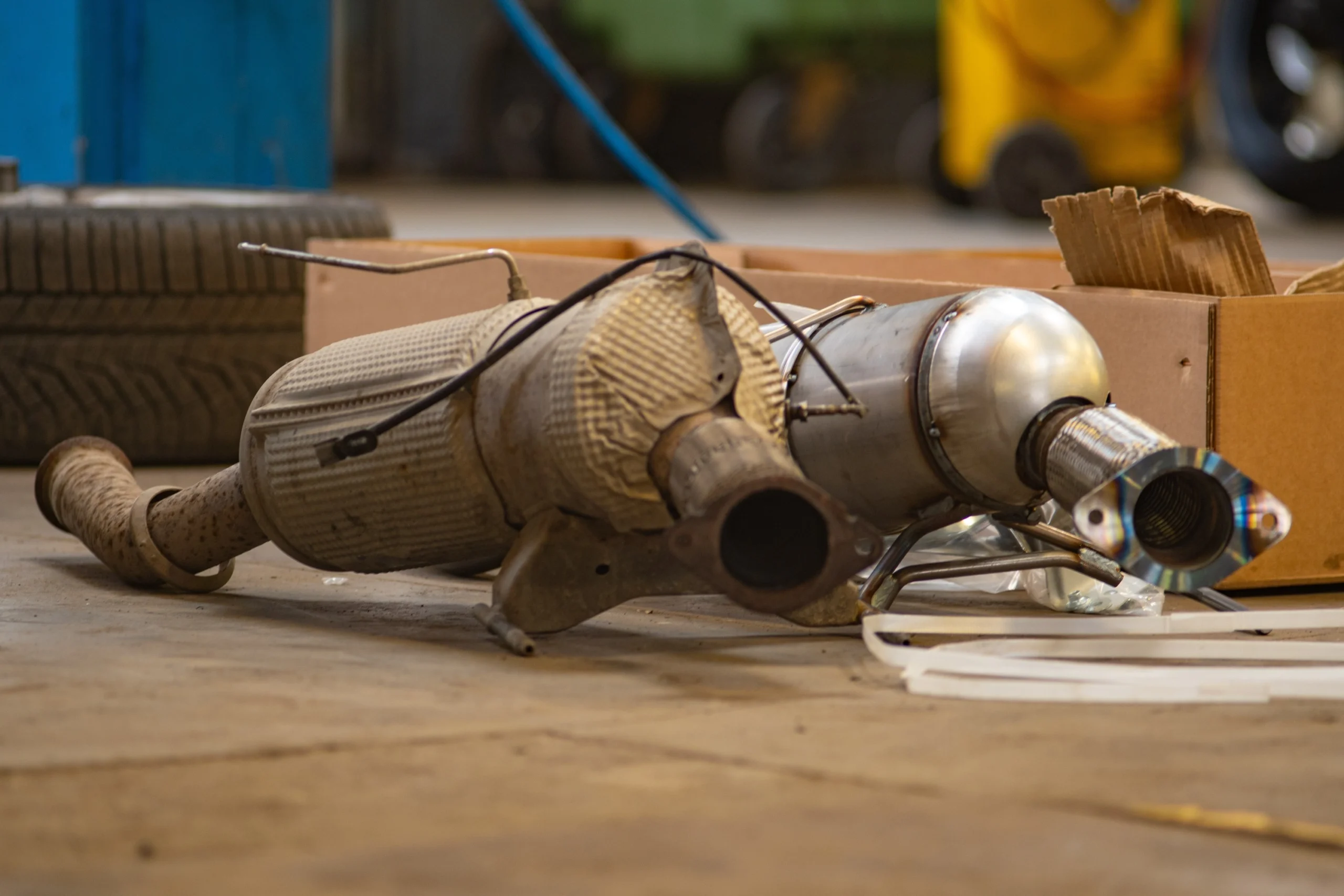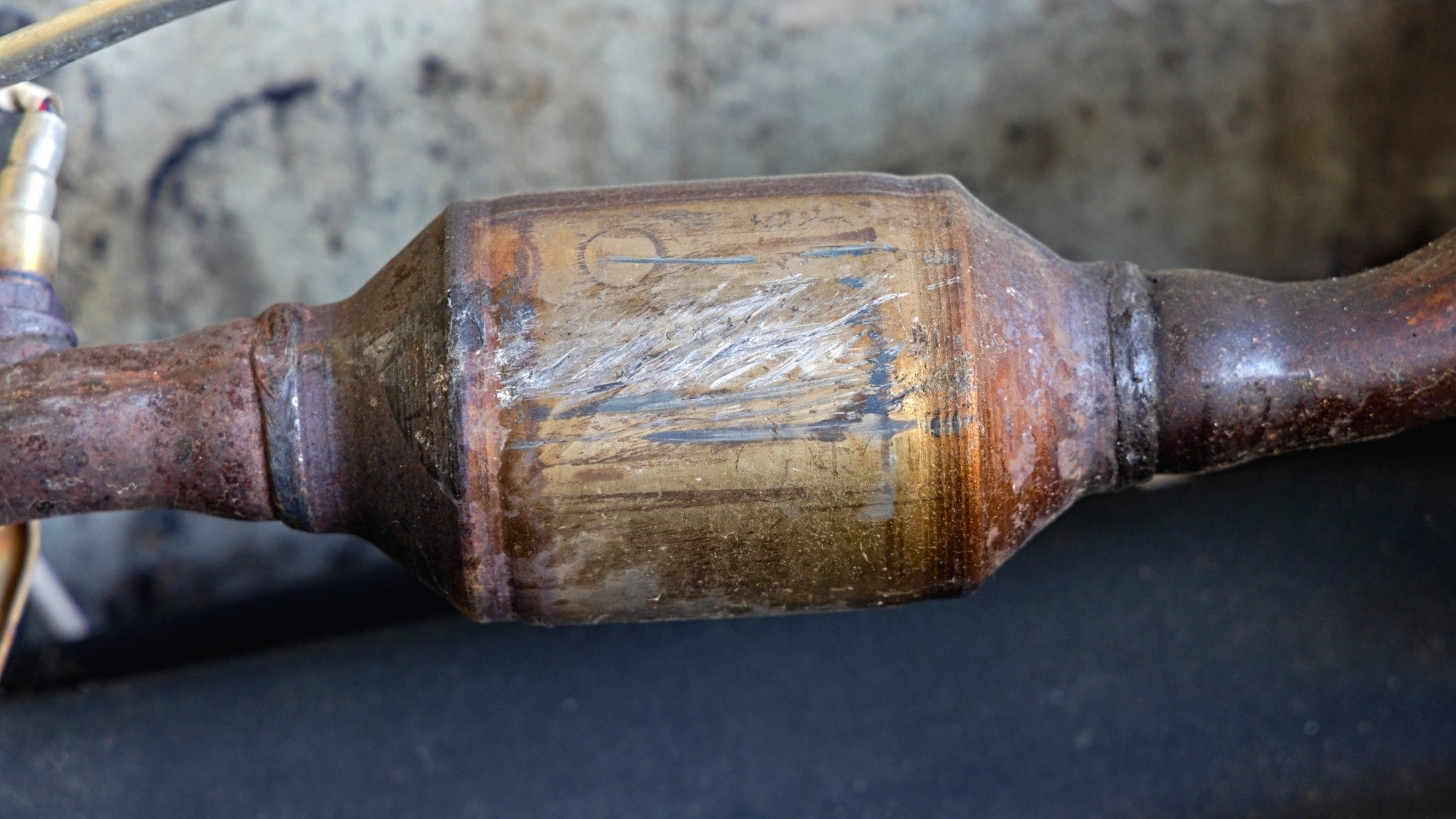

Introduction: In 2026, a lot of catalytic converter buying no longer starts with a truck, a warehouse visit, or a long email chain. It starts with a phone. A seller walks around a yard on WhatsApp, sends photos and short videos, reads out part numbers, and gets a fast reply from a buyer who may be in another city or another country. That shift matters across the Middle East, India, and Africa, where distance, mixed supply, and mobile-first trade all shape how deals happen. The result is a faster first pass on scrap catalytic converter prices, but also a bigger need for clean records, clear grading, and traceable ownership.
Key Takeaways
- WhatsApp photos now act as the first inspection step for many converter deals.
- Simple AI tools help buyers sort, identify, and estimate likely value faster.
- Remote quotes are useful, but they are still not the same as final settlement.
- Part numbers, shell shape, condition, and lot separation all affect the first offer.
- Recorded calls, photos, and app logs can support chain-of-custody checks later.
- Mobile-first buying is growing because it saves time on mixed and far-away lots.
How are WhatsApp photos changing converter buying in 2026?
They are changing the first step, not the last step. Photos and video now help buyers screen lots quickly before pickup, shipment, or lab-based review.
A few years ago, many deals still depended on slow back-and-forth messages, rough descriptions, or a physical visit before any serious number was discussed. Now the seller often opens WhatsApp, walks past bins or shelves, and shows each unit one by one. The buyer takes screenshots, checks visible codes, compares shell style, and feeds the lot into a cat-pricing app or internal grading tool.
This does not remove human judgment. It simply moves the early sort from the yard gate to the phone screen. That matters when supply is scattered, transport is costly, and both sides want a fast yes-or-no before spending more time.
What does a remote buying workflow look like?
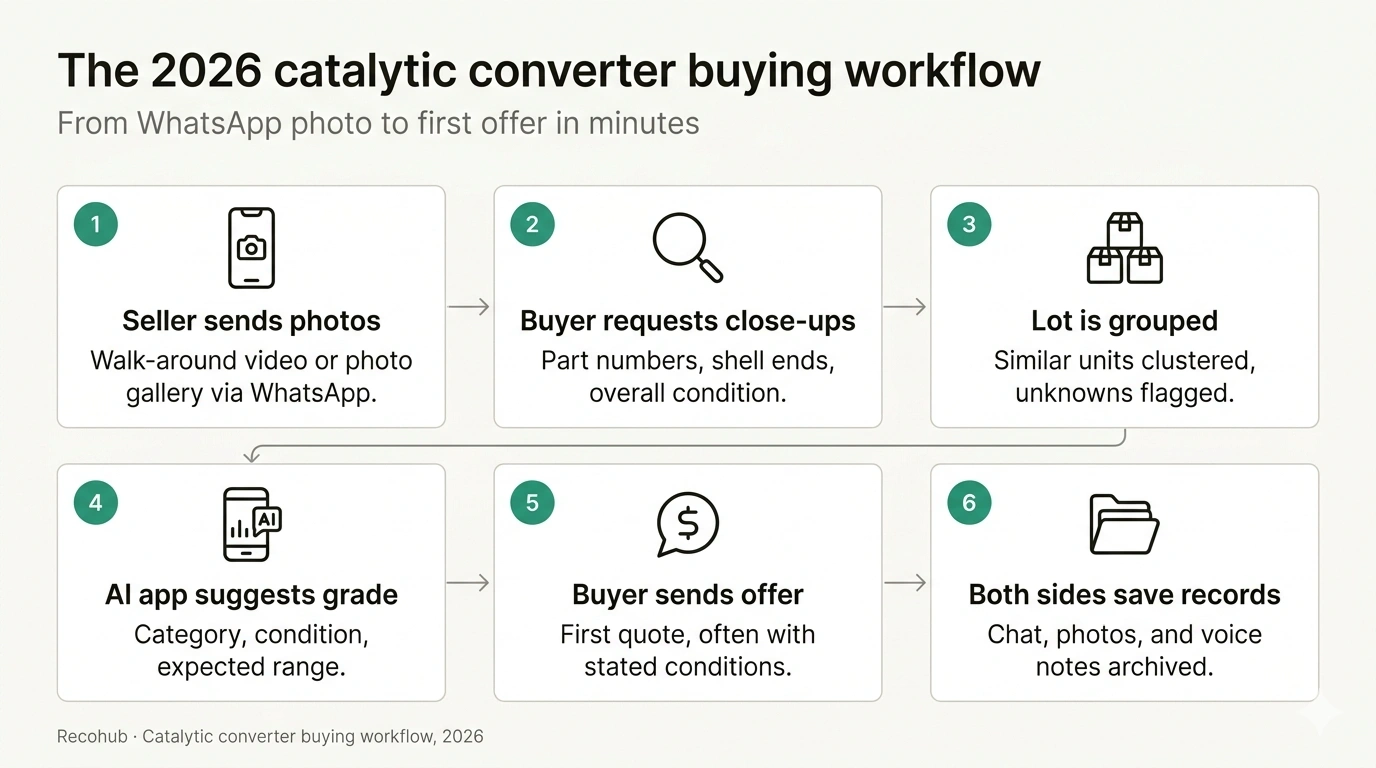
It is usually simple. One person shows the material, and the other person sorts and prices it from the screen.
- The seller sends photos or a short live walk-around.
- The buyer asks for close-ups of part numbers, shell ends, and overall condition.
- The buyer groups similar units and flags unknown ones.
- An app or database suggests likely category, grade, or range.
- The buyer replies with a first offer, often with conditions attached.
- Both sides save the chat, images, and voice notes as a record.
The process is fast because it fits how many yards already work. No extra software training is needed for the seller. If they can use WhatsApp, they can take part.
What can a buyer judge from remote images before pickup?
A buyer can judge a lot more than many sellers expect. Still, a remote check is only a screening step, not a final assay.
| Remote input | What it helps the buyer judge | What it cannot confirm on its own |
|---|---|---|
| Clear part number photo | Likely model family and expected category | Exact internal metal load |
| Full shell photo | Housing type, size, and obvious damage | Hidden contamination or internal loss |
| End view of the unit | Whether the substrate appears present | True condition through the full core |
| Lot photo with grouped units | Mix quality and sorting discipline | Accuracy of the final count |
| Voice note with quantity and origin | Context for ownership and pickup planning | Formal proof of title by itself |
Why is this model growing in the Middle East, India, and Africa?
It is growing because mobile messaging is easy, fast, and already built into daily trade. It works well where supply is spread across many small yards, workshops, and traders.
In these regions, distance can be a real cost. So can waiting. A remote first review helps buyers decide which lots deserve more attention and which ones do not. It also helps smaller sellers reach buyers they would never meet face to face.
India is also putting more focus on circular economy systems around end-of-life vehicles, as noted in the NITI Aayog report on the circular economy of end-of-life vehicles in India. That broader push makes traceability, material recovery, and cleaner buying records more relevant to converter trade as well.
Search behavior reflects that need for quick answers. Sellers often want a simple number first, so they search terms like catalytic converter price, catalytic converter price in India, or catalytic converter price list before they ever speak to a buyer. The problem is that a generic list cannot account for shell type, substrate condition, or whether the lot is mixed, cut, or incomplete.
Why do local dealers like app-assisted buying?
They like it because it saves time and filters weak leads early. A phone-based review can separate real supply from vague supply in minutes.
That helps on both sides. The seller gets feedback without waiting days. The buyer does not need to send a vehicle or field agent for every small lot. For yards dealing with mixed streams of used catalytic converters, that first filter can make the workday much more efficient.
Where do simple AI tools help most?
They help most at the sorting stage. They are strong at pattern recognition and weak at certainty when the material is damaged or unusual.
Most tools in this space are not magic. They compare visible clues against known patterns: stamped codes, shell dimensions, image features, prior grading notes, and buyer history. That is useful when the lot is clean and the photos are clear. It is far less useful when the shell is broken, the code is unreadable, or the unit has already been altered.
Can AI grading apps really estimate value from part numbers and visual cues?
Yes, they can estimate value well enough for a first quote. No, they should not be treated as the final word on settlement.
The strength of a grading app is speed. A buyer can move through a long gallery of screenshots, tag likely categories, and build a rough offer faster than by memory alone. When the tool recognizes a number and matches it to past transaction data, the first quote becomes more consistent.
Even so, every estimate sits on assumptions. Was the code read correctly? Is the shell original? Is the substrate complete? Has the unit been emptied, overheated, or mixed with look-alike parts? Those questions still matter.
That is why experienced buyers use AI as a helper, not a replacement. The app suggests. The buyer checks. The final processing result still matters most. If you want a plain-language look at those stages, this guide to the catalytic converter buying process is a useful place to start.
Which visual cues matter most in a quick review?
A few cues matter more than the rest. Clear codes, shell style, and visible substrate condition usually drive the first screening call.
Buyers often look for these signs first:
- Readable part number or stamped code
- Original-looking shell and welds
- Whether both ends appear intact
- Visible honeycomb presence at the opening
- Signs of cutting, heating, crushing, or tampering
- Whether the lot is sorted by type or mixed together
A clean lot with clear photos gets a cleaner quote. A messy lot with poor lighting usually gets a wider range or a lower first offer, simply because uncertainty is higher.
How do buyers turn a WhatsApp walk-around into a live offer?
They break the lot into categories, assign confidence levels, and price the risk. The offer is based on what can be seen, what can be matched, and what still needs checking.
In practice, the buyer is not just pricing the parts. They are also pricing the chance of error. If twenty units show clean codes and look consistent, confidence rises. If ten more are blurry, damaged, or mixed with other emissions parts, confidence falls. That gap changes the bid.
Some buyers reply with a single lot number. Others send a category-by-category quote. In cross-border trade, the offer may be framed in USD terms or another common trade currency so both sides can compare easily. What matters most is not the currency style, but the conditions behind the number.
What should a seller send to get a cleaner quote?
The seller should send fewer guesses and more proof. Better inputs usually lead to a tighter first range.
- Sharp photos of each code or marking
- Wide photos that show the full shell
- Separate groups for similar units
- Total count by group
- Approximate gross weight of each group
- Pickup city or shipment origin
- Basic ownership or intake notes
That last point is easy to miss. A lot with clean intake notes looks more reliable than a lot with no paper trail at all. Concerns around theft and informal sourcing are one reason traceability keeps gaining weight, as covered in Recohub’s article on the black market for stolen catalytic converters.
Are remote quotes the same as final settlement?
No. A remote quote is a decision tool, while final settlement depends on receipt, inspection, sorting, and downstream recovery results.
This point matters because sellers often see an app-based estimate and treat it as fixed. That can cause friction later. A buyer may issue a strong first number based on clear photos, then revise after arrival if the mix is different from what the images suggested.
Common reasons for a change include missing substrate, misread codes, mixed material, non-matching pieces, or damage that was not visible in the first images. None of that means the buyer acted unfairly. It means remote grading has limits, and both sides should say that plainly from the start.
That is also why many experienced traders prefer a quote format with stated assumptions. The message might say the offer is based on visible codes, intact units, grouped lots, and later verification on receipt. Clear words reduce later disputes.
Can photos, recorded calls, and app logs help prove chain of custody?
Yes, they can help a lot. They do not replace formal documents, but they create a useful timeline when questions come up later.
When a shipment is challenged, the first problem is often not value. It is proof. Who collected the material? When was it photographed? What was said during the sale? Was the quantity changed after the offer? Did the shipment match the chat record? Those details become easier to answer when the trade leaves a digital trail.
This matters even more in cross-border movement. The Basel Convention overview on controlling transboundary movements shows why paperwork, classification, and traceable movement records matter when waste or recoverable material moves across borders.
Which records matter most if a shipment is questioned later?
The most useful records are the ones that connect identity, condition, time, and movement. A simple file set is often better than a scattered pile of screenshots.
| Record type | What it helps prove | Why it matters |
|---|---|---|
| Timestamped yard photos | What the material looked like before pickup | Supports condition and quantity discussions |
| WhatsApp chat export | Offer terms, revisions, and seller statements | Shows what both sides agreed to |
| Recorded call note or file | Verbal confirmations and deal conditions | Useful if the written chat is incomplete |
| App grading log | How the lot was categorized at first review | Shows the basis for the first quote |
| Pickup receipt or intake form | Transfer of possession | Supports chain of custody |
| Shipment reference and receiving note | What moved and what arrived | Helps resolve mismatch claims |
How should yards store these records without making the job harder?
Keep it simple and consistent. One folder per lot is usually enough.
A practical approach is to save every deal under a lot ID with the same core set of files: intake photo, code photos, chat export, offer summary, pickup note, and receiving update. That structure helps when a buyer, customs team, or recycler asks for proof months later.
Small yards do not need a large software stack to do this well. A shared drive, cloud folder, or even a disciplined phone-to-desktop routine can go a long way. The real issue is consistency, not fancy tools.
What does this mean for sellers in 2026?
It means the phone camera has become part of the sales process. Good images, clear sorting, and traceable intake now affect the first offer almost as much as the material itself.
Sellers who treat remote review seriously tend to get faster responses and fewer disputes. They sort lots better. They label groups. They keep intake notes. They understand that a blurry walk-around can cost money, while a clean visual file can shorten the path from inquiry to pickup.
It also means buyers are under pressure to be more transparent. If an app helped shape the quote, the buyer should say what the quote depends on. If the number may change after receipt, that should be said up front. Trust grows when both sides can see the steps.
Summary
The 2026 shift is not about robots replacing traders. It is about mobile messaging, image-based screening, and simple AI tools making the first stage of converter buying faster and more traceable. Across the Middle East, India, and Africa, that change fits how real trade often works: quickly, remotely, and with mixed lots that need sorting before anyone commits serious time or freight.
The smarter teams will be the ones that combine speed with proof. They will use better photos, cleaner lot separation, and stronger record keeping so quotes are easier to defend later. If your process also includes a reliable path for used catalytic converter handling and recovery, the whole chain becomes easier to manage from first message to final settlement.