
Introduction: Rhodium moved past $11,000 per ounce in 2026, and that matters because platinum group metal values set the floor for scrap converter payouts. If you have used units on the shelf, the real question is simple: sell now or wait. This guide explains what is pushing prices, what sellers in South Africa, Australia, and India are seeing, and how to move a documented car catalyst with clear paperwork and realistic timing.
Key Takeaways
- Rhodium above $10,000 usually supports strong scrap bids.
- PGM prices drive value, but paperwork and assay still matter.
- South Africa supply shocks can move rhodium fast.
- Australia and India have very different legal selling routes.
- Get at least 3 quotes before you commit.
- Do not chase the exact top of the market.
- ID, vehicle reg, and a signed receipt protect everyone.
What does rhodium at $11,000/oz mean for scrap cats?
It means the market is paying close attention to rhodium-rich units right now. When rhodium rises this far, many converters become more valuable, but the final offer still depends on the metal mix, the unit type, and the buyer’s process.
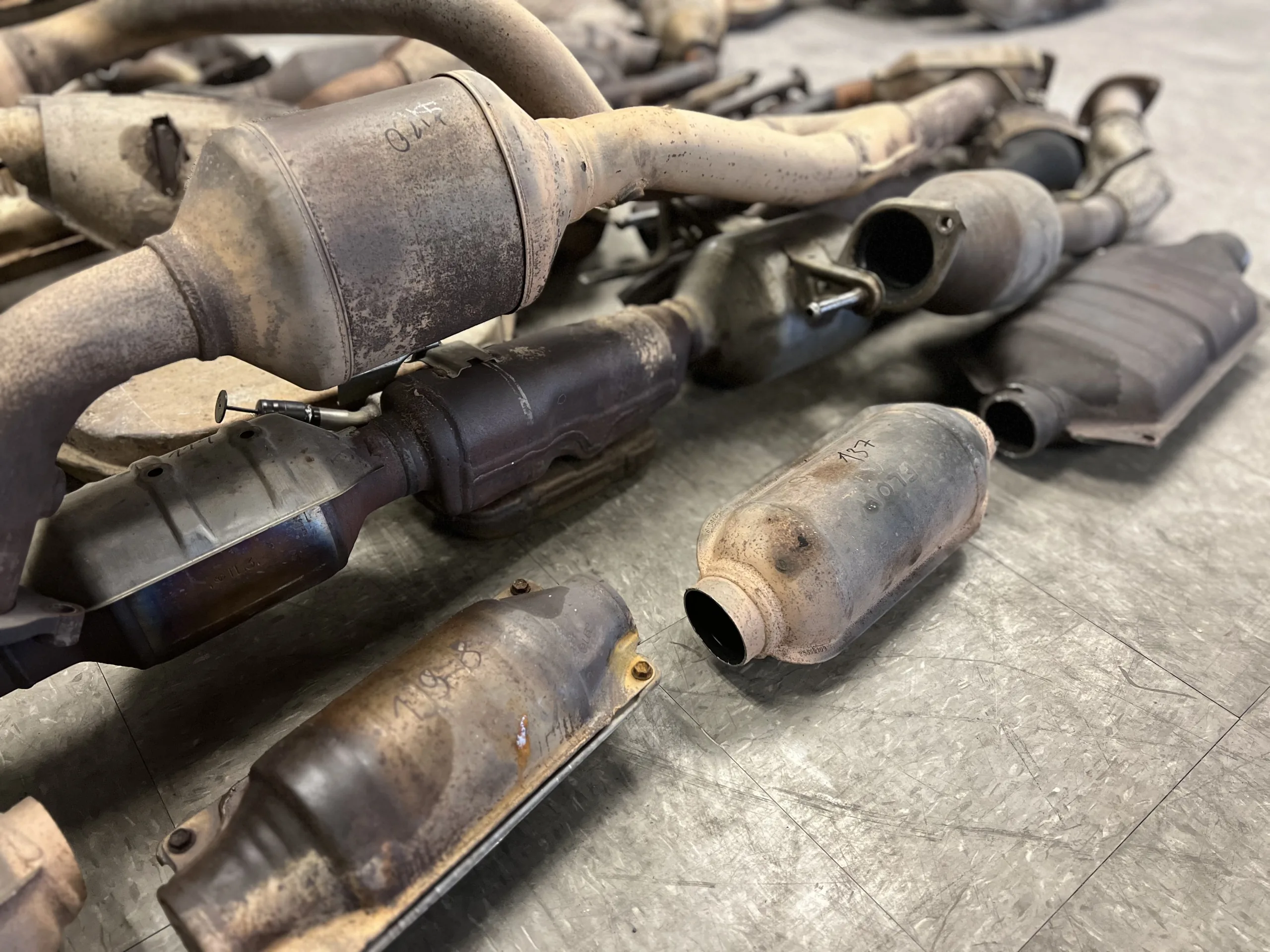
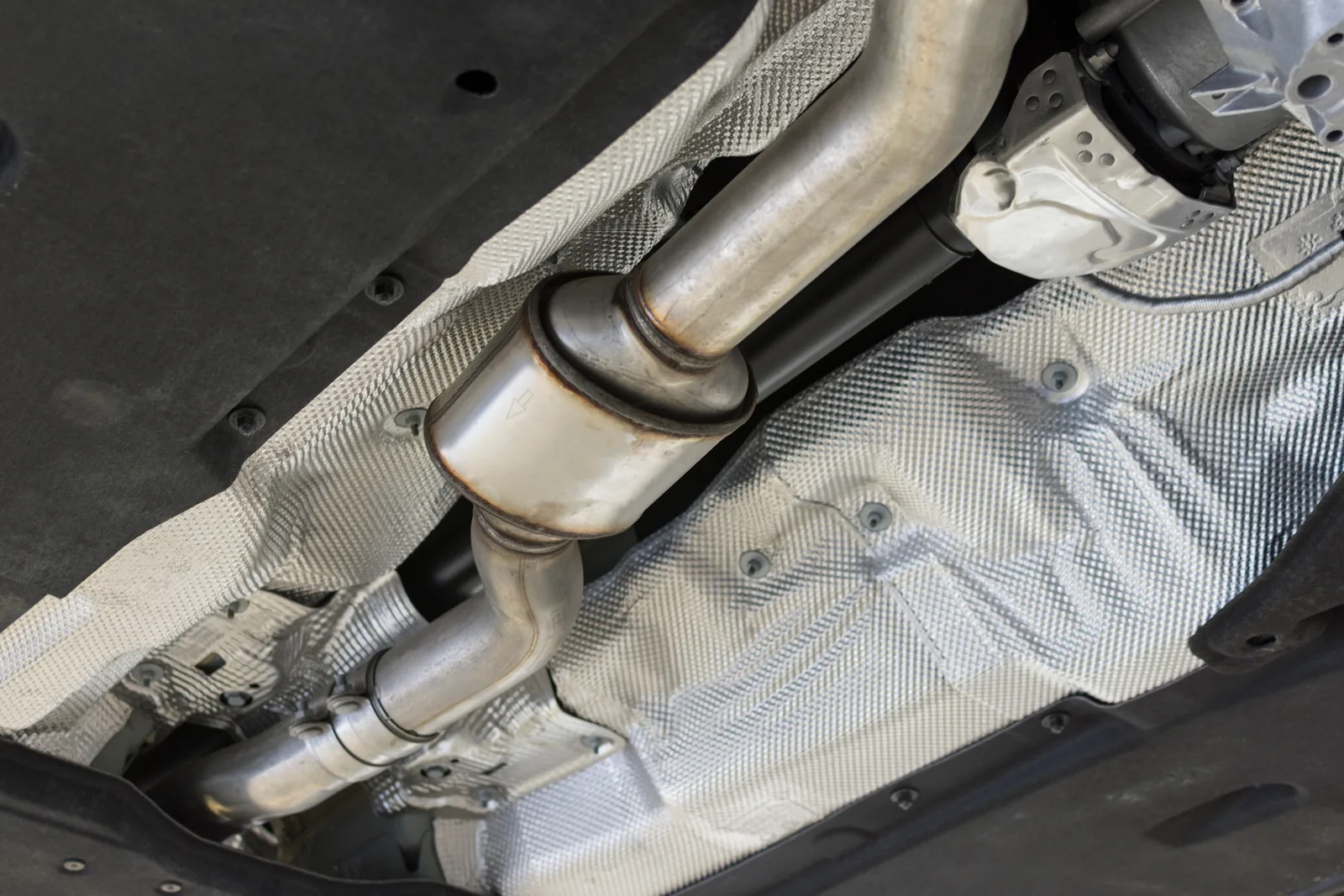
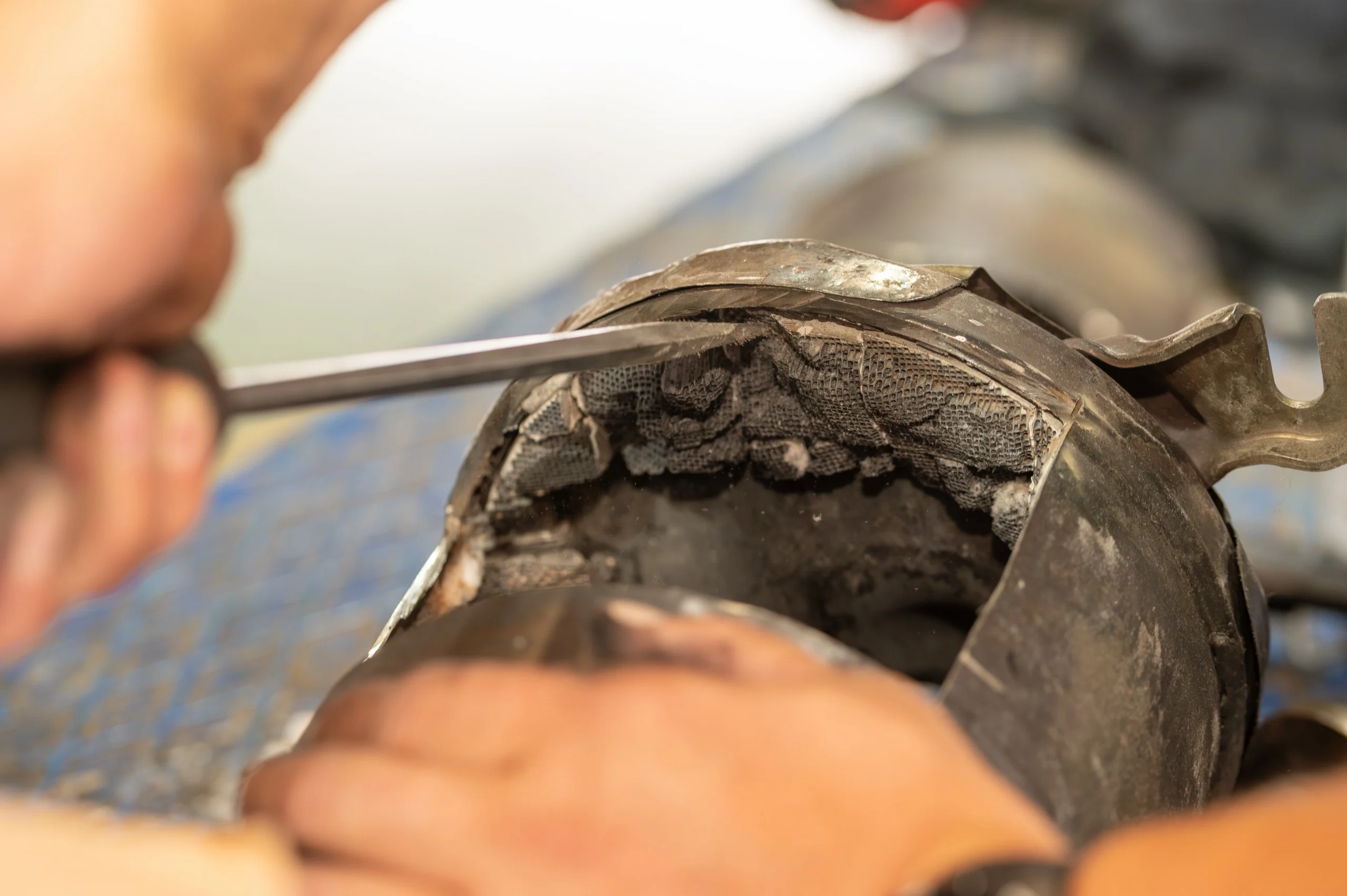
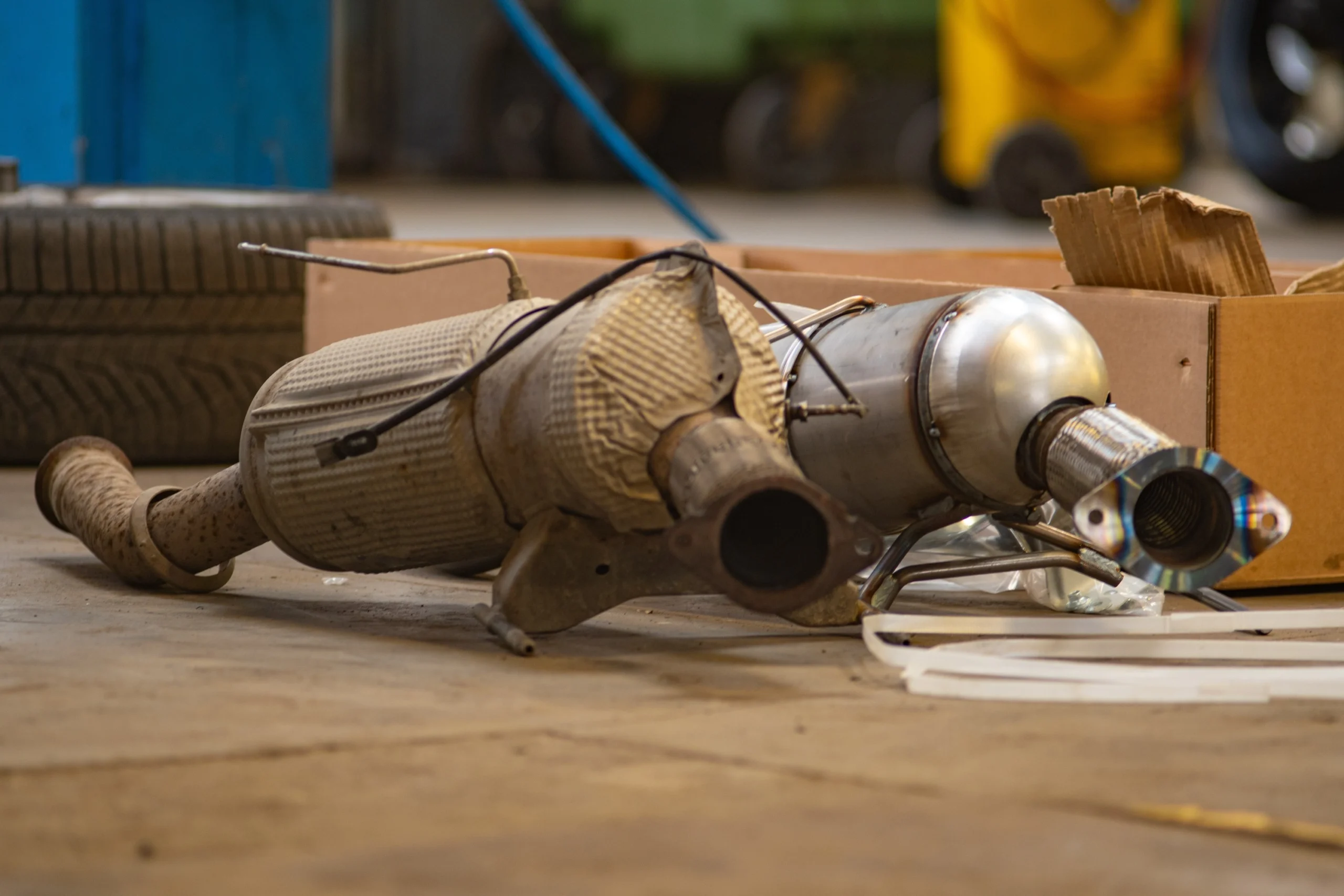
The catalytic converter price you are offered is not random. It comes from the recoverable platinum group metals inside the unit, mainly platinum, palladium, and rhodium. Those are the core catalytic converter metals that refiners look for when they assay material.
That is why two converters that look similar can produce very different offers. Vehicle make, engine size, emissions standard, age, and even whether the unit came from a hybrid can all change the metal content. If you want a quick refresher on why rhodium gets so much attention, read why rhodium matters inside catalytic converters.
The key point is this: a high rhodium market supports good offers, but it does not remove the need for documentation, careful quoting, and a buyer who can explain how the number was reached.
What is driving the price in 2026?
Supply concentration and steady vehicle demand are the two biggest forces. When a metal is mined mainly in one region and millions of older vehicles still need emissions control parts, price swings can be sharp.
Why does South Africa matter so much?
Because South Africa dominates rhodium supply. When output there slows, the global market feels it quickly.
According to the U.S. Geological Survey, South Africa remains the main source of rhodium, with more than 70% of global mine supply. That level of concentration means labor issues, energy disruption, transport delays, or smelter bottlenecks can hit the market hard. Even a short pause can tighten supply enough to move bids for scrap material.
For sellers, that matters because refiners and traders watch mined supply very closely. When they think refined rhodium may get tighter, they often become more interested in converter feedstock. That can lift offers, especially for units known to carry richer PGM loads.
Why is demand still firm?
Because combustion vehicles are still everywhere. Even with EV growth, the road fleet remains huge, and that keeps emissions-control demand alive.
The IEA has noted that the global car fleet is still dominated by internal combustion vehicles, at around 1.4 billion units. That installed base matters more to scrap sellers than headlines about new EV launches. As long as a vast number of petrol and diesel vehicles stay on the road, demand for catalytic materials remains relevant.
Hybrids add another layer. Many hybrid systems cycle the engine on and off, which can call for richer catalyst loading to manage emissions across varying temperatures. In plain terms, some hybrid converters can carry more valuable metal than many sellers expect.
How much are scrap cats worth by country?
There is no one global rate. Payouts change by model, metal content, local regulation, buyer risk, and whether the deal is based on visual ID or a proper assay.
This is also why published scrap catalytic converter prices can look confusing. A number that seems high on a forum may reflect a single premium unit, while a yard quote in another country may include heavy discounts for risk, logistics, and compliance.
Table showing typical payout patterns in South Africa, Australia, and India
This table shows broad market patterns from the regions covered in this article. It is useful for comparing the local reality behind headline rhodium prices.
| Country | Typical market picture | What usually drives the result | What sellers should check |
|---|---|---|---|
| South Africa | Local buyers may pay about 25-35% of spot value | Middlemen margins, export risk, sampling risk, slower settlement | Ask for live PGM references, assay terms, and net payout after fees |
| Australia | Common range can be about $50-$1,500 depending on vehicle type | Small local cars sit at the low end; larger, premium, and some hybrid units can be much higher | Use licensed yards and keep proof of ownership |
| India | Legal route depends on licensed buyers and valid compliance chain | If the buyer lacks CPCB authorization, downstream sale and export route can break | Confirm authorization before handing over stock |
Why do South African buyers often pay only 25-35% of spot?
Because spot metal value is not the same as a local street offer. The gap covers risk, processing cost, transport, finance, and the chance that the unit assays lower than expected.
Many South African sellers hear that rhodium is above $11,000 and expect a near-spot offer. In reality, a local buyer may be working through several layers before the material reaches a refinery. Each layer takes margin. Add paperwork risk, delayed settlement, and theft concerns, and the number can fall fast.
The way to improve your result is simple. Get more than one quote. Ask if the offer is based on visual ID, database matching, or actual assay. Compare the proposed payout against live platinum, palladium, and rhodium values on the day you sell. A documented automobile catalytic converter with traceable origin and clear vehicle details will usually attract more serious interest than loose, undocumented stock.
It also helps to ask one direct question: what is the net amount after every fee? Sellers often focus on the headline number and miss freight, handling, or refining deductions that cut the final payment.
What do sellers in Australia usually see?
Most sellers see a very wide range. A low-value unit may bring about $50, while a better unit from a larger, premium, or hybrid vehicle can reach $1,500.
Australia is a good example of why model-specific value matters. Small commuter cars with lower PGM loading often sit near the bottom of the range. In contrast, larger petrol vehicles, some premium European models, and certain hybrids can bring much stronger offers.
Legal handling matters here too. Licensed yards are the safer route, especially while theft remains a concern. If a buyer seems willing to skip ID, registration details, or a receipt, that is a warning sign. Quick cash can look attractive, but it often comes with a hidden discount because the buyer is taking risk or passing risk back to you.
What should sellers know about India?
India requires more care on the compliance side. If the buyer is not properly authorized, the whole downstream chain can stall.
For many sellers, the first question is the catalytic converter price in India. That matters, of course, but legality matters first. If a buyer lacks CPCB authorization, the export or recovery route can fail later, and that puts payment, traceability, and even possession records at risk.
Ask for proof of licensing. Keep a copy of your invoice, ID, vehicle registration details, and signed receipt. If a buyer hesitates when you ask about compliance, move on. A lower but clean offer is often worth more than a higher number tied to a broken chain.
Should you sell now or hold?
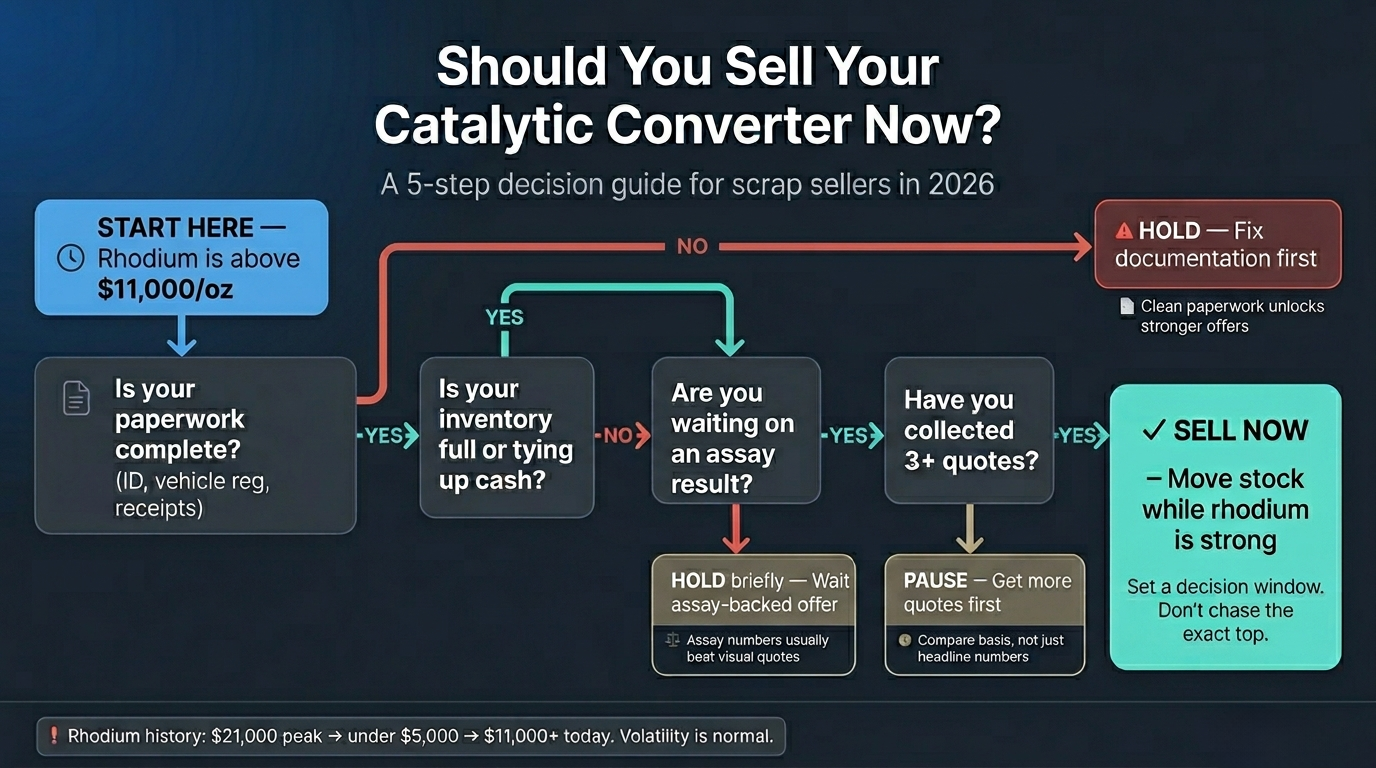
If rhodium is above $10,000 and your shelf is full, selling now is usually the sensible call. Holding can make sense in a narrow set of cases, but waiting for the exact top is often a costly game.
The hard truth is that no one rings a bell at the peak. Rhodium has moved violently before, and it can do it again. If your stock is ready, documented, and already tied to strong offers, there is a good case for moving at least part of it now.
Table showing when selling now makes more sense than holding
This table gives a simple decision frame for owners, dismantlers, and yards who are trying to choose between a sale today and a short wait.
| Situation | Sell now | Hold for a short time | Practical move |
|---|---|---|---|
| Rhodium above $10,000 | Usually yes | Only if you expect a very near-term event and accept the risk | Get 3+ quotes and act quickly |
| Inventory is full | Yes | No clear benefit in waiting | Convert stock into cash flow |
| Assay not finished yet | Maybe not | Yes, for a brief period | Wait for the assay-backed offer |
| Short dip after a sharp run | Maybe | Possibly, if your buyer will refresh the quote soon | Set a time limit and do not drift |
| Paperwork missing | No | Yes, until documents are complete | Fix traceability first |
When does selling now make the most sense?
It makes sense when the market is already favorable and your stock is ready. High rhodium, full inventory, and clean documents are a strong reason to move.
If you run a workshop, dismantling yard, or scrap operation, idle stock has a cost. It ties up space, cash, and attention. That cost is easy to miss when charts look exciting. However, waiting for a slightly better metal price can backfire if local offers weaken, if theft risk rises, or if buyer appetite cools.
This is especially true with richer European units. A well-documented BMW catalytic converter may attract a good bid today, but quote gaps between buyers can still be large. That is why three quotes beat one optimistic guess.
When can holding make sense?
Holding can make sense when you are waiting for facts, not when you are chasing emotion. The clearest example is a pending assay.
If a buyer has only given you a rough visual quote and a refinery-backed assay is due soon, waiting a little can be smart. The same applies if there has been a brief market dip and your buyer is willing to refresh the offer on a set date. A short pause with a clear reason is different from open-ended waiting.
If you are not sure how refinery testing changes a payout, this guide on how assay results turn into a scrap offer can help. It explains why assay-backed numbers often differ from quick yard estimates.
How do you avoid chasing the top?
You avoid it by using a simple process. Get 3 or more quotes, compare the basis for each one, and set a decision window.
Do not wait forever for one more spike. Rhodium has already shown how violent it can be. It traded near $21,000 in the past and later fell below $5,000. That history matters because it reminds sellers that volatility is normal, not rare. If you have stock and strong quotes today, the cost of waiting is real.
Why does theft and informal trading hurt legitimate sellers?
Because stolen stock floods informal channels and drags down clean-market confidence. When buyers fear legal trouble, they often cut offers or stop buying certain units altogether.
High prices have helped fuel a theft surge in 2026. The result is bad for honest sellers. Informal stock entering the market makes every buyer more cautious, and that caution often shows up as lower bids, slower payment, and tougher paperwork checks. In Australia, South Africa, Italy, and Greece, buyers can face prosecution if stolen units end up in their books, even when the original seller story sounded credible.
What documents should you always exchange?
You should exchange enough documents to prove origin and transfer. Clear records protect both sides if questions come up later.
- Government ID from the seller
- Vehicle registration or proof tying the unit to a vehicle
- Signed receipt with date, quantity, and agreed amount
- Business details if the seller is a workshop or yard
- Photos or stock records if the buyer requests them
This is not red tape for its own sake. It is what keeps a clean sale clean. If a buyer does not ask for documents, or if a seller refuses to provide them, risk goes up fast.
Why are licensed buyers safer?
Licensed buyers are safer because they have more to lose and more reason to keep records straight. That usually leads to better traceability and more reliable settlement.
A buyer with a documented chain can tell you how the material will be handled, where it will be processed, and how payment is calculated. That clarity helps honest sellers. It also reduces the chance that a good unit gets discounted simply because the buyer is nervous about origin.
When material enters a documented route, everyone is better protected. That is one reason reputable buyers ask questions early. They are not trying to slow you down. They are trying to keep your sale defensible.
How can you sell legitimately and still get a strong price?
Use a buyer who can explain the quote, keep the paperwork clean, and show how the number was reached. Transparency often improves value because it removes the risk discount that informal deals carry.
How do you compare quotes fairly?
Compare the basis, not just the top-line number. Two quotes that look close can produce very different net payouts.
- Ask whether the quote is visual, database-based, or assay-based.
- Check if freight, handling, or refining fees are deducted later.
- Use the same photos, serials, and unit details for every buyer.
- In South Africa, compare offers against live PGM spot values that day.
- In India, confirm CPCB authorization before discussing shipment.
- In Australia, use licensed yards and keep full transfer records.
If one buyer offers far more than everyone else, ask why. Sometimes the reason is genuine. Sometimes the number is only a teaser that changes once the stock is in hand.
What should you ask a buyer before you agree?
You should ask enough questions to understand timing, paperwork, and the final payout path. A serious buyer will answer clearly.
Ask how fast they pay, whether the quote can change after receipt, and what documents they need from you. Ask whether they can provide a refinery assay offer where relevant. Ask what happens if the unit differs from the initial description. These are simple questions, but they reveal a lot.
If you want a documented and transparent route, it helps to work with a buyer that treats traceability as part of the service, not an afterthought. That makes it easier to move stock without guessing which detail might cause trouble later.
Summary
Rhodium above $11,000 is a real signal, but it is not a promise that waiting will pay more. PGM prices drive converter value, yet your result still depends on model mix, assay, country rules, and how cleanly you can document the sale. South Africa’s supply weight, the huge combustion-vehicle fleet, and richer hybrid units all help explain why the market is firm now. Even so, rhodium has fallen from very high levels before, and the cost of waiting is easy to ignore until the market turns.
If you have stock ready, get 3 or more quotes, compare the net numbers, and move before hesitation becomes a strategy. For sellers who want a clear, documented route, auto catalyst recycling through a transparent buyer like Recohub can help reduce risk while keeping the process straightforward. If you want to know what your units may be worth right now, ask for a quote and compare it against the market while rhodium is still strong.