Your old catalytic converter might be worth more than you realise. Understanding what drives its value helps you make smarter decisions about whether to recycle, sell, or simply scrap this essential exhaust component. Whether you’re replacing a worn-out unit or recovering one from an end-of-life vehicle, knowing the numbers empowers you to get fair value.
At Recohub, we believe transparency matters. This breakdown examines exactly where costs come from and how precious metal markets directly influence what your converter is worth today.
What Makes a Catalytic Converter Valuable?
Three platinum group metals create the real value inside every catalytic converter: platinum, palladium, and rhodium. Manufacturers coat the internal honeycomb structure with these precious metals because they trigger chemical reactions that transform harmful exhaust gases into safer emissions. Without these metals, your vehicle would release dangerous levels of carbon monoxide, hydrocarbons, and nitrogen oxides into the atmosphere.
The exact composition varies significantly between vehicles. Petrol engines typically contain all three metals, while diesel units often rely primarily on platinum and palladium. Luxury vehicles and SUVs generally contain higher concentrations, which explains why some converters command substantially higher prices than others.
According to research published in the journal resources, the major applications of platinum group metals include catalysts in the automotive industry, with these materials playing crucial roles in emission control systems worldwide.
How Do Precious Metal Prices Affect Your Converter’s Worth?
Market prices for platinum, palladium, and rhodium fluctuate daily based on global supply and demand. Current trading values directly determine what recyclers pay for your old catalytic converter. When rhodium prices surged to record highs in 2021, certain converters became extraordinarily valuable almost overnight.
The relationship works simply: higher metal prices mean higher catalytic converter prices at recycling centres like Recohub. Lower market values reduce what you can expect to receive. Supply constraints in South Africa – where most platinum group metals originate – often push prices upward, while increased electric vehicle adoption may gradually reduce demand.
Current Precious Metal Market Overview
| Metal | Typical Price Range (per gram) | Amount in Average Converter | Primary Function |
|---|---|---|---|
| Platinum | £22-28 | 1-7 grams | Oxidises carbon monoxide and hydrocarbons |
| Palladium | £25-35 | 2-7 grams | Works efficiently in petrol engine applications |
| Rhodium | £140-180 | 1-2 grams | Reduces nitrogen oxide emissions |
These figures shift constantly. A converter containing 5 grams of total precious metals might be worth £200 one month and £280 the next, depending entirely on market conditions. Recohub tracks these movements closely to ensure competitive pricing for every customer.
What Determines New Catalytic Converter Replacement Costs?
Replacement costs break down into three main categories: the converter unit itself, installation labour, and any additional parts or repairs needed. Each component contributes significantly to your final bill.
Parts Costs
Original equipment manufacturer (OEM) converters typically cost between £800 and £2,500 for common vehicles. Premium brands like BMW, Mercedes, and Audi often require units priced above £3,000. These factory-spec parts match your vehicle’s exact specifications and contain sufficient precious metal loading to meet strict emission standards.
Aftermarket alternatives range from £200 for budget universal units up to £1,200 for quality direct-fit replacements. However, cheaper options frequently contain minimal precious metal content, which means they won’t perform as effectively and often fail sooner. California Air Resources Board (CARB) compliant converters – required in several US states – cost 20-40% more than basic federal-spec units.
Labour Costs
Professional installation typically runs between £70 and £150 per hour, with most replacements requiring one to three hours of workshop time. Straightforward bolt-on replacements on accessible vehicles take less time, while corroded mountings, welded connections, or difficult-to-reach positions extend labour significantly.
Factors affecting installation time include:
- Vehicle age and condition of exhaust components
- Whether the converter bolts on or requires welding
- Accessibility beneath the vehicle
- Number of oxygen sensors requiring removal
- Regional labour rates in your area
Why Does Recycling Make Financial Sense?
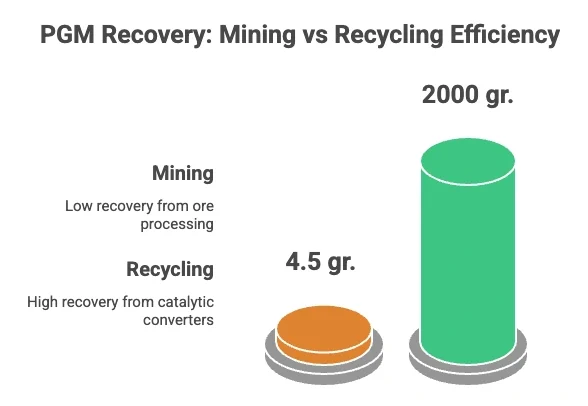
Rather than paying substantial replacement costs, catalytic converter recycling recovers value from your old unit. Recohub specialises in extracting and processing the precious metals contained within spent converters, returning fair market value to sellers while ensuring responsible environmental practices.
The International Platinum Group Metals Association confirms that recycling provides an essential secondary supply source, helping meet global demand while reducing mining pressure on limited natural reserves.
Which Vehicle Types Have the Most Valuable Converters?
Vehicle manufacturers load certain models with higher precious metal concentrations based on engine size, emission standards, and intended markets. Understanding these differences helps you recognise potential value in your own vehicle.
High-Value Categories
Hybrid vehicles consistently top value charts. Toyota Prius converters regularly fetch £600-£900 because hybrids require extra catalytic efficiency when operating at lower temperatures during electric-mode driving. Their converters contain substantially more precious metals to compensate.
Large SUVs and pickup trucks also command premium prices. Bigger engines produce more exhaust gases, requiring larger converters with proportionally more catalyst material. A Ford F-150 or Land Rover Discovery converter might contain three times the precious metal loading of a small hatchback.
Luxury European vehicles – particularly BMW, Mercedes, and Porsche – incorporate high-quality converters designed to meet stringent European emission standards while maintaining performance. These units frequently rank among the most valuable for recycling purposes.
Understanding Value Variations
The same model can have dramatically different converter values depending on production year and engine variant. A 2015 model might contain different metal ratios than its 2020 successor due to evolving emission regulations and material cost fluctuations during manufacturing.
Recohub evaluates each converter individually, using serial numbers and physical characteristics to determine precise precious metal content. This approach ensures you receive accurate valuations rather than generic estimates.
For more detailed information about the metals found inside these devices, read our guide on identifying valuable metals in catalytic converters.
How Do Emission Standards Drive Converter Design?
Governments worldwide have progressively tightened vehicle emission requirements over decades. Each regulatory update typically demands more efficient catalytic conversion, which often means higher precious metal loadings in new converters.
Euro 6 standards currently govern European vehicles, requiring sophisticated exhaust aftertreatment systems that often include multiple converters working in sequence. American Tier 3 regulations impose similarly strict requirements. These standards directly influence how much catalyst material manufacturers must include.
Stricter regulations mean newer vehicles generally contain more valuable converters than older models. A 2020 vehicle meeting current standards likely holds more recoverable precious metal than a comparable 2010 model built to earlier specifications.
Understanding how converters function helps explain their value. Our comprehensive article on understanding catalytic converters: function, importance, and environmental impact explores this topic thoroughly.
What Should You Consider Before Selling Your Converter?
Several factors affect the price you’ll receive when selling to a recycler like Recohub:
Condition matters less than you might expect. Even damaged, crushed, or corroded converters contain valuable metals. The precious metals inside don’t degrade significantly over time, making even heavily used units worth recycling.
Serial numbers help identification. Most converters display manufacturer codes that help recyclers determine exact specifications and expected metal content. Preserving these markings enables more accurate valuations.
Aftermarket units have limited value. Budget replacement converters contain minimal precious metals – sometimes as little as 10% of OEM content. Knowing whether your converter is original equipment or an aftermarket replacement sets realistic expectations.
Timing influences offers. Metal prices fluctuate daily. Selling during high market periods maximises your return, though predicting price movements proves challenging even for industry experts.
Why Choose Professional Recycling Over Scrap Dealers?
Specialist catalytic converter recyclers like Recohub offer distinct advantages over general scrap metal dealers. Professional operations invest in assay technology that accurately measures precious metal content, ensuring fair payment based on actual recoverable value rather than rough estimates.
Certified recyclers also handle environmental compliance properly. Catalytic converters contain materials requiring careful processing to avoid releasing harmful substances. Responsible recycling protects both people and the environment while recovering maximum value from each unit.
The precious metal recovery process involves crushing the ceramic substrate, analysing its composition through laboratory testing, and chemically extracting platinum, palladium, and rhodium. These refined metals then return to manufacturers for use in new products – including new catalytic converters.
The Bottom Line on Catalytic Converter Economics
Every catalytic converter represents concentrated value. Whether you’re facing expensive replacement costs or simply wondering what your old unit might fetch, understanding the components that determine price helps you navigate decisions confidently.
Precious metal markets set the foundation. Manufacturing specifications determine content. Vehicle type influences loading. Professional assessment reveals actual worth. Recohub combines expertise in all these areas to deliver transparent, competitive pricing for every customer.
Ready to find out what your catalytic converter is worth? Contact Recohub today for a no-obligation valuation. Our team evaluates each unit individually, ensuring you receive fair market value based on current precious metal prices and accurate content assessment.