In short: This guide covers catalytic converter prices across the Gulf Region (UAE, Saudi Arabia, Kuwait, Qatar, Oman) and South Asia (India, Sri Lanka, Bangladesh) in 2026. Learn what your converter is worth, why SUVs and luxury cars command premium prices, how to grade Japanese OEM units, what paperwork you need to sell legally, how remote WhatsApp and AI quotes now work, and how to get the best value through professional recycling.
A catalytic converter in the Middle East and South Asia is worth between $50 and $900 USD (approximately AED 185-3,300 or INR 4,200-75,000) depending on the vehicle type, converter condition, and precious metal content. Prices in 2026 reflect elevated platinum group metal (PGM) markets, with platinum trading above $2,300 per ounce and palladium exceeding $2,000 per ounce following the rally in late 2025.
The Gulf region commands particularly strong prices due to the prevalence of large SUVs (Land Cruiser, Nissan Patrol) and luxury European vehicles – both categories containing significantly higher PGM content than standard passenger cars. At Recohub, our UAE-based facility serves the entire Middle East and South Asia region with professional assay analysis to ensure you receive fair market value for every auto catalyst.
Key Takeaways
- A catalytic converter in the Middle East and South Asia is worth $50-900, driven mainly by platinum, palladium, and rhodium content.
- Hybrids, large SUVs, and luxury European cars carry the most precious metal and command the highest prices.
- Japanese OEM units often grade well, but the country label alone does not set value – part number, condition, and OEM status matter more.
- Selling legally needs proof of ownership, a valid ID, and a licensed buyer; requirements differ by country and tighten as theft enforcement rises.
- In 2026, the first quote often comes from WhatsApp photos and AI grading apps, but a remote estimate is a starting point, not a final settlement.
- A professional assay – not a visual guess – is the only way to know your converter’s exact PGM value.
What This Article Covers
- Catalytic converter prices 2026: regional guide in USD and local currencies ($50-900)
- Precious metal market trends driving converter values
- Prices by vehicle type: SUVs, luxury cars, sedans, diesel, and hybrids
- BMW and hybrid converter values
- Country-by-country price comparison across eight markets
- How to identify high-value converters and grade Japanese OEM units
- How to sell legally: paperwork by country, local sale vs export
- How WhatsApp photos and AI tools now set the first quote
- Where to sell and how the assay process determines fair value
Precious Metal Market Trends Driving Catalytic Converter Prices in 2026
Every car catalytic converter derives its value from the platinum group metals (PGMs) contained within its ceramic honeycomb structure. The World Platinum Investment Council’s Platinum Quarterly reports a continued platinum market deficit forecast for 2026, with recycling supply growing as higher prices pull more material back into the market. Palladium has followed a similarly elevated path. These conditions follow the exceptional rally in late 2025 that pushed PGM prices to multi-year highs.
Supply chain disruptions from major producing regions continue to support elevated prices. Russia and South Africa together account for over 75% of global palladium production, and geopolitical tensions have created persistent supply uncertainty. The U.S. Geological Survey’s Mineral Commodity Summaries 2025 reports that recycled automotive catalysts now provide approximately 25-30% of global palladium supply – underscoring the importance of catalytic converter price recovery through professional recycling channels.
How Do Precious Metal Prices Affect Catalytic Converter Values in 2026?
Rising precious metal prices directly increase your automotive catalytic converter value because the platinum, palladium, and rhodium content becomes more valuable when extracted and refined. When platinum prices climb by 30%, the recoverable value of your converter’s platinum content increases proportionally. This relationship makes 2026 an excellent time to sell converters from scrapped or upgraded vehicles.
Professional recyclers track real-time commodity markets and adjust purchasing rates daily. A converter worth AED 1,500 one week could be worth AED 1,650 the next if palladium prices surge. For detailed insight into how metal prices translate to actual payments, read our guide: Catalytic Converter Cost Breakdown: Parts vs. Labour vs. Market Metal Prices.
What Types of Catalytic Converters Are Worth the Most Money?
If you are wondering what catalytic converter is worth the most money, it is almost always a hybrid or large-SUV unit. The highest-value catalytic converters come from hybrid vehicles, large SUVs, and luxury European cars – all categories well-represented in the Gulf region. Hybrid converters (Toyota Prius, Camry Hybrid) contain 10-15 grams of PGMs because they must function efficiently during frequent engine start-stop cycles. Large SUVs like the Toyota Land Cruiser and Nissan Patrol contain 8-12 grams due to their higher displacement engines and strict emissions requirements.
Catalytic Converter Prices by Vehicle Type (Middle East & South Asia 2026)
| Vehicle Category | Price (USD) | PGM Content | Common In |
|---|---|---|---|
| Small Cars (Yaris, City) | $50 – $200 | 3-5 grams | South Asia |
| Medium Sedans (Camry, Accord) | $150 – $400 | 5-8 grams | All regions |
| Large SUVs (Land Cruiser, Patrol) | $300 – $700 | 8-12 grams | Gulf Region |
| Luxury Cars (BMW, Mercedes) | $250 – $600 | 6-10 grams | Gulf Region |
| Hybrid Vehicles (Prius) | $400 – $900 | 10-15 grams | UAE, India |
| Diesel Vehicles | $100 – $350 | 4-8 grams | South Asia |
| Aftermarket Converters | $20 – $50 | 1-2 grams | All regions |
Note: Prices are estimates based on January 2026 market conditions. Actual values depend on assay analysis and current precious metal spot prices.
Why Are SUV and Luxury Car Converters Worth More in the Gulf Region?
SUV and luxury car catalyst prices are significantly higher in the Gulf because these vehicles dominate the regional market and contain substantially more precious metals than standard cars. A Toyota Land Cruiser converter can contain 8-12 grams of PGMs – roughly double what you’d find in a typical sedan – because larger engines produce more exhaust volume requiring more catalyst material.
The extreme Gulf climate also plays a role. Vehicles operating in 40-50C temperatures with heavy air conditioning loads work their engines harder, which is why manufacturers specify robust catalytic converters with generous precious metal loading. When these vehicles reach end-of-life, their converters represent significant recoverable value that shouldn’t be underestimated.
How Much Is a BMW Converter Worth in 2026?
A BMW converter is worth between $200 and $700 depending on the model, with larger vehicles and M-series performance models commanding premium prices. BMW converters are particularly common in the Gulf region’s luxury vehicle market, and their German-engineered quality means higher precious metal content compared to economy brands.
BMW Catalytic Converter Values (2026)
| BMW Model | Price (USD) | Price (AED) | Notes |
|---|---|---|---|
| BMW 3 Series | $200 – $400 | AED 735 – 1,470 | Common, moderate PGM |
| BMW 5 Series | $250 – $500 | AED 920 – 1,835 | Higher PGM content |
| BMW 7 Series | $300 – $600 | AED 1,100 – 2,200 | Premium converter |
| BMW X5 / X7 | $350 – $650 | AED 1,285 – 2,385 | Large SUV, high value |
| BMW M Series | $400 – $700 | AED 1,470 – 2,570 | Performance, high PGM |
Why Are Toyota Prius and Hybrid Catalytic Converters Worth More?
Hybrid vehicle catalytic converters are worth $400 to $900 – significantly more than standard petrol cars – because they contain substantially higher precious metal concentrations. A Toyota Prius converter typically holds 10-15 grams of platinum group metals compared to just 3-5 grams in a standard sedan. This difference translates directly into higher scrap value.
The engineering reason is straightforward. Hybrid engines cycle on and off constantly during normal driving, meaning the catalytic converter must reach optimal operating temperature quickly during each restart. Cold converters don’t work efficiently, so manufacturers load hybrid converters with extra precious metals to ensure they light off faster and maintain emissions compliance during frequent start-stop cycles.
In the Middle East and South Asia, the Toyota Prius, Camry Hybrid, and Lexus hybrids are increasingly popular – particularly in the UAE where fuel efficiency and environmental awareness are growing. These vehicles’ converters represent some of the highest values in the regional market:
Hybrid Vehicle Catalytic Converter Values (2026)
| Hybrid Model | Price (USD) | Price (AED) | PGM Content |
|---|---|---|---|
| Toyota Prius (Gen 2-4) | $500 – $900 | AED 1,835 – 3,300 | 12-15 grams |
| Toyota Camry Hybrid | $450 – $750 | AED 1,650 – 2,750 | 10-13 grams |
| Lexus RX Hybrid | $500 – $850 | AED 1,835 – 3,120 | 11-14 grams |
| Lexus ES Hybrid | $450 – $700 | AED 1,650 – 2,570 | 10-12 grams |
| Honda Accord Hybrid | $400 – $650 | AED 1,470 – 2,385 | 9-11 grams |
The Prius is particularly notable because earlier generations (Gen 2 and Gen 3) often contain even more precious metals than newer models, as Toyota refined their catalyst formulations over time. If you have an older Prius, don’t assume it’s worth less – the converter could be among the most valuable in your fleet.
Catalytic Converter Prices by Country: Regional Comparison
Converter values vary across the region based on the typical vehicle mix, local regulations, and market maturity. Gulf countries generally command higher average prices due to their concentration of large SUVs and luxury vehicles, while South Asian markets see more volume in smaller vehicles with correspondingly lower individual converter values. For example, the catalytic converter price in Bangladesh sits at the lower end of the range given its older, smaller-engine fleet, while the Saudi Arabia autocatalyst market is buoyed by the large SUVs and trucks that carry richer, higher-value converters.
Regional Price Comparison (2026)
| Country | Price Range (USD) | Local Currency | Key Factors |
|---|---|---|---|
| UAE | $150 – $700 | AED 550 – 2,570 | Luxury, SUVs dominant |
| Saudi Arabia | $150 – $650 | SAR 560 – 2,440 | Large SUVs, trucks |
| Kuwait | $150 – $600 | KWD 46 – 185 | High-end vehicles |
| Qatar | $150 – $650 | QAR 545 – 2,365 | Luxury market |
| Oman | $100 – $500 | OMR 38 – 192 | Mixed vehicle market |
| India | $50 – $400 | INR 4,200 – 33,500 | Volume, BS6 standards |
| Sri Lanka | $50 – $300 | LKR 15,000 – 90,000 | Import vehicles |
| Bangladesh | $40 – $250 | BDT 4,400 – 27,500 | Older vehicle fleet |
What Factors Determine How Much Your Catalytic Converter Is Worth?
Five primary factors determine your automobile catalytic converter value: the vehicle make and model, whether it’s an OEM or aftermarket unit, physical condition, ceramic honeycomb integrity, and current precious metal spot prices. Understanding these variables helps you estimate your converter’s worth and avoid underselling to uninformed buyers.
OEM (original equipment) converters are worth significantly more than aftermarket replacements because manufacturers engineer them to meet strict emissions standards for the vehicle’s entire lifespan. An OEM converter from a Land Cruiser might fetch $500-700, while an aftermarket replacement for the same vehicle could be worth only $30-50.
How to Identify a High-Value Catalytic Converter
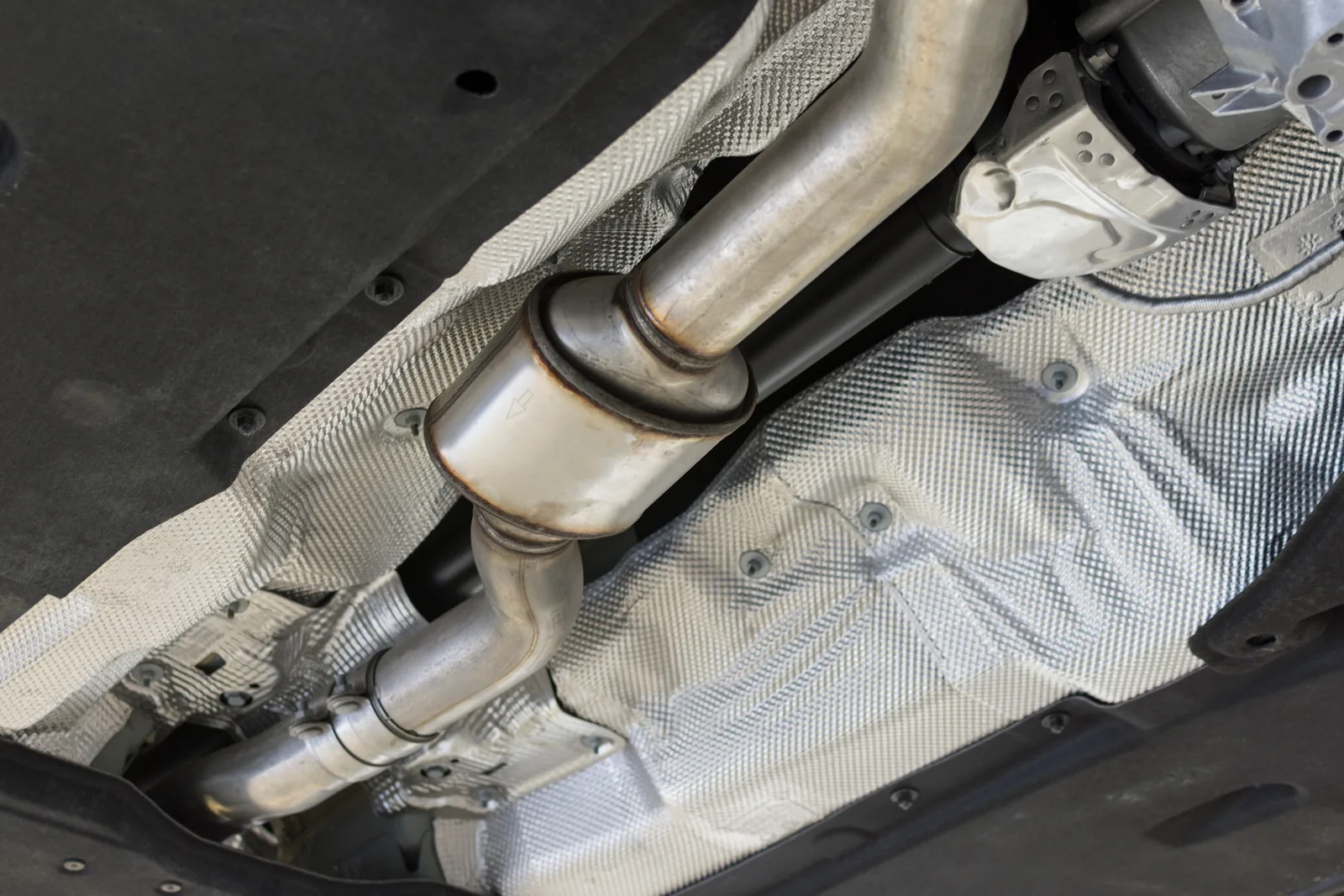
Identifying high-value converters before selling helps you avoid underselling to uninformed buyers. Several visual and physical indicators can help you estimate whether your converter falls into the premium category or represents standard value.
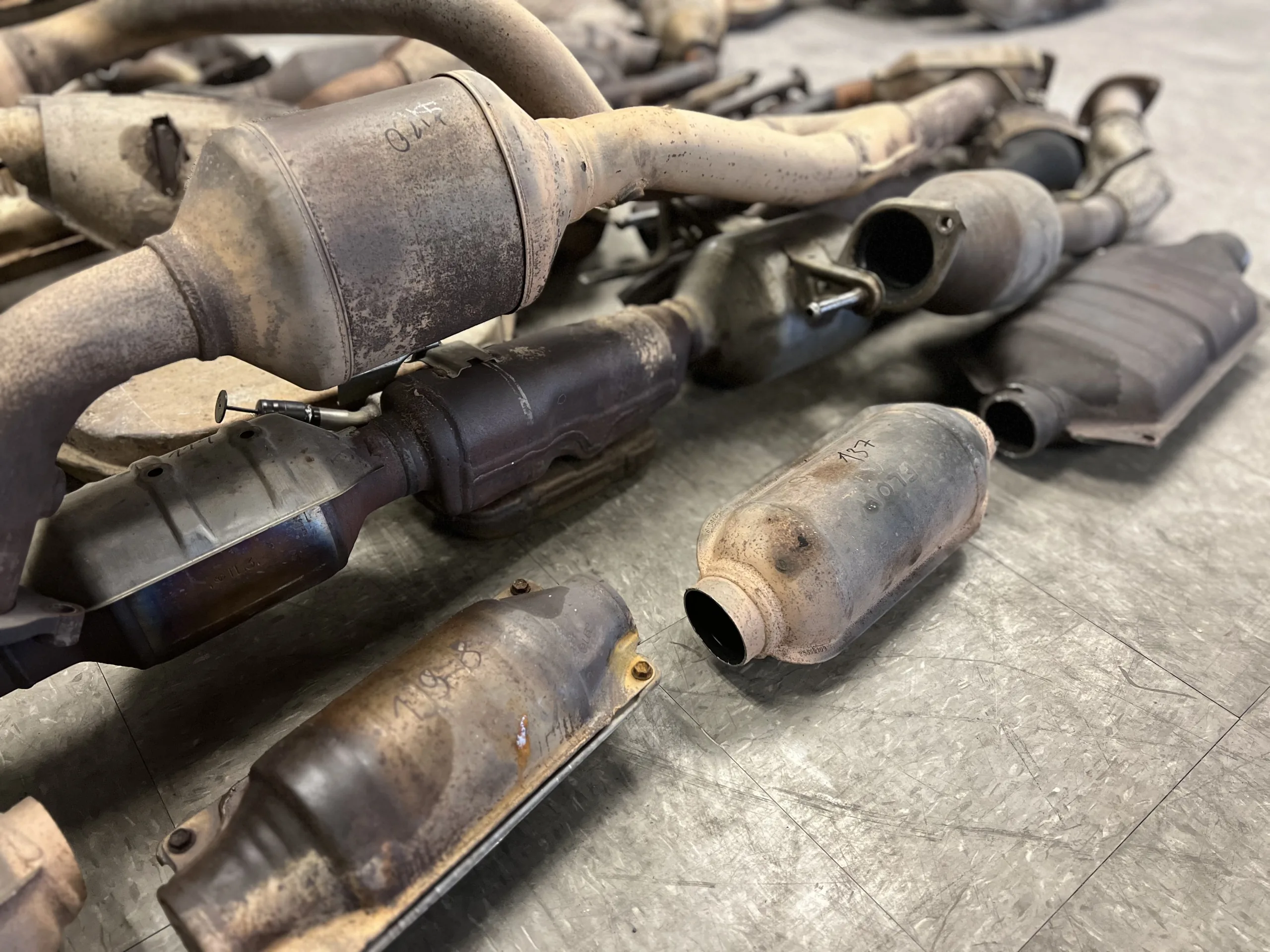
Check the serial number first. Every OEM catalytic converter has a serial number stamped or engraved on the metal housing. This number identifies the exact model and allows professional buyers like Recohub to look up the converter in databases containing verified assay results. Aftermarket converters often have generic or missing serial numbers – a red flag that the unit contains minimal precious metals.
Assess the weight and size. Heavier converters generally contain more precious metals. A typical sedan converter weighs 1-3 kg, while SUV and truck converters can weigh 4-8 kg. Hybrid converters are often surprisingly heavy for their size due to increased catalyst loading. If your converter feels substantial, it’s likely worth more than a lightweight unit.
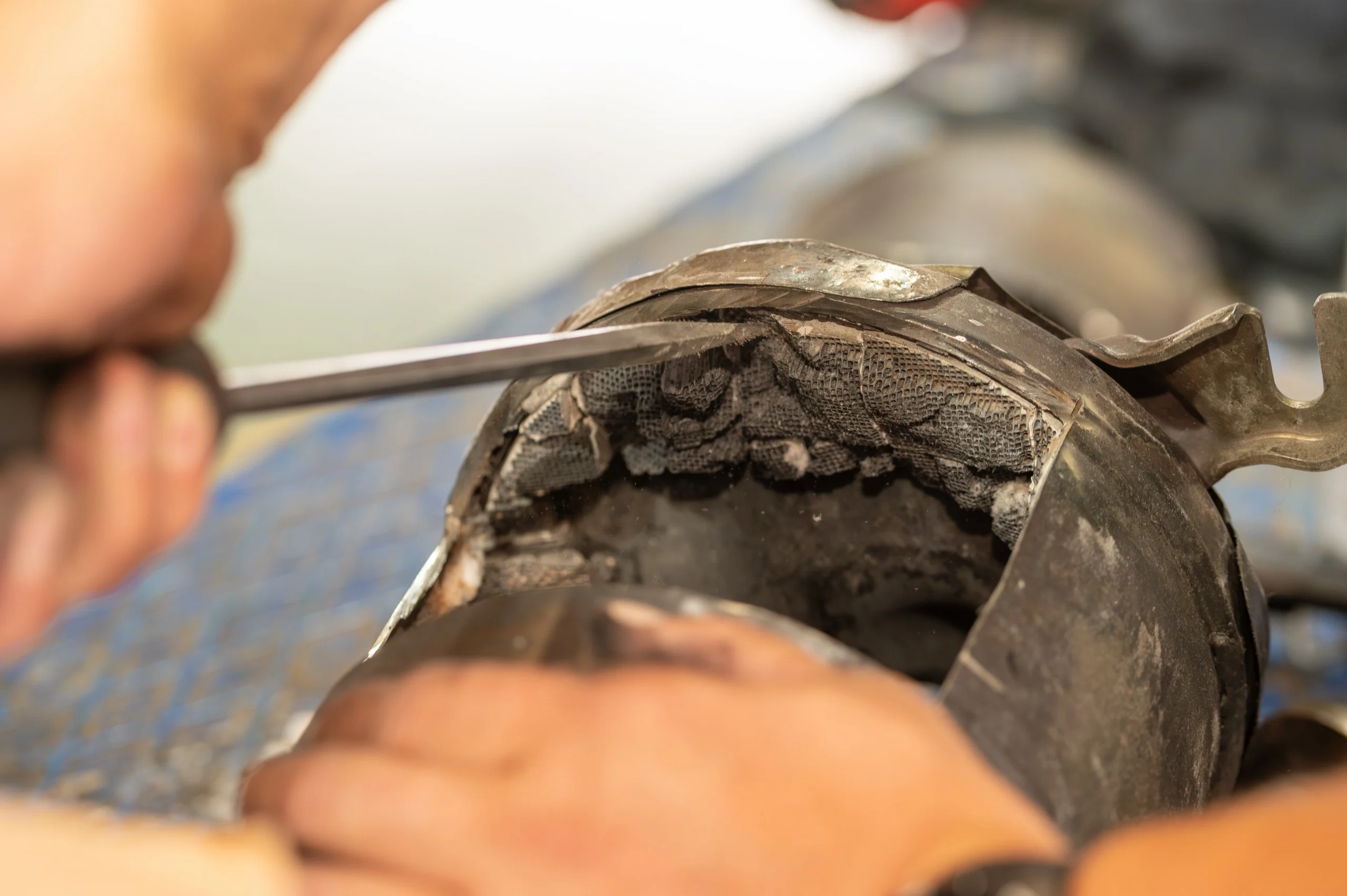
Look at the honeycomb condition. Inside every converter is a ceramic honeycomb structure coated with precious metals. If you can see inside (through the inlet or outlet), check whether the honeycomb is intact or damaged. Broken, melted, or missing honeycomb sections reduce recoverable value. However, even damaged converters have value – just less than intact units.
Identify the vehicle origin. Converters from Japanese vehicles (Toyota, Honda, Nissan, Lexus) and European vehicles (BMW, Mercedes, Audi, Porsche) typically command higher prices than converters from economy brands. Vehicles sold in regions with strict emissions standards (Europe, Japan, USA) contain more precious metals than those from markets with looser regulations.
Know the high-value categories:
- Hybrid vehicles (Prius, Camry Hybrid, Lexus hybrids) – highest values
- Large SUVs (Land Cruiser, Patrol, Lexus LX) – premium prices
- Luxury European (BMW, Mercedes, Porsche, Audi) – above average
- Pre-2010 vehicles – often contain more PGMs than newer models
- Diesel vehicles with DPF – additional value from filter materials
When in doubt, send photos and serial numbers to Recohub for a professional assessment. Our database includes thousands of converter types with verified assay results, allowing us to quickly identify high-value units that visual inspection alone might miss.
Why Japanese OEM Converters Often Command the Highest Scrap Prices
Many older Japanese OEM converters are known in the recycling trade for strong recoverable metal content. As the USGS notes, the platinum group metals – palladium, platinum, and rhodium – are exactly what make a converter useful both for emissions control and for recovery once the part reaches end of life. Buyers are not paying for the shell. They are paying for the likely metal recovery inside the substrate, plus the confidence that the unit is genuine and traceable.
Why the Japanese Label Alone Is Not Enough
There is an important limit here: Japanese does not mean valuable by default. A cheap aftermarket replacement, a broken shell, or a unit that has already been cut open may sell for much less than an intact OEM part from the same vehicle line. Experienced buyers look past broad labels and check the code, shape, shell style, and source history. The better the record, the easier it is to grade and move the unit legally. Two converters from the same maker can grade very differently – one a sought-after OEM unit, the other a low-grade replacement that only looks similar from the outside.
What Buyers Check First: OEM vs Aftermarket
Value usually comes from original construction, likely metal content, and how easy the unit is to identify. Before you ship or sell an automobile catalytic converter, ask for a code-based quote rather than a guess based on weight or size. That one step can save you from underpricing a strong OEM piece or overrating a weak replacement.
- OEM vs aftermarket – original factory units usually attract more interest because buyers can identify them more easily.
- Part number and code – a readable code helps a buyer match the unit to known grading data.
- Substrate condition – intact ceramic or metallic material is better than cracked, melted, or empty material.
- Shell condition – a badly cut shell raises questions and can lower confidence.
- Vehicle type and emissions design – different engines and standards used different catalyst loads.
- Chain of custody – clean sourcing records matter more now because theft risk is a real issue.
The table below shows what buyers usually check first, what tends to support a stronger offer, and what can slow or block a legal shipment.
| Factor | What usually helps value | What usually hurts value | Why it matters for export |
|---|---|---|---|
| Part identification | Readable OEM code or clear model match | No code, heavy rust, unclear origin | Clear ID helps with invoices, customs descriptions, and buyer trust |
| Construction | Original shell and intact substrate | Aftermarket shell, cut casing, empty unit | Damaged or altered parts can trigger more questions during review |
| Source records | Invoice, dismantler record, seller details | No proof of ownership or mixed loose loads | Traceability helps show lawful origin |
| Sorting | Units grouped by code or vehicle type | Mixed bins with no labels | Sorted loads are easier to declare and inspect |
| Condition | Dry, intact, photographed, stored safely | Crushed, wet, contaminated, badly handled | Poor condition can reduce buyer confidence and slow acceptance |
| Material status | Properly described as required by buyer and destination | Wrong description or vague paperwork | Cross-border rules can change based on classification |
How Japanese OEM Grades Typically Compare
Not all Japanese OEM units land in the same tier. The table below gives a general overview of how units from common Japanese vehicle types tend to be perceived in the scrap market. These are broad patterns, not guaranteed values – always verify by code before making decisions.
| Vehicle category | Typical OEM status | General market perception | Key variable |
|---|---|---|---|
| Japanese passenger cars (pre-2005) | Often OEM, easier to identify | Generally sought after | Substrate must be intact and unaltered |
| Japanese hybrid vehicles | OEM but different catalyst design | Varies by model, check code carefully | Different PGM load than standard combustion |
| Japanese light commercial vehicles | Mixed, OEM and aftermarket common | Moderate, condition and code matter more | Source records important for traceability |
| Japanese performance/sports models | Often OEM with higher-spec catalyst | Can attract stronger bids | Rarity and OEM status must be confirmed |
| Japanese aftermarket replacements | Not OEM | Lower grading regardless of country label | Weight and condition still matter, but ceiling is lower |
Common Mistakes That Hurt Value or Cause Legal Trouble
The biggest mistakes are easy to avoid. Most happen before the units ever reach a buyer.
- Mixing everything together – unsourced mixed loads are hard to grade and hard to defend.
- Removing or damaging the shell – a cut shell often lowers confidence and can reduce the offer.
- Skipping source records – no invoice means more risk for everyone in the chain.
- Using vague descriptions – a poor description can create customs issues or payment delays.
- Ignoring destination rules – a lawful shipment in one country may need different handling in another.
How to Sell a Used Catalytic Converter Legally in the Middle East and South Asia
To sell a used catalytic converter legally, you generally need proof of ownership (vehicle deregistration papers or a receipt showing where the converter came from), a valid ID, and a licensed buyer. In most Middle Eastern and South Asian countries, selling catalytic converters without documentation risks fines, confiscation, or criminal charges – especially as governments crack down on converter theft. Working with an international recycler like Recohub ensures your sale is fully compliant, your converter is properly assayed for its actual platinum, palladium, and rhodium content, and you receive a fair market price based on current precious metal rates.
What Paperwork Do You Need in Your Country?
In every country Recohub serves, you will need at minimum two things: proof of ownership and a valid government-issued ID. Beyond that, requirements diverge significantly by jurisdiction. Some countries require the buyer to hold a scrap trading licence, others mandate environmental clearances for handling precious-metal-bearing waste, and a few have recently introduced specific regulations targeting catalytic converter sales in response to rising theft. The rise of catalytic converter theft and the black market has pushed governments across the region to tighten regulations.
| Country | Key Documents Required | Licensing Authority | Special Notes |
|---|---|---|---|
| India | Vehicle deregistration certificate (Form 30), valid ID (Aadhaar/PAN), GST registration if selling commercially | State RTO; Central Pollution Control Board (CPCB) | E-waste and scrap metal dealers may need CPCB authorisation under Hazardous Waste Management Rules |
| Sri Lanka | Motor Traffic Dept deregistration, National ID, Environmental Protection Licence for commercial sellers | Central Environmental Authority (CEA) | Scrap metal exports require Department of Import/Export Control clearance |
| Saudi Arabia | Vehicle ownership transfer docs (Istimara), Iqama/National ID, commercial registration for dealers | Ministry of Environment, Water and Agriculture (MEWA) | Scrap trade regulated under Zakat, Tax and Customs Authority; VAT applies |
| Oman | Vehicle deregistration from ROP, Omani ID/passport, trade licence for commercial operations | Environment Authority of Oman | Environmental clearance required for waste containing precious metals |
| United Arab Emirates | Vehicle export certificate (RTA), Emirates ID, municipality waste trading permit for dealers | Ministry of Climate Change and Environment; local municipality | Free Zone entities have separate regulations; Dubai and Abu Dhabi rules may differ |
| Kuwait | Vehicle ownership proof, Civil ID, commercial licence for scrap businesses | Environment Public Authority (EPA Kuwait) | Strict rules on recycling waste containing heavy metals; EPA authorisation needed for export |
| Qatar | Vehicle deregistration (MOI Traffic Dept), QID, commercial registration for businesses | Ministry of Environment and Climate Change | Hazardous waste management laws apply; commercial sellers need environmental impact assessment |
| Bangladesh | BRTA vehicle deregistration, National ID (NID), trade licence for dealers | Department of Environment (DoE) | Ship breaking and scrap import/export heavily regulated; DoE clearance needed for precious metal waste |
Always verify current requirements with your local authority, as regulations are updated frequently. Recohub’s team can help guide you through the paperwork for your specific country.
Selling Locally vs Exporting Across Borders
Selling a catalytic converter to a buyer within your own country is significantly simpler than exporting it across borders, which adds customs declarations, environmental compliance, and potential Basel Convention obligations. Getting cross-border shipments wrong can result in confiscation at customs, heavy fines, or even criminal charges. The Basel Convention is an international treaty ratified by 191 countries – including India, Sri Lanka, Saudi Arabia, Oman, the UAE, Kuwait, Qatar, and Bangladesh – that governs the cross-border movement of hazardous waste and recyclable materials. Depending on how your country classifies them, exporting converters may require prior informed consent from the importing country, export licences, and detailed documentation of the material’s composition.
| Requirement | Local Sale | Cross-Border Export |
|---|---|---|
| Documentation | Proof of ownership, valid ID, sale receipt | All local docs + customs declaration, material composition certificate, export permit |
| Licences | Buyer needs scrap trading licence in most countries | Exporter needs environmental clearance, waste export licence, and trade permit |
| Customs | Not applicable | Full customs declaration required; HS codes for precious metal scrap apply |
| Basel Convention | Not applicable | Prior informed consent may be required from importing country; full compliance mandatory |
| Timeline | Same day to a few days | Weeks to months depending on country approvals |
| Risk Level | Low (if selling to licensed buyer) | Higher – confiscation, fines, criminal charges for non-compliance |
| Best Approach | Sell to a licensed local recycler or aggregator | Work with an international recycler like Recohub that handles all logistics and compliance |
How to Export Catalytic Converters Legally
Start with the rules of the sending country, the receiving country, and any transit countries. Use the Basel Convention Export and Import Control Tool to review how countries control cross-border movements of waste and related materials. Then build a clean file for every shipment. Good paperwork is not a formality – it is your first layer of legal protection.
- Commercial invoice with clear seller and buyer details
- Packing list with counts, weights, and lot numbers
- Photos of units and pallets before shipment
- Proof of ownership or dismantling records
- A clear material description that matches the shipment
- Any country-specific export or import paperwork your broker requests
Why Sell to a Licensed Recycler Instead of the Informal Market?
Licensed recyclers offer assay-based pricing, legal protection, and the assurance that you are not unknowingly participating in a stolen goods supply chain. When you sell through the informal market, the buyer typically estimates the converter’s value based on its external appearance or a reference number lookup – not on the actual PGM content inside. This method routinely undervalues converters by 20-40%. A licensed recycler like Recohub performs a professional assay, measuring the exact grams of platinum, palladium, and rhodium and pricing against current spot rates.
Equally important is legal protection. If authorities trace a stolen converter to a sale you were involved in – even if you had no idea it was stolen – you could face criminal charges. A documented sale to a licensed recycler with a clear paper trail protects you completely. Our investigation into what happens to stolen catalytic converters shows why serious buyers now ask hard questions about origin.
How WhatsApp Photos and AI Tools Now Set Catalytic Converter Prices
In 2026, a lot of catalytic converter buying no longer starts with a truck, a warehouse visit, or a long email chain. It starts with a phone. A seller walks around a yard on WhatsApp, sends photos and short videos, reads out part numbers, and gets a fast reply from a buyer who may be in another city or another country. That shift matters across the Middle East, India, and Africa, where distance, mixed supply, and mobile-first trade all shape how deals happen. The result is a faster first pass on scrap catalytic converter prices, but also a bigger need for clean records, clear grading, and traceable ownership.
What a Remote Buying Workflow Looks Like
It is usually simple. One person shows the material, and the other person sorts and prices it from the screen.
- The seller sends photos or a short live walk-around.
- The buyer asks for close-ups of part numbers, shell ends, and overall condition.
- The buyer groups similar units and flags unknown ones.
- An app or database suggests likely category, grade, or range.
- The buyer replies with a first offer, often with conditions attached.
- Both sides save the chat, images, and voice notes as a record.
A buyer can judge a lot from remote images, but a remote check is only a screening step, not a final assay.
| Remote input | What it helps the buyer judge | What it cannot confirm on its own |
|---|---|---|
| Clear part number photo | Likely model family and expected category | Exact internal metal load |
| Full shell photo | Housing type, size, and obvious damage | Hidden contamination or internal loss |
| End view of the unit | Whether the substrate appears present | True condition through the full core |
| Lot photo with grouped units | Mix quality and sorting discipline | Accuracy of the final count |
| Voice note with quantity and origin | Context for ownership and pickup planning | Formal proof of title by itself |
Can AI Grading Apps Estimate Value from Photos?
Yes, they can estimate value well enough for a first quote – but they should not be treated as the final word on settlement. The strength of a grading app is speed: a buyer can move through a long gallery of screenshots, tag likely categories, and build a rough offer faster than by memory alone. Most tools compare visible clues against known patterns – stamped codes, shell dimensions, image features, prior grading notes, and buyer history. That is useful when the lot is clean and the photos are clear. It is far less useful when the shell is broken, the code is unreadable, or the unit has already been altered. Experienced buyers use AI as a helper, not a replacement: the app suggests, the buyer checks, and the final processing result still matters most. For a plain-language look at those stages, this guide to the catalytic converter buying process is a useful place to start.
What to Send for a Cleaner Remote Quote
The seller should send fewer guesses and more proof. Better inputs usually lead to a tighter first range.
- Sharp photos of each code or marking
- Wide photos that show the full shell
- Separate groups for similar units
- Total count by group
- Approximate gross weight of each group
- Pickup city or shipment origin
- Basic ownership or intake notes
That last point is easy to miss. A lot with clean intake notes looks more reliable than a lot with no paper trail at all. A clean lot with clear photos gets a cleaner quote; a messy lot with poor lighting usually gets a wider range or a lower first offer, simply because uncertainty is higher.
Are Remote Quotes the Same as Final Settlement?
No. A remote quote is a decision tool, while final settlement depends on receipt, inspection, sorting, and downstream recovery results. A buyer may issue a strong first number based on clear photos, then revise after arrival if the mix is different from what the images suggested. Common reasons for a change include missing substrate, misread codes, mixed material, non-matching pieces, or damage that was not visible in the first images. That is why many experienced traders prefer a quote format with stated assumptions – the offer is based on visible codes, intact units, grouped lots, and later verification on receipt. Clear words reduce later disputes.
Using Photos and Logs to Prove Chain of Custody
Photos, recorded calls, and app logs do not replace formal documents, but they create a useful timeline when questions come up later. When a shipment is challenged, the first problem is often not value – it is proof. India is also putting more focus on circular economy systems around end-of-life vehicles, as noted in the NITI Aayog report on the circular economy of end-of-life vehicles in India. That broader push makes traceability, material recovery, and cleaner buying records more relevant to converter trade as well.
| Record type | What it helps prove | Why it matters |
|---|---|---|
| Timestamped yard photos | What the material looked like before pickup | Supports condition and quantity discussions |
| WhatsApp chat export | Offer terms, revisions, and seller statements | Shows what both sides agreed to |
| Recorded call note or file | Verbal confirmations and deal conditions | Useful if the written chat is incomplete |
| App grading log | How the lot was categorized at first review | Shows the basis for the first quote |
| Pickup receipt or intake form | Transfer of possession | Supports chain of custody |
| Shipment reference and receiving note | What moved and what arrived | Helps resolve mismatch claims |
Where Can I Sell My Catalytic Converter in the Middle East & South Asia?
Selling your catalytic converter through a professional recycling facility ensures you receive fair market value based on accurate precious metal analysis rather than generic estimates. Recohub operates a dedicated processing facility in the UAE that serves customers throughout the Gulf Region and South Asia.
We purchase converters from all eight countries in the region, with established logistics networks for efficient collection. Whether you’re an individual with a single converter or a business with regular volume, our UAE facility provides professional assay analysis to determine exact precious metal content – ensuring transparent, fair pricing for every transaction. Avoid selling to informal buyers or unverified exporters who may offer below-market prices based on visual estimates alone.
How Does the Assay Process Determine Your Converter’s Value?
The assay process is what separates professional recycling from guesswork. At Recohub, we use XRF (X-ray fluorescence) spectroscopy and chemical analysis methods to measure the exact platinum, palladium, and rhodium content in each converter. This laboratory-grade testing eliminates estimation errors and ensures your payment accurately reflects your material’s true worth.
The process works end to end: you contact Recohub with vehicle details, quantity, and photos; the team confirms documentation for your country; logistics are arranged for collection or shipment to the UAE facility; your converters undergo a professional assay where the ceramic substrate is extracted, ground into a homogeneous sample, and analysed in a laboratory; and settlement is processed promptly against current PGM market rates. From there, the processed material is delivered to globally recognised refining plants for final recovery. Learn the complete process: How Assay Results Translate to Scrap Price.
The Environmental Importance of Catalytic Converter Recycling
Professional catalytic converter recycling serves critical environmental purposes beyond generating income for sellers. Mining platinum group metals from natural ores requires massive amounts of energy and creates significant environmental impact. Recycled converters now supply approximately 25-30% of global palladium demand, reducing the need for destructive mining operations. The precious metals recovered from your old converter will be refined and reused in new catalytic converters, electronic components, or industrial applications.
Ready to Sell Your Catalytic Converter?
If you have a used catalytic converter and want to receive fair market value based on professional assay analysis, Recohub is ready to help. Our UAE facility serves customers throughout the Middle East and South Asia with transparent pricing, expert analysis, and competitive payment terms. Whether you have a single converter or regular volume from your business, we provide the same commitment to accuracy and fair dealing. Visit Recohub to learn more about our services or contact us directly for a quote on your catalytic converters.
FAQ
What is the average catalytic converter price in the UAE and Gulf region?
The average catalytic converter price in the UAE and Gulf region ranges from $150 to $700 (AED 550-2,570) depending on the vehicle type. SUVs like Land Cruiser and Patrol command $300-700, while medium sedans typically bring $150-400. Luxury European vehicles (BMW, Mercedes, Porsche) fall in the $250-600 range. Contact Recohub for a precise quote based on assay analysis.
How much is a BMW catalytic converter worth in 2026?
A BMW catalytic converter is worth between $200 and $700 in 2026. The 3 Series brings $200-400, the 5 Series $250-500, the 7 Series $300-600, X5/X7 models $350-650, and high-performance M Series $400-700. Actual value depends on model year and assay-verified precious metal content.
How can I find out what my car catalyst is worth before selling?
You can get a preliminary estimate using the price tables in this guide based on your vehicle type. For accurate valuation, send photos and converter details to Recohub for a no-obligation quote. Our database includes thousands of converter types with verified assay results, allowing us to provide accurate estimates before you ship your materials.
Does Recohub buy catalytic converters from the Middle East and South Asia?
Yes, Recohub purchases catalytic converters from all eight countries covered in this guide: UAE, Saudi Arabia, Kuwait, Qatar, Oman, India, Sri Lanka, and Bangladesh. Our UAE-based facility serves the entire region with established logistics networks for collection and competitive pricing based on professional assay analysis.
Why are Land Cruiser and Patrol catalytic converters worth more than other vehicles?
Land Cruiser and Patrol converters are worth more because their large-displacement engines require converters with higher precious metal loading to meet emissions standards. These SUVs typically contain 8-12 grams of platinum group metals compared to 3-5 grams in small cars. The Gulf region’s hot climate also means manufacturers specify robust converters, further increasing PGM content.
Is it legal to sell a used catalytic converter?
Land Cruiser and Patrol converters are worth more because their large-displacement engines require converters with higher precious metal loading to meet emissions standards. These SUVs typically contain 8-12 grams of platinum group metals compared to 3-5 grams in small cars. The Gulf region’s hot climate also means manufacturers specify robust converters, further increasing PGM content.
What documents do I need to sell a catalytic converter?
Land Cruiser and Patrol converters are worth more because their large-displacement engines require converters with higher precious metal loading to meet emissions standards. These SUVs typically contain 8-12 grams of platinum group metals compared to 3-5 grams in small cars. The Gulf region’s hot climate also means manufacturers specify robust converters, further increasing PGM content.
Can I export catalytic converters from my country?
Land Cruiser and Patrol converters are worth more because their large-displacement engines require converters with higher precious metal loading to meet emissions standards. These SUVs typically contain 8-12 grams of platinum group metals compared to 3-5 grams in small cars. The Gulf region’s hot climate also means manufacturers specify robust converters, further increasing PGM content.
Are aftermarket converters worth less than OEM units?
Land Cruiser and Patrol converters are worth more because their large-displacement engines require converters with higher precious metal loading to meet emissions standards. These SUVs typically contain 8-12 grams of platinum group metals compared to 3-5 grams in small cars. The Gulf region’s hot climate also means manufacturers specify robust converters, further increasing PGM content.
How accurate are catalytic converter pricing apps?
Land Cruiser and Patrol converters are worth more because their large-displacement engines require converters with higher precious metal loading to meet emissions standards. These SUVs typically contain 8-12 grams of platinum group metals compared to 3-5 grams in small cars. The Gulf region’s hot climate also means manufacturers specify robust converters, further increasing PGM content.
Can I sell a catalytic converter without a visible serial number?
Land Cruiser and Patrol converters are worth more because their large-displacement engines require converters with higher precious metal loading to meet emissions standards. These SUVs typically contain 8-12 grams of platinum group metals compared to 3-5 grams in small cars. The Gulf region’s hot climate also means manufacturers specify robust converters, further increasing PGM content.
Does it matter if a catalytic converter is cut, damaged, or partially emptied?
Land Cruiser and Patrol converters are worth more because their large-displacement engines require converters with higher precious metal loading to meet emissions standards. These SUVs typically contain 8-12 grams of platinum group metals compared to 3-5 grams in small cars. The Gulf region’s hot climate also means manufacturers specify robust converters, further increasing PGM content.
How do I know if a remote catalytic converter buyer is legitimate?
Land Cruiser and Patrol converters are worth more because their large-displacement engines require converters with higher precious metal loading to meet emissions standards. These SUVs typically contain 8-12 grams of platinum group metals compared to 3-5 grams in small cars. The Gulf region’s hot climate also means manufacturers specify robust converters, further increasing PGM content.
What is the catalytic converter price per kg?
Whole catalytic converters are usually priced per unit by type and PGM content rather than by weight, but buyers do sometimes quote a catalytic converter price per kg for bulk or broken material. A catalytic price per kilo only reflects the mixed ceramic-and-metal weight, so a single high-grade unit is almost always worth more sold whole than weighed in as mixed scrap. For an accurate figure, have the unit assayed rather than weighed.