
Overview: This guide explains how to sell a catalytic converter for a fair price without relying on a rough guess from the nearest scrap yard. It covers what your unit is worth, how the scrap price is set, why proximity matters far less than an accurate metal assay, and how to get a market-based offer. It is written for individual sellers, garages, dismantlers, and businesses handling single units or bulk lots.
Key Takeaways
- Most used catalytic converters are worth between $50 and more than $1,500, depending on their platinum, palladium, and rhodium content.
- The catalytic converter scrap price is driven by metal content, not by how close the buyer is to you – two identical-looking units can differ in value by hundreds of dollars.
- Rhodium recovered from a converter can, at times, be worth more than ten times the value of gold, which is why an accurate assay matters.
- Searching “catalytic converter buyers near me” is a fine starting point, but the closest yard is rarely the one paying the true market rate.
- A converter’s make, model, year, serial code, and condition all change the offer you should receive.
- The most reliable price comes from professional assaying (XRF and ICP), where the unit is analyzed for its exact precious-metal load.
- Cash-only, no-questions buyers are a red flag; a legitimate recycler documents the transaction and settles transparently.
The best place to sell a catalytic converter is a recycler that prices your unit on its actual precious-metal content, not on how near it happens to be. Most used catalytic converters sell for somewhere between $50 and more than $1,500, and the difference between a lowball and a fair offer usually comes down to one thing: whether the buyer measured what is really inside the unit, or simply guessed. This guide shows you how to remove the guesswork.
How much is a catalytic converter worth?
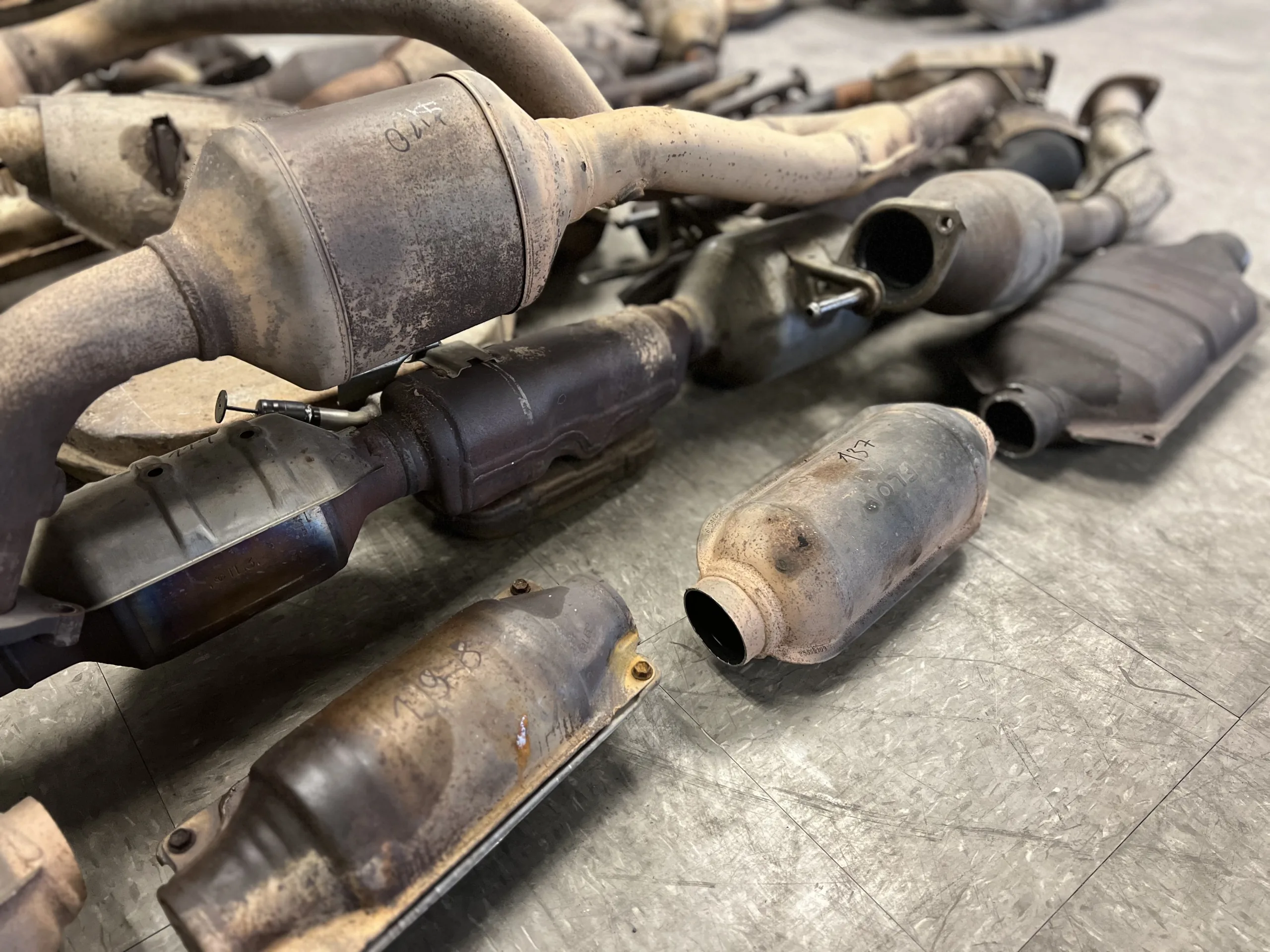
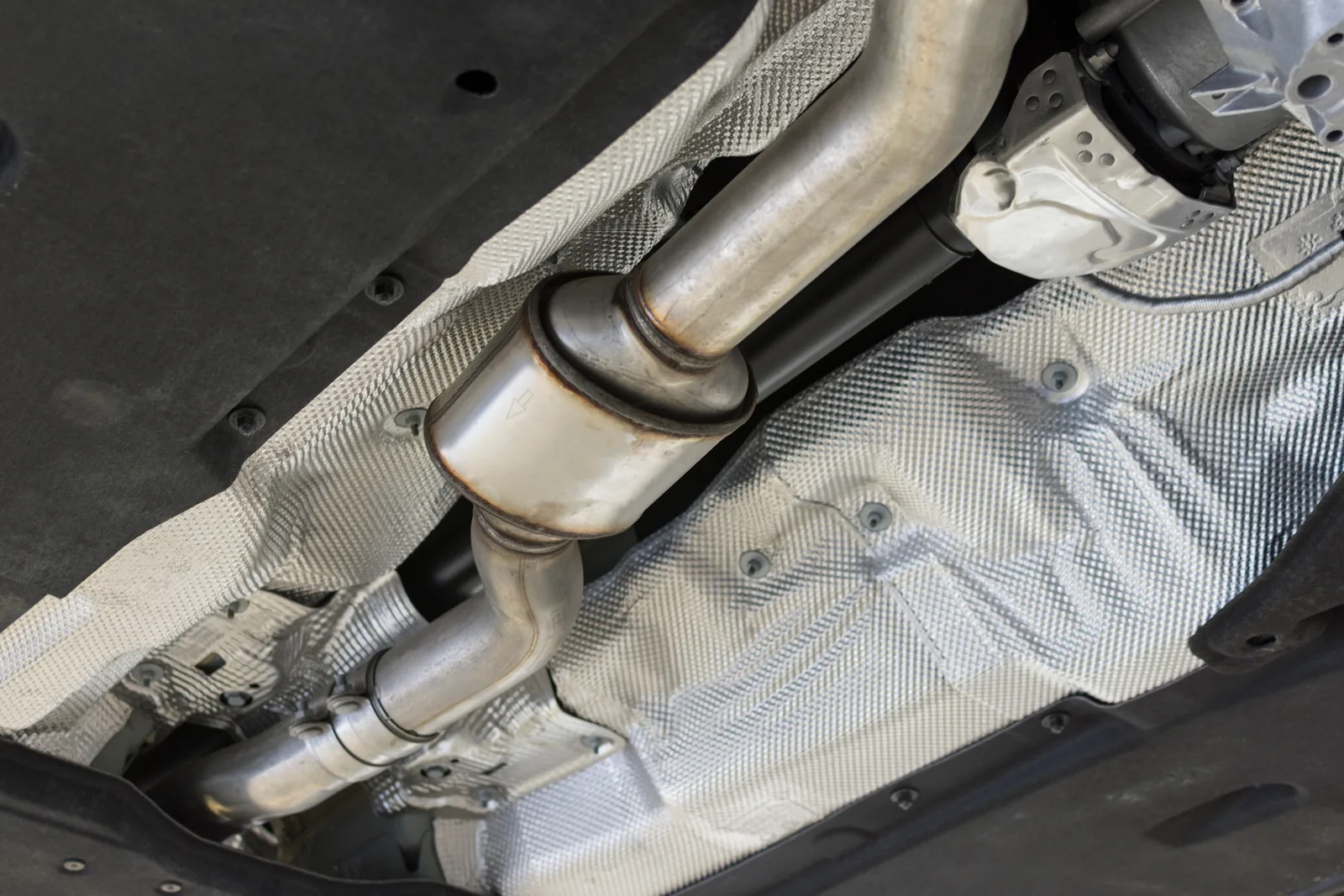
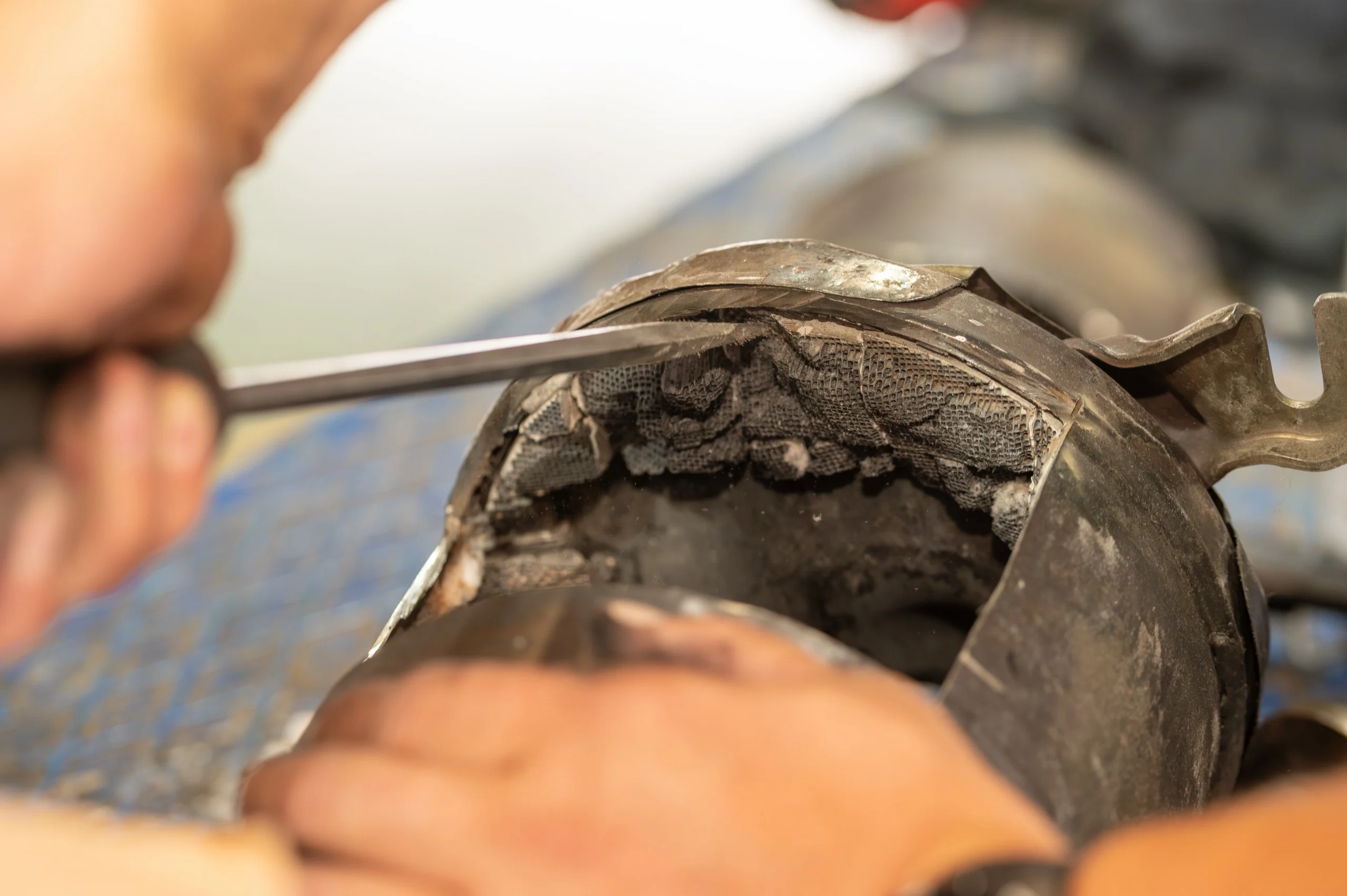
A catalytic converter is typically worth between $50 and more than $1,500 as scrap, with rare high-grade units commanding even more. That value exists because the ceramic honeycomb inside every automotive catalytic converter is coated with three platinum-group metals (PGMs): platinum, palladium, and rhodium. These metals do the chemical work of converting toxic exhaust gases into cleaner emissions through oxidation and reduction reactions – a well-functioning converter cuts harmful pollutants by more than 90% – and they are rare enough to carry serious resale value once the unit is retired.
Rhodium is the reason the numbers swing so widely: as one of the scarce platinum-group metals tracked by the U.S. Geological Survey, recovered rhodium can at times be worth more than ten times the value of gold, so a converter loaded with it is worth far more than one that is not. This is also why a headline “catalytic converter price” quoted online means very little on its own: the real figure depends on your specific unit, not a category average. For a fuller breakdown of how value is assessed, see Recohub’s catalytic converter recycling services.
Why does searching “catalytic converter buyers near me” rarely give you the best price?
Typing “catalytic converter buyers near me” into a search shows you who is closest – not who pays the most. Proximity feels convenient, but it has no bearing on what the platinum, palladium, and rhodium inside your unit are actually worth. A local yard that quotes a flat rate is protecting itself against uncertainty, and that caution comes out of your payout.
The same logic applies to “scrap catalytic converter buyers near me” and “catalytic converter near me.” These searches surface businesses by distance and reviews, which tells you nothing about whether they assay each unit or pay against live metal markets. A recycler that identifies your converter by its code and settles on measured metal content can offer more than a nearby buyer working from a laminated price sheet – and can often arrange collection, so the physical distance stops mattering at all. In short, “catalytic converter recycling near me” is the right question with the wrong filter: swap “nearest” for “most accurate.”
What determines the catalytic converter scrap price?
The catalytic converter scrap price is set by how much recoverable platinum, palladium, and rhodium your unit contains, priced against current precious-metal markets. Because those markets move daily and PGM loading varies enormously between models, no two converters are guaranteed the same value – even when they look identical from the outside. A BMW converter, for example, can be worth substantially more than a common passenger-car unit because of its higher metal loading.
Five factors do most of the work in setting the number you are quoted.
| Factor | Why it moves the price |
|---|---|
| PGM content (platinum, palladium, rhodium) | The single biggest driver – more recoverable metal means a higher offer. |
| Type and weight of the converter | Larger substrates and certain catalyst types carry more metal. |
| Vehicle make, model, and year | Specific codes (e.g. some BMW units) signal premium loading. |
| Condition of the unit | Cracked, melted, or emptied honeycombs lose recoverable value. |
| Current precious-metal market values | Spot prices for PGMs fluctuate daily, moving the scrap price with them. |
Source: Recohub, Catalytic Converter Recycling (2026).
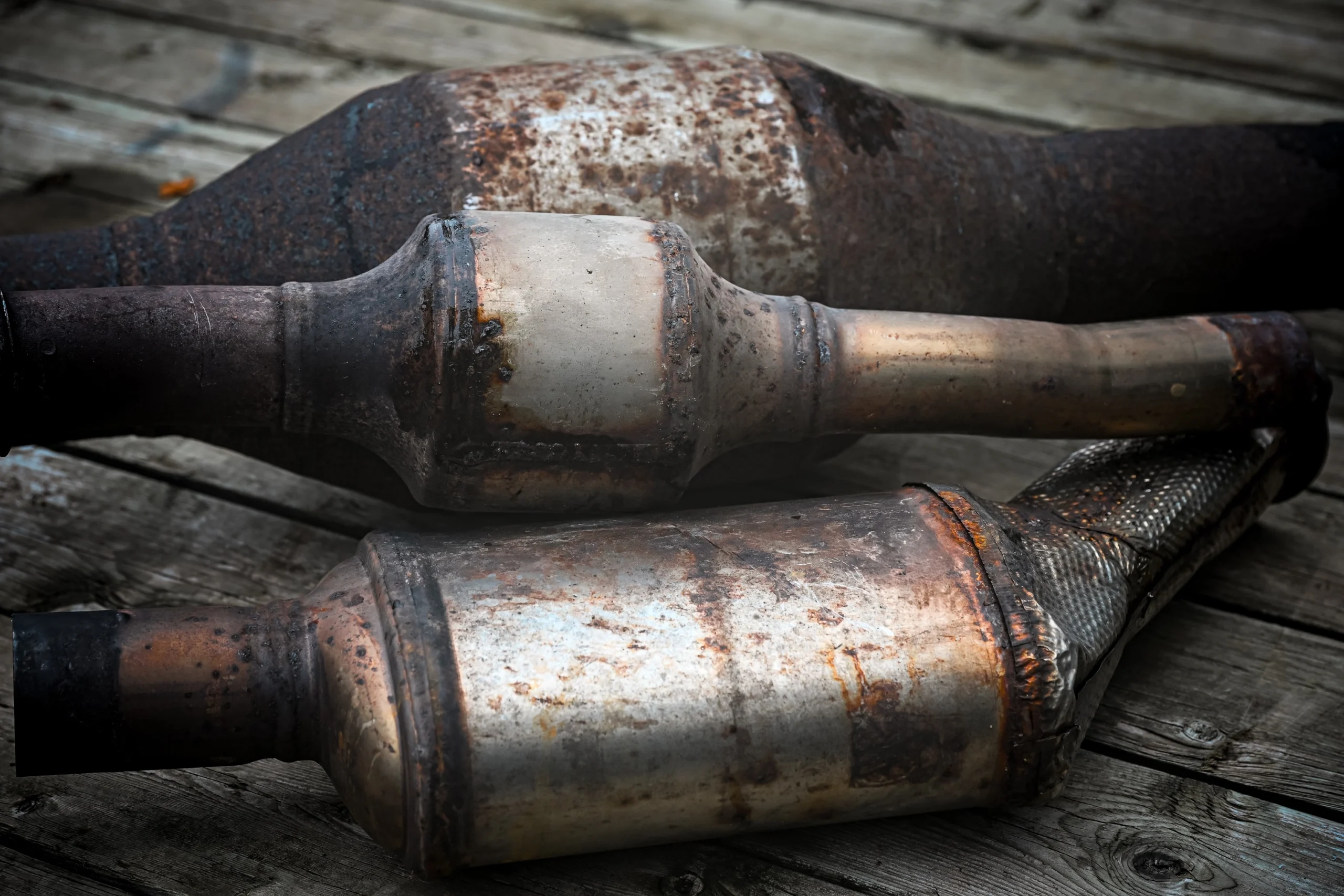
Whether the unit is original equipment or a replacement part matters, too. An original-equipment (OEM) converter fitted at the factory tends to carry a heavier PGM load and is usually worth more as scrap than a cheap aftermarket replacement built to meet only minimum emissions standards. That is one more reason a category-level “catalytic converter price” is unreliable: a genuine offer weighs the specific unit in front of the buyer, including whether it is OEM or aftermarket, rather than assuming an average. A recycler that prices each used catalytic converter individually will reflect these differences instead of flattening them into a single rate.
How do you sell a used catalytic converter without guesswork?
To sell a used catalytic converter without guessing, get the unit identified by its code and valued on measured metal content before you accept any offer. Guesswork enters the moment a buyer skips that step and quotes a round number from memory. Removing it takes three practical moves.
First, find the serial or part number. It is usually stamped, engraved, or printed on the metal canister itself, often on the outer shell or a small welded plate; if rust hides it, a wire brush will expose it. Second, send that code for a pre-quote so the converter can be matched against a database of known units rather than eyeballed. Third, insist the final catalytic converter price is based on an assay, not an estimate. If you want the shortest version of this workflow, Recohub’s walkthrough on quick and easy ways to sell your catalytic converter lays out each step.
One more guardrail: be wary of any buyer who insists on cash with no paperwork. A legitimate recycler records the transaction and settles by traceable payment. If an offer depends on you not asking questions, that is not a good price – it is an uncontrolled one.
How to Spot a Fair Catalytic Converter Buyer
The best price comes from evidence, not a glance. Here’s what to look for – and what to avoid.
Green flags
A buyer you can trust
- ✓Identifies your unit by its serial / part number before quoting
- ✓Values it on an assay (XRF / ICP) of real metal content, not a flat rate
- ✓Prices against current platinum, palladium & rhodium market values
- ✓Pays by traceable, documented payment – and records the transaction
- ✓Shows a transparent breakdown of how the figure was reached
- ✓Is a certified / licensed facility and can arrange collection
Red flags
Walk away
- ✕Cash only, with no paperwork or ID check
- ✕One flat price regardless of make, model or condition
- ✕Won’t explain how the number was reached
- ✕Pressures you to accept on the spot
- ✕Offers no receipt or documentation
- ✕Refuses to assay or discuss metal content
Bottom line: an accurate price is a measured price. If a buyer won’t measure, don’t sell.
Recohub (2026) · recohub.com/catalytic-converter-recycling
What does a trustworthy catalytic converter recycling process look like?
A trustworthy process values your unit on evidence, then documents how it reached the figure. Instead of a single over-the-counter guess, a professional recycler runs each converter through defined stages, ending in a settlement tied to real metal content. Recohub, an ISO 9001, 14001, and 45001 certified recycler, follows a six-step sequence.
| Step | What happens |
|---|---|
| 1. Consulting | Guidance on valuation, logistics, and settlement before anything ships. |
| 2. Cargo delivery | Collection, transport, and customs handling for units worldwide. |
| 3. Processing | Each unit is inspected and de-canned; the ceramic honeycomb is removed and milled. |
| 4. Sampling | Milled material is blended into a homogeneous batch and representative samples are taken. |
| 5. Assaying | Platinum, palladium, and rhodium are measured using XRF and ICP analysis. |
| 6. Settlement | Payout reflects measured metal content and current market-driven scrap prices. |
Source: Recohub, Catalytic Converter Recycling process (2026).
The value of this structure is that every figure is traceable. When the offer is built from an assay rather than a hunch, you can see why your catalytic converter is worth what it is worth – and a seller who understands the number is far harder to underpay.
Conclusion
Selling a catalytic converter without guesswork comes down to replacing “nearest” with “most accurate.” The units that fetch the strongest offers are not the ones dropped at the closest yard, but the ones identified by code and valued on their measured platinum, palladium, and rhodium content against live markets. If you want a transparent, assay-based valuation for a single unit or a bulk lot, request a quote from Recohub’s catalytic converter recycling team and let the metal content – not the map – set the price.
FAQ
How much is a catalytic converter worth?
How is the catalytic converter scrap price calculated?
Which catalytic converters are worth the most?
Original-equipment (OEM) converters from some luxury, performance, and hybrid vehicles are usually worth the most, because they carry the heaviest loadings of platinum, palladium, and rhodium. Aftermarket units and older economy models tend to sit at the bottom of the range, sometimes worth only a few dollars. Because two converters can look alike yet differ sharply in value, an assay is the only way to confirm where yours falls.
What is the difference between OEM and aftermarket catalytic converters?
An OEM (Original Equipment Manufacturer) converter is the unit fitted at the factory, and it carries a far higher load of precious metals, so it is worth much more as scrap. An aftermarket converter is a lower-cost replacement built to meet minimum emissions rules with minimal platinum, palladium, and rhodium, often worth only a small fraction of an OEM unit. Aftermarket units are usually lighter and carry generic markings rather than an OEM serial code.
Are diesel catalytic converters and DPFs worth anything?
Yes, though often less than a comparable petrol unit. Diesel converters and diesel particulate filters (DPFs) lean heavily on platinum with little or no rhodium, so despite their large size they can hold less recoverable value than a smaller petrol three-way unit. As with any converter, the real figure comes from assaying the actual metal content.
Where is the serial number on a catalytic converter, and how do I get a value from it?
The serial or part number is usually stamped, engraved, or printed on the metal canister, often on the outer shell or a small welded plate, and sometimes hidden behind a heat shield. If rust obscures it, a wire brush will expose it. Sending that code lets a recycler match your used catalytic converter against a database of known units for an accurate pre-quote, though the final price is confirmed by assay.
Where is the best place to sell a catalytic converter near me?
The best place is a recycler that prices your unit on measured metal content, not simply the closest one. Searching “catalytic converter buyers near me” ranks businesses by distance, which says nothing about whether they assay each unit or pay real market value, and a local yard quoting a flat rate usually protects itself at your expense. A recycler or refiner that assays and can arrange collection often pays more than a nearby buyer, regardless of distance.
Is it legal to sell a catalytic converter, and what documents do I need?
Selling a catalytic converter is legal as long as it was obtained lawfully and sold to a licensed buyer, though the exact requirements vary by country and region. Legitimate buyers typically ask for proof of ownership and photo ID and pay by traceable, documented methods rather than cash. An offer that skips paperwork or insists on cash with no questions is a warning sign, not a good deal.
Can I sell a used or damaged catalytic converter?
Yes. A used catalytic converter still holds recoverable platinum, palladium, and rhodium, and even a cracked, melted, or partly emptied unit has value based on whatever metal remains. A damaged honeycomb is generally worth less than an intact one, and the exact amount is determined during assaying.