
Overview: This guide explains what really sets used catalytic converter prices, and the checks every seller should make before accepting an offer. It covers assay versus visual grading, precious-metal spot prices, vehicle and converter type, condition, quotes, and paperwork – so you can tell a fair price from a lowball one. Written for vehicle owners, workshops, and traders across the Middle East and South Asia.
Key Takeaways
- Used catalytic converter prices are set by the platinum, palladium, and rhodium inside, priced against live metal-market values – not by looks.
- An assay is the single most important check: two identical-looking units can differ sharply in metal content and therefore in value.
- A catalytic converter price sheet is only a rough guide; a static list goes stale as metal prices move and cannot replace a unit-specific assay.
- Vehicle type matters – large SUVs carry more precious metal (roughly 8-12 g) than small cars (roughly 3-5 g).
- Condition counts: keep the unit intact and the honeycomb undamaged, and never empty or cut it open.
- Get at least three quotes, insist on a documented assay, and have your ID and proof of ownership ready.
Before you accept any offer, the first thing to check is how the price was calculated: a genuine figure for used catalytic converters comes from an assay of the actual platinum, palladium, and rhodium inside, priced against current metal-market values – not from a glance at the shell. Understanding this is what separates a fair payout from a lowball one. This guide walks through the checks that decide used catalytic converter prices, in the order a careful seller should make them.
What determines used catalytic converter prices?
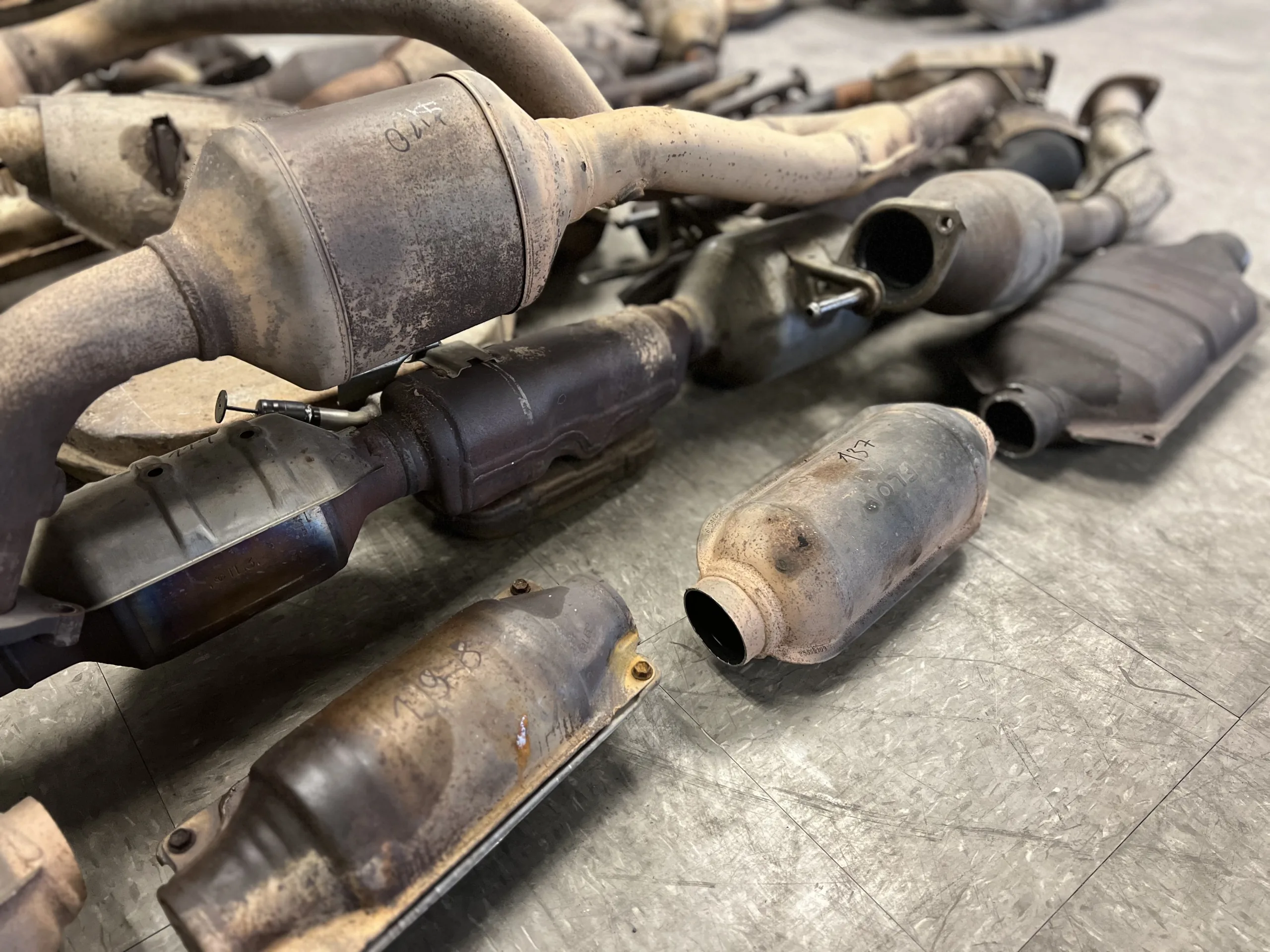
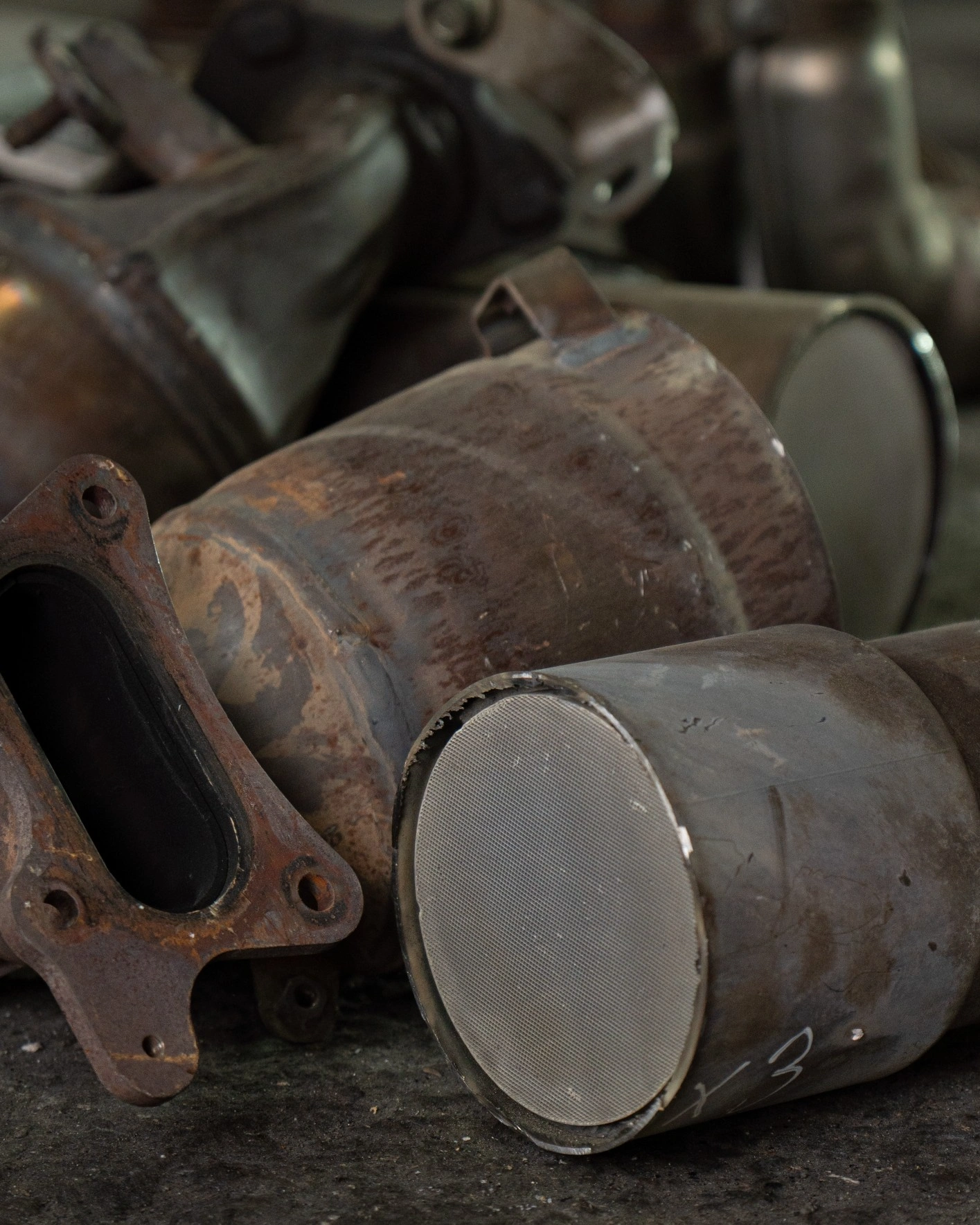
Used catalytic converter prices are determined by four things: the precious-metal content of the unit, current platinum, palladium, and rhodium spot prices, the vehicle and converter type, and the condition of the part. Everything else is secondary. Because the value lives in the coating on the ceramic honeycomb, the same model can be worth very different amounts depending on manufacturer, engine, and production year. According to the U.S. Geological Survey, the automotive industry is the principal consumer of platinum-group metals, which is why converter values track these metal markets so closely.
This is why a single flat rate rarely reflects true worth. Scrap catalytic converter prices at a serious buyer are built from the measured metal content multiplied by live spot values, then adjusted for refining and handling. At Recohub, for example, each unit is assayed and settled against live Pt, Pd, and Rh prices, so the payout tracks what the converter actually contains.
Why the assay is the first thing to check
The assay is the most important check because it measures the real metal content instead of guessing from appearance. A professional assay uses XRF screening and, for settlement, a lab-grade ICP reading of homogenized material. This matters because two converters that look identical can hold dramatically different amounts of platinum group metals, and a visual grade will miss that difference entirely.
How an Assay Becomes Your Price
A used converter’s payout is measured, not guessed – here is the chain that sets it.
Assay result
Lab measures platinum, palladium, and rhodium content (g/t).
Dry weight
Wet weight is adjusted to dry tonnes before valuing.
Payable %
The per-metal return percentage the refiner pays out.
Spot price
Content is valued against live Pt, Pd, and Rh market prices.
Deductions
Treatment, refining, and sampling charges are subtracted.
Your payout
The final scrap price for your specific unit.
Payable metal = assay (g/t) × dry tonnes × return % × spot price, minus refining and handling.
Recohub – recohub.com
Backing the catalytic converter scrap price with an assay
If you want to see exactly how a lab result becomes a number, Recohub’s guide on how assay results translate to scrap price walks through reading a report, converting grams per tonne into payable metal, and applying refining returns and deductions. Any buyer quoting a serious catalytic converter scrap price should be able to back the figure with an assay rather than a hunch.
Should you trust a catalytic converter price sheet?
A catalytic converter price sheet is useful as a rough benchmark, but it should not be the basis for accepting an offer. Price sheets list typical values by code or model, which helps you sanity-check a quote – yet they cannot account for your unit’s exact metal content, its condition, or where spot prices sit today. A printed or online sheet is a snapshot, and metal markets move constantly.
Treat any price sheet as a starting point and confirm the real figure with an assay. If a buyer relies solely on a sheet or a flat per-unit rate, that is a sign they are estimating rather than measuring. The most reliable prices on used catalytic converters come from unit-specific testing, not a generic list.
How do current PGM spot prices affect the scrap price?
Platinum, palladium, and rhodium spot prices set the floor for every scrap converter payout, so the same unit can be worth more one week than the next. Rhodium in particular is volatile and can swing sharply, which moves values quickly. Because of this, a quote is only meaningful against the day it was given. According to Johnson Matthey’s 2026 PGM Market Report, strong PGM prices are supporting a recovery in autocatalyst recycling, and rhodium touched a three-year high near $12,000 an ounce in early 2026 before easing – a clear reminder of how quickly values can move.
When are scrap converter prices strongest?
Sellers sometimes try to time the exact top of the market, but a more practical approach is to know the current trend and act on a fair, documented offer. Chasing the peak often means missing several good ones. If you track spot prices even loosely, you will recognize when scrap converter prices are strong enough to sell.
Does the vehicle and converter type change the price?
Yes – the vehicle and converter type are a major factor, because larger engines require converters with higher precious-metal loading. Large SUVs such as the Toyota Land Cruiser and Nissan Patrol typically contain around 8-12 grams of platinum group metals, compared with roughly 3-5 grams in a small car. That gap translates directly into value.
Scrap catalytic converter prices by vehicle type
Across the range, an individual used catalytic converter can be worth anywhere from about $50 to more than $1,500, depending on model and metal content. For a regional breakdown by vehicle, Recohub’s guide on how much a catalytic converter is worth in the Middle East and South Asia in 2026 shows where different models fall.
| Vehicle class | Approx. PGM content | Relative value |
|---|---|---|
| Small cars | 3-5 g | Lower end of the range |
| Mid-size sedans | 5-8 g | Mid-range |
| Large SUVs (Land Cruiser, Patrol) | 8-12 g | Highest |
| Aftermarket units | Low | Reduced, but still assessed |
Source: Recohub – PGM loadings and per-unit value ranges; figures are estimates confirmed by assay.
How does condition affect the value?
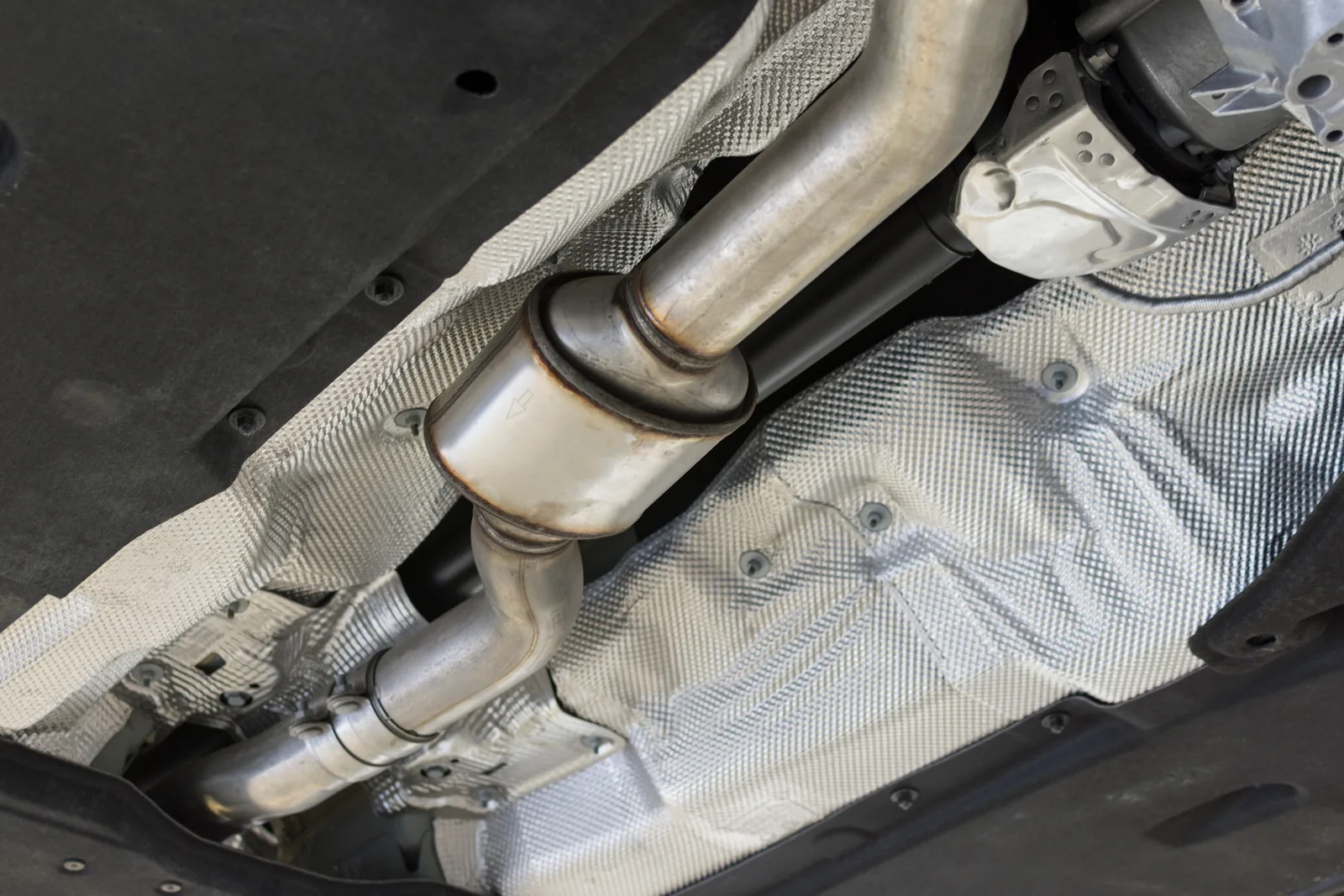
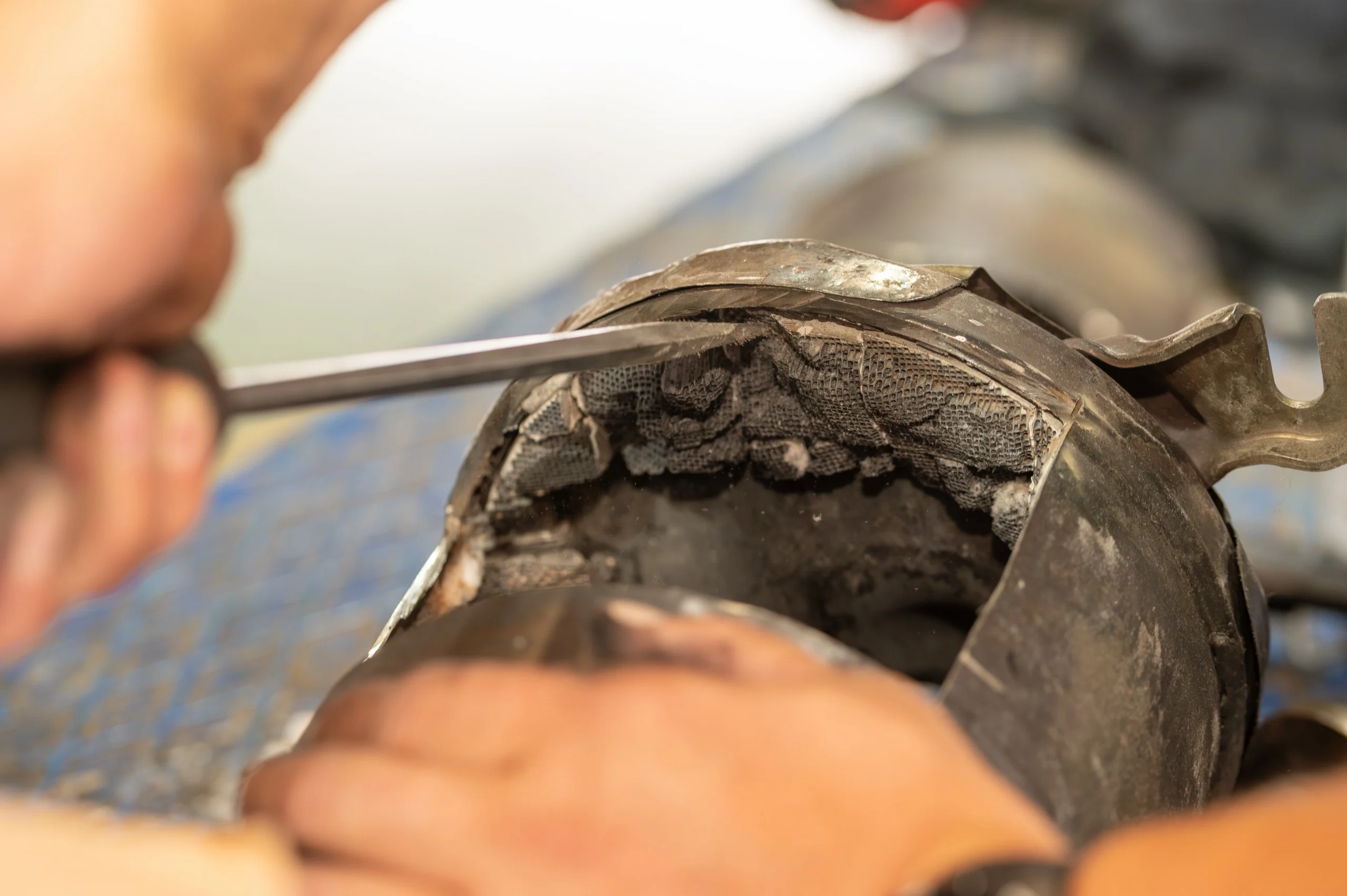
Condition affects value because damage and contamination reduce recoverable metal and make accurate assessment harder. The most important rule is simple: keep the unit intact. Do not cut it open, empty the honeycomb, or crush the core, as this removes the very material that carries the value and raises questions about completeness.
Remove the converter without cracking it, brush off loose dirt without washing out the substrate, and keep it dry. A clean, complete unit is easier to assay and typically earns a stronger offer. If you have installation records or receipts, keep them – they help prove authenticity and can lift a buyer’s confidence in the sale.
How do you check the buyer and the offer?
Check the buyer by confirming they price on a documented assay, publish transparent terms, and pay through traceable methods. The clearest way to protect yourself is to gather at least three quotes and compare them on the same basis – the same photos, the same details, and the same expectation of an assay-backed figure.
Comparing prices on used catalytic converters
Specialist refiners and recyclers usually offer more than general scrapyards, because they recover the metals directly and price by assay rather than a flat rate. When you compare used catalytic converters across buyers, favor the one that measures rather than estimates. A quote that comes with a clear explanation of how it was reached is worth more than a slightly higher number with no backing.
What paperwork should you check before selling?
You should have proof of identity and proof that the converter is legitimately yours before you sell. That usually means a government ID, vehicle registration or proof tying the unit to a vehicle, and a signed receipt showing the date and amount. Workshops and yards should also have their business details ready.
Licensed buyers ask for these documents because they protect both sides, and clean paperwork often unlocks stronger offers than an informal cash deal. Having your records in order also speeds up settlement, especially for larger lots that go through full assay analysis.
Conclusion
The price of a used converter is not a mystery – it is the metal inside, measured by assay and priced against the live market. Check how the figure was calculated, treat any price sheet as a rough guide, factor in vehicle type and condition, gather several quotes, and have your paperwork ready. Do those things and you will consistently tell a fair offer from a weak one. To get an assay-backed quote for your unit, contact the Recohub team and sell with confidence.
FAQ
How much are used catalytic converters worth?
Used catalytic converters are typically worth anywhere from about $50 to more than $1,500 each, depending on the vehicle, the converter type, and the platinum, palladium, and rhodium it contains. The exact figure comes from an assay priced against current metal-market values, so a small-car unit sits at the low end and a large-SUV unit at the high end.
How do I find the price for my specific converter?
The most accurate way is to have the unit assayed, because the price depends on its measured metal content rather than the model alone. Photos and the converter code help a buyer give a preliminary quote, but the final figure is confirmed by testing. A price sheet can give you a rough benchmark to compare against.
Are catalytic converter price sheets accurate?
Price sheets are a useful rough guide, but they are not accurate enough to settle on, because they cannot reflect your unit’s exact metal content, its condition, or where spot prices sit today. Metal markets move constantly, so a static sheet quickly goes out of date. Use it to sanity-check a quote, then confirm with an assay.
Why do two identical-looking converters sell for different prices?
Because the precious-metal content can differ significantly between units that look the same, depending on manufacturer, engine, and production year. A visual grade misses this, while an assay measures it. This is exactly why an assay-based price is more reliable than a flat per-unit rate.
Should I clean or cut open my converter before selling?
Clean off loose dirt, but never cut it open or empty the honeycomb. The value is in the coated ceramic core, so opening the unit removes recoverable metal and can lower your payout while raising questions about completeness. Keep it intact, dry, and complete for the best result.
How many quotes should I get before selling?
Aim for at least three quotes, compared on the same photos and details, so you can judge them on a like-for-like basis. Favor buyers who back their offer with a documented assay rather than a flat rate. Do not chase the exact top of the market – act on a fair, well-explained offer.
What documents do I need to sell a used catalytic converter?
You generally need a government ID, vehicle registration or proof tying the unit to a vehicle, and a signed receipt with the date and amount; workshops should add their business details. Licensed buyers request these to keep the sale traceable, and clean paperwork often unlocks stronger offers than an informal cash deal.
Does rhodium's price really affect what I get paid?
Yes, significantly. Rhodium is one of the three metals recovered from a converter and is highly valuable, so its price has a strong effect on the final payout, even in small quantities. Because rhodium is volatile, the same unit can be worth noticeably more or less from one week to the next.