
Key Takeaways
- A spent unit is not scrap steel – the platinum, palladium and rhodium inside stay recoverable after the device stops working.
- Concentration is the whole story: spent automotive catalysts carry roughly 100 times more platinum group metal than mined ore.
- Value ranges from $50 to more than $1,500 per unit, depending on model, metal loading, condition and market prices on the day.
- No published list can price your specific unit – identification and assay do that, which is why flat per-piece offers underpay.
- The process runs in six stages: consulting, cargo delivery, processing, sampling, assaying by XRF and ICP, and settlement.
- Demand is structural, not cyclical: emission control remains the largest single application for these metals worldwide.
What Is a Catalytic Converter and What Does It Contain?
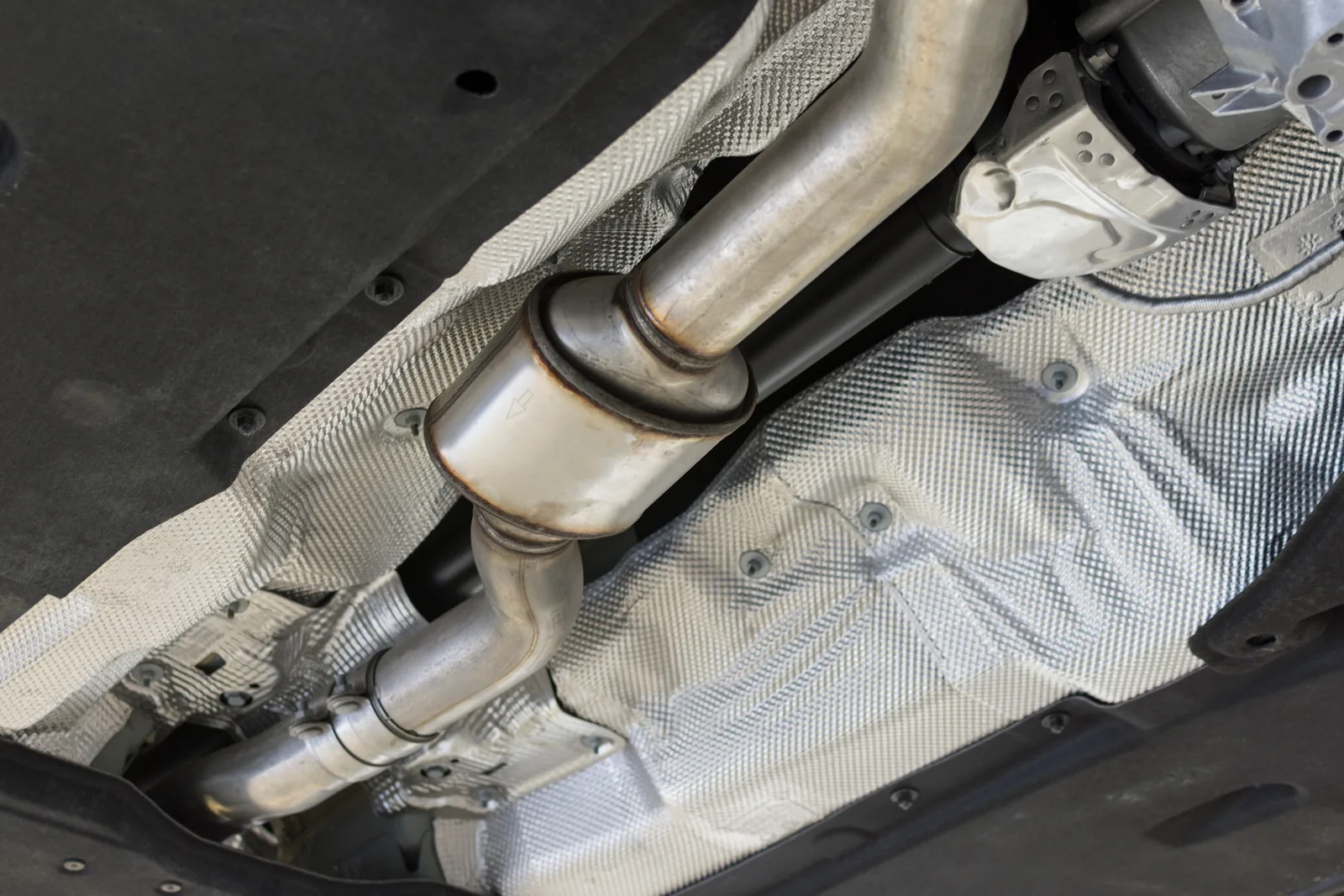
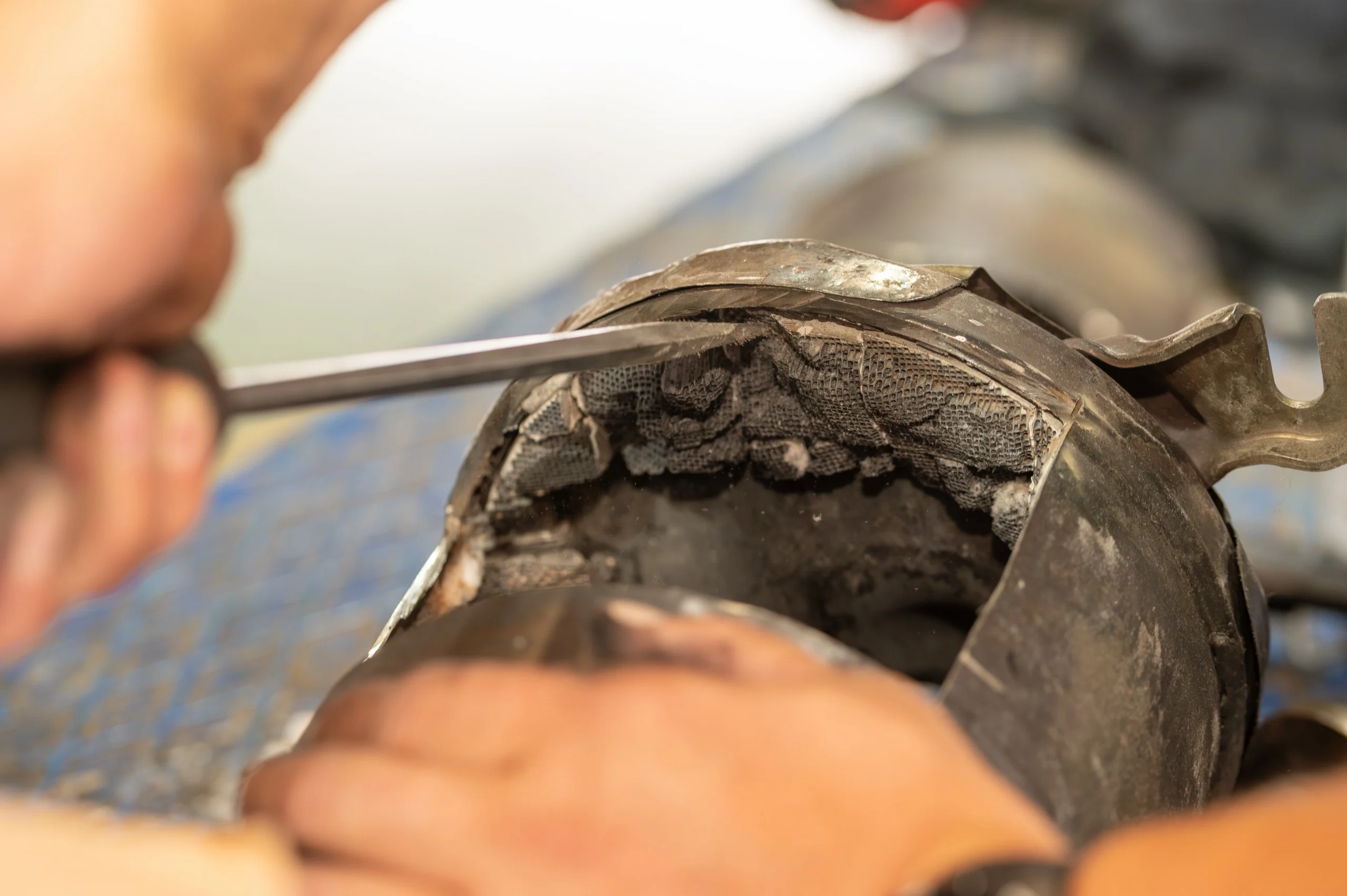
The device sits in the exhaust system and converts harmful gases – carbon monoxide, nitrogen oxides and hydrocarbons – into less harmful carbon dioxide, nitrogen and water vapour. A properly working unit reduces these pollutants by more than 90 percent. The conversion happens on a honeycomb substrate, usually ceramic, coated with a washcoat carrying fine particles of platinum, palladium and rhodium. Those three metals are the reason any of this matters commercially. They are not consumed by the reaction – they accelerate it while remaining chemically intact – so when the device eventually fails, the metals are still there. Understanding that distinction is the foundation of everything that follows: a converter fails as a component long before its contents lose value as a material.Why the Housing Tells You Almost Nothing
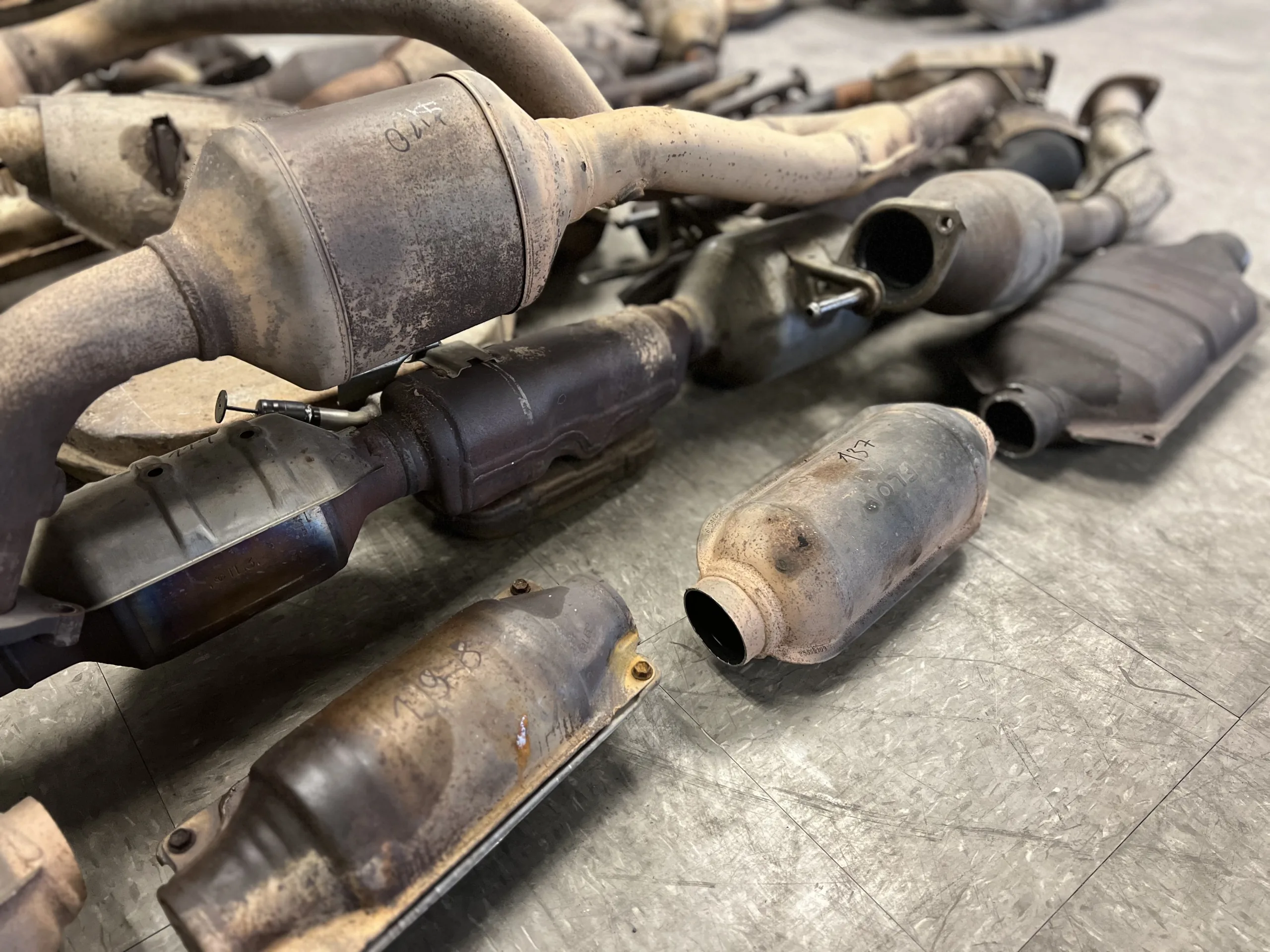
The stainless steel casing is the least valuable part of the assembly, yet it is the only part most sellers can see. Two units of near-identical external appearance can differ several times over in recoverable content, because manufacturers tune the metal loading to the engine, the emission standard and the market the vehicle was built for. This is why size and weight are unreliable guides, and why anyone quoting on appearance alone is quoting on a guess.Ceramic and Metallic Substrates
Most passenger cars use a ceramic honeycomb. Some newer and heavy-duty applications use a metallic substrate, which is mechanically tougher and behaves differently in processing. Diesel vehicles add further variation, combining oxidation catalysts and particulate filters in multi-part assemblies. None of this needs to be established by the seller – it is exactly what identification at the recycler is for – but it explains why a single price list cannot cover the field.When Does the Catalytic Converter Reach End of Life?
The catalytic converter usually leaves service for one of four reasons, and knowing which one applies tells you something about what the recycler will find inside. Age and mileage account for the largest share: most original units work properly for well over a hundred thousand kilometres before efficiency drops below the threshold the vehicle’s computer expects. Overheating is the second, typically caused by engine misfires sending unburned fuel into the exhaust, where it ignites and melts or sinters the honeycomb. Contamination is the third – oil or coolant leaking past worn seals coats the catalyst surface and blocks the reaction. Physical damage is the fourth, from road impact, corrosion or rough removal. None of these destroys the precious metal. A melted substrate still holds its platinum, palladium and rhodium; a poisoned surface still holds them; a cracked housing still holds them. What changes is how much material remains intact and how readily it can be processed, which is why condition appears as a valuation factor rather than a yes-or-no gate. The practical implication for anyone holding stock is that a unit which failed badly is still worth assessing – the failure mode that ended its working life rarely removes the reason it has value. Theft is the one category that sits outside this logic entirely. A unit cut from a vehicle it did not belong to has not reached end of life at all, which is why provenance checks matter to every legitimate operator in the chain and why documentation is not an administrative nicety.Why Are Used Catalytic Converters Worth Money?
Because the metal inside them is more concentrated than in any mine. A 2025 review in Resources, Conservation and Recycling puts the platinum group metal content of spent automotive catalysts at roughly 1,000 to 3,000 grams per tonne, against natural ore deposits that generally run below 10 grams per tonne – about a hundredfold difference. The same review notes that spent catalysts have become the principal secondary source of these metals, and that automotive exhaust purification remains their largest application worldwide.Spent Catalyst vs Mined Ore: Where the Metal Is Denser
Mined ore
Below 10 g/t
Platinum group metal content
- Deposits generally run below 10 grams per tonne
- Extraction is energy-intensive deep-level work
- Reserves are concentrated in a small number of regions
Spent automotive catalyst
1,000 – 3,000 g/t
Platinum group metal content
- Roughly a hundred times the concentration of mined ore
- The material is already above ground and in circulation
- Spent catalysts are now the principal secondary source of these metals
Source: Resources, Conservation and Recycling (2025) – the concentration gap is the reason recovery is treated as an industrial route rather than ordinary scrap handling.
Supply Concentration Keeps Demand Firm
Primary supply is geographically narrow and politically exposed. The European Commission’s strategic raw materials factsheet on platinum group metals records EU import dependency at the processing stage at 96 percent, notes that demand for platinum and palladium is primarily driven by catalyst applications, and states that these metals carry a high recycling rate precisely because of their value. The International Energy Agency’s Global Critical Minerals Outlook makes the same point from the other direction: price volatility, supply bottlenecks and geopolitical concerns are now permanent features of critical mineral markets rather than temporary disruptions. For a seller, the practical consequence is simple. Recovered metal is not a fringe supply source that industry tolerates – it is a structural part of how the world gets its platinum, palladium and rhodium. That is what puts a floor under the value of the material sitting in your workshop.How Is a Catalytic Converter Price Actually Determined?
The catalytic converter price for any specific unit comes from four variables working together: the model and its metal loading, whether the unit is original equipment or an aftermarket replacement, its physical condition, and the market prices of platinum, palladium and rhodium at the moment of settlement. Change any one of those and the figure changes with it.| Factor | Why it moves the number | How a serious buyer establishes it |
|---|---|---|
| Model and metal loading | The single largest driver – loading varies widely between applications | Codes and markings, database match, assay |
| Original equipment vs aftermarket | OEM units generally carry more precious metal than budget replacements | Construction, markings, vehicle origin |
| Condition and completeness | Missing, contaminated or damaged substrate reduces recoverable content | Physical inspection, evidence of tampering |
| Market prices on the day | Settlement tracks platinum, palladium and rhodium indices | Benchmarking against current market rates |
Why Published Converter Prices Cannot Price Your Unit
Searchers reasonably want a list, and plenty of sites publish one. The problem is structural: any table of converter prices is an average across units that differ in exactly the ways that matter. A published figure can tell you the neighbourhood; only analysis of your specific unit tells you the number you will be paid. Treat headline figures as orientation and ask the buyer how they reach the final figure – our article debunking common myths about catalytic converter recycling covers the pricing misconceptions that cost sellers the most money.What a Catalytic Converter Scrap Price Reflects
A catalytic converter scrap price is not a price for the object. It is a price for the platinum, palladium and rhodium that analysis says can be recovered from it, calculated against market indices and adjusted for processing. Once you see it that way, two things follow: a flat per-piece offer must be set low enough to protect the buyer on the worst unit in the batch, and an assay-based offer can afford to pay properly on the good ones because the content is known rather than assumed.How Does the Recycling Process Work?
The industrial chain is the same everywhere, and knowing it helps you judge who you are dealing with. Recohub runs it in six stages: consulting, cargo delivery, processing, sampling, assaying and settlement. Each exists to establish, with progressively more certainty, exactly how much recoverable metal the material holds.| Stage | What happens | Why it matters to the seller |
|---|---|---|
| 1. Consulting | Guidance on valuation, logistics and what the material is likely to be | You know what to expect before anything moves |
| 2. Cargo delivery | Shipping, customs and supply-chain coordination for the lot | Cross-border volume is handled rather than left to you |
| 3. Processing | Decanning, then grinding the honeycomb to fine particles | Opens the material for accurate measurement |
| 4. Sampling | The batch is homogenised and representative samples taken | A uniform batch means a fair sample |
| 5. Assaying | Platinum, palladium and rhodium measured by XRF and ICP methods | This is where the real content is established |
| 6. Settlement | Payment calculated from measured content and current market prices | You are paid for what is there, not what was guessed |
Why the Sampling Stage Decides Everything
Sampling is the least visible stage and the most consequential. Until the milled material is properly homogenised, any sample taken from it is unrepresentative – richer or poorer than the batch as a whole – and every number downstream inherits that error. A recycler that mills and homogenises before sampling is not adding ceremony; it is removing the single biggest source of dispute between buyer and seller.What Happens to the Recovered Metal
Refined platinum, palladium and rhodium return to industry, and the largest destination is new emission-control catalysts – the same application they came from. Beyond automotive, the metals go into chemical and petroleum refining catalysts, electronics, medical devices, glass manufacturing and, increasingly, hydrogen technologies: the European Commission factsheet cited above identifies fuel cells and electrolysers as expected growth drivers for platinum group metal demand. Metal recovered from a scrapped car today may end up in an electrolyser tomorrow.How Should You Prepare Material Before Selling?
Preparation is almost entirely about preserving information. The codes, markings and completeness of a unit are what allow accurate identification, and identification is what allows accurate pricing. Everything on this list protects that.Before You Sell: A Seven-Point Checklist
- 1Keep it intact: Do not cut, crush or open the housing
- 2Preserve the markings: Leave serial numbers, part numbers and codes readable
- 3Record the source: Note which vehicle each unit came from, where you can
- 4Photograph it: Capture each unit before handover for your own records
- 5Store it properly: Keep units dry and separate from mixed scrap
- 6Sort by type: When selling in volume, group units so each model is valued on its own
- 7Prepare your paperwork: Have proof of ownership ready – responsible buyers require it
What to avoid
- Cutting the housing open, which removes the identification codes
- Mixing units into one pile, so material that should be assayed separately is combined
- Washing the unit, which can disturb substrate material
- Accepting a firm final price offered before the unit has been seen or analyzed
Preparation is about preserving information – identification is what allows accurate pricing.
Why Opening a Unit Destroys Value
It is worth stating plainly, because the temptation is common. Cutting a housing open removes the identification codes, mixes material that should have been assayed separately, and raises questions about origin that slow or block the transaction. The substrate is not designed to be handled loose. Nothing is gained that the recycler was not going to measure anyway, and a good deal is lost.How Do You Choose a Buyer?
Judge a buyer on method, not on the size of the number they open with. The questions that separate a professional operation from a casual trader are straightforward, and any serious recycler will answer them without hesitation: how is the unit identified, what analysis is performed, how is the offer calculated, what documentation is provided, and when does payment clear. Our dedicated guide to the questions that help you discover the right recycling partner works through eight of them in detail, covering experience, valuation method, references, environmental and safety standards, logistics, payment terms, data confidentiality and market awareness. If you are weighing local options and quotes, our guide on finding catalytic converter buyers near you covers how to compare them without guesswork.Warning Signs Worth Taking Seriously
A buyer who offers a firm final figure before seeing or analysing the unit is guessing, and a guess that has to cover the worst case will not be generous on the best case. A buyer indifferent to proof of ownership is a problem of a different kind: converter theft is a real and international issue, and any legitimate operation verifies sellers as a matter of course. Vagueness about when funds clear, or about what happens if the material differs from the description, is worth resolving before material leaves your premises rather than after.Certification and Compliance
Environmental and safety certification is not decoration. Processing this material involves hazardous substances and regulated waste streams, and a recycler operating outside those frameworks exposes its suppliers as well as itself. Recohub holds ISO 9001, ISO 14001 and ISO 45001 certification, covering quality, environmental and occupational health and safety management respectively, and operates from the SAIF Zone in Sharjah, United Arab Emirates, sourcing across the Gulf, South Asia, the Asia-Pacific, Europe, the United States and South Africa.Who Sells Spent Units, and How Much Do They Handle?
The supply side is broader than most people assume, and the right arrangement differs by volume.| Seller type | How units accumulate | What usually suits them |
|---|---|---|
| Private vehicle owners | One unit after a replacement or a scrapping | Single-unit assessment with clear documentation |
| Workshops and exhaust specialists | Steady trickle from routine replacement work | Periodic batched collection |
| Dismantlers and scrap yards | Recovered from end-of-life vehicles | Regular scheduled collection, sorted lots |
| Fleet operators | Predictable flow from maintenance cycles | Standing arrangement with reporting |
| Traders and collectors | Consolidated from multiple sources | Bulk logistics and customs support |
Why Volume Changes the Terms
Batched, sorted, documented lots are cheaper and faster to process than one-off units arriving unannounced, and that efficiency is reflected in what a recycler can offer. Volume also makes collection viable, which removes transport from the seller’s side of the ledger entirely. For businesses generating a steady flow, moving from ad hoc sales to a standing arrangement is usually the single largest improvement available – and it costs nothing but process discipline.Is the Market Going to Hold Up?
Yes, and the reason is worth understanding rather than taking on faith. The obvious concern is electrification: if internal combustion engines disappear, so does the source of material. But the transition is gradual and uneven, hybrids run combustion engines and still need emission control, and the global vehicle fleet turns over slowly – the units reaching recyclers today were fitted years ago, and the units fitted today will reach recyclers years from now. Meanwhile, demand for the metals themselves is diversifying rather than shrinking. Hydrogen technologies are an emerging draw on the same materials, and tightening emission standards continue to push manufacturers toward more capable catalysts in the vehicles still being built. Our article on the future of catalytic converter recycling looks at how that transition period plays out for businesses holding material.What Would Actually Change the Picture
Two things would move the market materially, and neither is close. A genuine substitute for platinum group metals in emission control would reduce demand at the source, but no viable replacement has emerged for the catalytic properties these metals provide. A collapse in metal prices would compress settlements, but the supply concentration described earlier works against that – when 96 percent of a region’s processing capacity is imported, prices tend to find support rather than floors. For the foreseeable future, the material in your storeroom retains its character as a recoverable asset.Conclusion: One Chain, Measured at Every Step
Recycling a spent converter is a measurement exercise dressed as a transaction. Identify the unit, measure the metal, recover it, pay on the numbers – every stage of the chain exists to replace assumption with evidence, and every shortcut around it transfers value from the seller to whoever is willing to guess. The material is genuinely valuable, but only a process that measures it properly will pay you what it is worth. Recohub runs that full chain in-house, from consulting and logistics through decanning, milling, homogenising and XRF and ICP assaying to settlement benchmarked against current market prices. Request an assay-based valuation from Recohub before accepting any flat per-piece offer.FAQ
How much is a used catalytic converter worth?
Depending on the model, its precious metal loading, its condition and current market prices, a single unit can be worth anywhere from $50 to more than $1,500. The only way to establish the figure for your specific unit is identification followed by assay of its platinum, palladium and rhodium content – no published price list can do it, because loading varies too widely between models.
Why are used catalytic converters more valuable than mined ore?
Because the metal is far more concentrated. Published research puts the platinum group metal content of spent automotive catalysts at roughly 1,000 to 3,000 grams per tonne, while natural ore deposits generally run below 10 grams per tonne. That is about a hundredfold difference, which is why spent catalysts have become the principal secondary source of these metals worldwide.
How does catalytic converter recycling work?
It runs in six stages: consulting on the material, cargo delivery and logistics, processing by decanning and grinding the honeycomb, sampling after the batch is homogenised, assaying by XRF and ICP methods to measure platinum, palladium and rhodium, and settlement calculated from that measured content against current market prices. The seller’s part is simply to deliver intact, documented units.
What should I ask a catalytic converter buyer before selling?
Ask how the unit is identified, what analysis is performed and by which method, how the offer is calculated, what documentation you will receive, and when payment clears. Also ask what happens if the material differs from the initial description. A buyer who cannot answer these in plain language is worth comparing against others before you commit material.
Should I open or cut the converter before selling it?
No. Cutting a unit open removes the identification codes that support accurate valuation, mixes material that should be assayed separately, and raises questions about origin. Nothing is gained, because the recycler measures the content regardless, and value is lost through weaker identification and slower processing.
Do I need proof of ownership to sell a catalytic converter?
Yes, with any legitimate buyer. Converter theft is an international problem, so responsible recyclers verify sellers as standard practice. Have identification and, where applicable, vehicle or business documentation ready. A buyer indifferent to ownership checks is a warning sign rather than a convenience.
Can damaged or partially empty units still be recycled?
Yes, though the settlement reflects what is actually recoverable. Damage to the housing does not remove precious metal from the substrate, so a damaged unit is still worth assessing. A unit that has been emptied or heavily contaminated will assay lower, but it should still go to a recycler rather than into mixed scrap or landfill.
Is it worth selling a single converter, or should I wait to collect several?
Both work, and the right answer depends on your situation. Single units are assessed and settled individually. Batches are cheaper and faster to process, which is reflected in terms, and volume usually makes collection viable so transport stops being your problem. If you generate units regularly, a standing arrangement beats ad hoc sales.