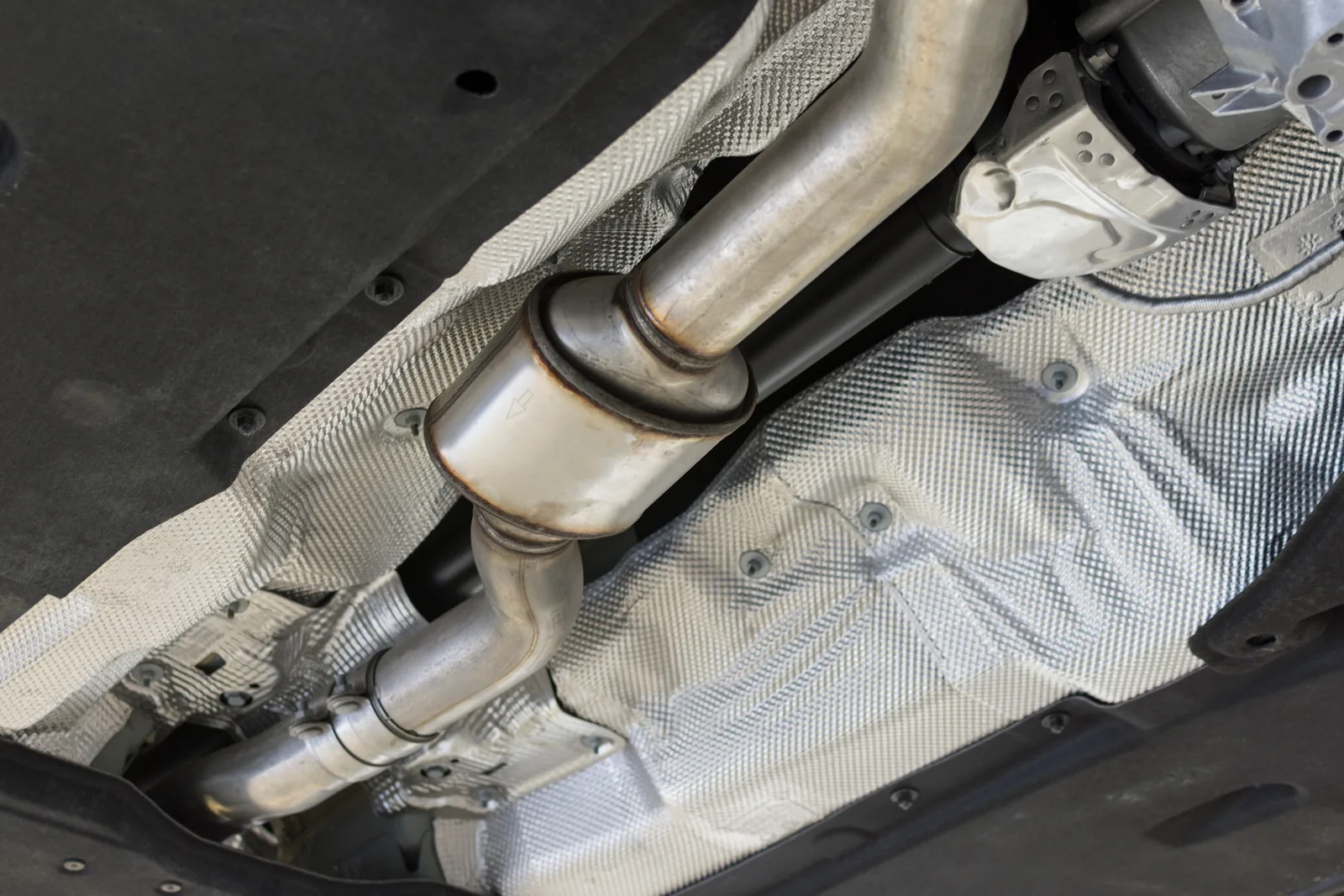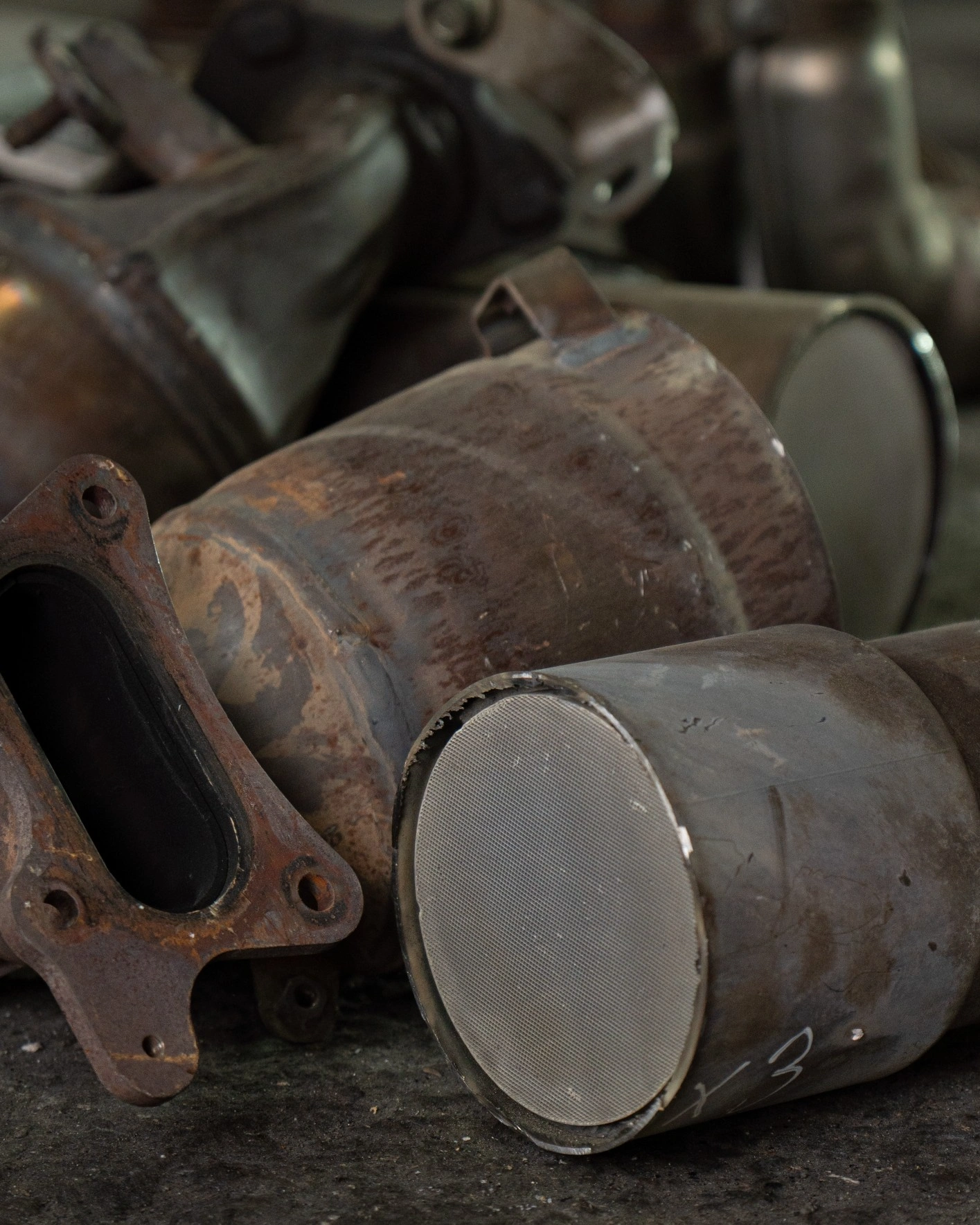

Overview: Catalytic converter cleaner is a fuel additive that claims to clear deposits and restore efficiency. This guide gives a straight answer on whether it works, when it helps and when it cannot, how to use it, what it costs, and what to do when a converter is genuinely failed – written for drivers across the Middle East and South Asia.
Key Takeaways
- Catalytic converter cleaner can help in mild cases – light carbon fouling or a borderline efficiency code – but it cannot repair a genuinely failed unit.
- A cleaner may address removable deposits (fouling); it cannot reverse melted, poisoned, or physically damaged catalyst.
- Fix the underlying cause first (misfire, oil burning), add the cleaner to a low tank, then drive at highway speed to raise exhaust temperature.
- Diesel cleaners target the DPF and injectors and work differently from petrol formulas; neither replaces proper regeneration or replacement.
- Cleaner costs roughly $10 to $30 a bottle; replacement runs far higher, so a cleaner is worth trying first only for mild symptoms.
- When cleaning fails, replace the converter and recycle the old one – the precious metals inside still hold real value.
The short answer: a catalytic converter cleaner can work, but only in specific, mild cases – it may help clear light carbon deposits and nudge a borderline emissions reading back in range, yet it cannot fix a converter that has genuinely failed. Knowing the difference saves you money and manages expectations. This guide explains what a cleaner does, when it helps, how to use it, what it costs, and what to do when your car catalytic converter is beyond saving.
What is a catalytic converter cleaner?
A catalytic converter cleaner is a fuel additive you pour into the tank, where it mixes with fuel and is designed to burn off carbon and sulfur deposits as the engine runs. Most products also claim to clean the oxygen sensors, fuel injectors, and combustion chamber along the way. The idea is that clearing these deposits helps the converter and its sensors read and work more efficiently.
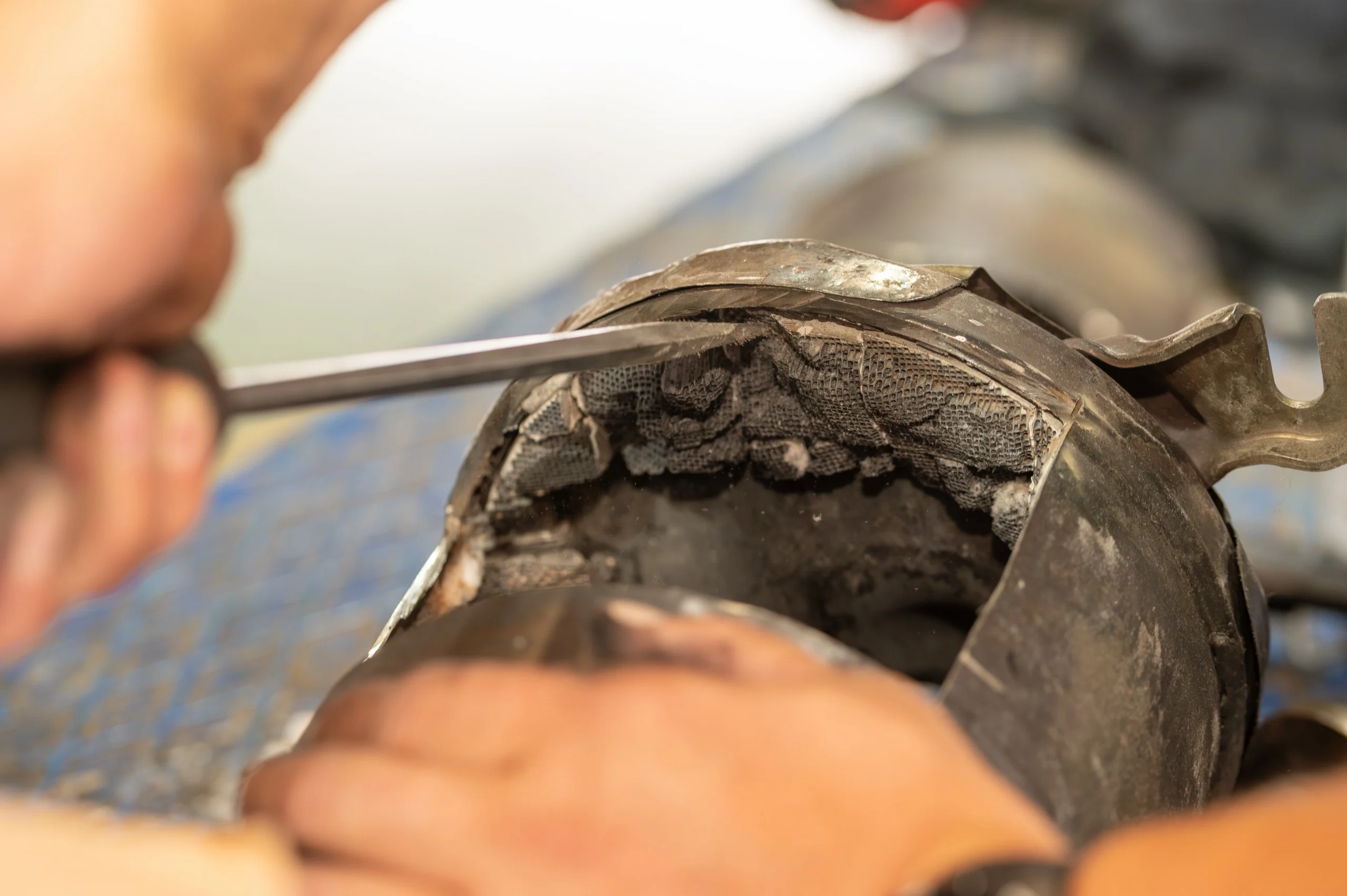
It is important to be clear about what a cleaner is not: it is not a repair. An automotive catalytic converter relies on a coated ceramic honeycomb, and a fuel additive cannot rebuild that coating or replace precious metal that has been lost. At best, a cleaner tackles surface deposits; it cannot restore a substrate that is melted, contaminated, or worn out.
Does catalytic converter cleaner actually work?
Catalytic converter cleaner works only for mild, deposit-related problems – not for real converter failure. To understand why, it helps to know how a converter loses performance. According to a peer-reviewed review in the journal Catalysts, catalytic converters are degraded by several mechanisms, including fouling by fuel and lubricant deposits, chemical poisoning, and thermal damage. A cleaner can only realistically affect one of these: the removable surface fouling. Even then its reach is limited – research on fuel-additive detergents published in the journal Carbon found that combustion-chamber deposits are hard to remove with these additives because of the very high temperatures involved.
What a cleaner can and cannot reach
Poisoning (for example, from historic leaded fuel or phosphorus in oil) and thermal damage such as a melted or sintered substrate are effectively permanent. The same review notes that reversing deactivation generally requires specific regeneration techniques, not a simple fuel additive. So if your converter is clogged with light carbon and the code is borderline, a cleaner may help; if the honeycomb is damaged, rattling, or oil-fouled, it will not.
How to clean catalytic converter deposits with a cleaner
To clean a catalytic converter with an additive, fix the underlying problem first, then add the product to a low fuel tank and drive to raise the exhaust temperature. Cleaning a converter while the engine is still misfiring or burning oil simply re-fouls it, so diagnose and repair the root cause before you start. This single step decides whether the cleaner has any chance of working.
Add it, then drive it hot
Once the engine is healthy, pour the cleaner into a nearly empty tank, refill, and drive at sustained highway speed for 20 to 30 minutes. The higher exhaust temperature helps burn off deposits – the principle behind the old “Italian tune-up.” Repeat over a couple of tanks if symptoms are mild. If there is no improvement after that, the converter likely needs replacing rather than cleaning.
Car catalytic converter cleaner vs diesel catalytic converter cleaner
A car catalytic converter cleaner and a diesel catalytic converter cleaner are formulated for different systems, so you should match the product to your engine. Petrol formulas target carbon and sulfur deposits on the three-way catalyst and oxygen sensors. Using the right one matters, because the chemistry and the emissions hardware differ between fuel types.
How diesel cleaners differ
A diesel catalytic converter cleaner is usually aimed at the diesel particulate filter (DPF) and injectors as much as the oxidation catalyst. Diesels rely on DPF regeneration – active or passive burn-off cycles – to clear soot, and additives can assist that process but do not replace it. If a DPF or diesel converter is heavily blocked or damaged, cleaning will not substitute for regeneration or replacement.
What does catalytic converter cleaning cost?
Catalytic converter cleaning cost is low compared with replacement: a bottle of additive typically runs about $10 to $30. That low price is exactly why a cleaner is worth trying first when symptoms are mild – the downside is small. Professional off-car cleaning services exist but are uncommon and rarely worthwhile versus simply replacing a failed unit.
Will a cleaner help? Match your symptom
A cleaner is worth trying for light, deposit-related issues – but not for a genuinely failed converter. Find your symptom below.
Worth trying a cleaner
- Try: Borderline P0420 code, car still runs normally
- Try: Light carbon smell or slightly sluggish response
- Try: Minor efficiency loss with no other faults
- Try: General maintenance after fixing a small issue
A cleaner won’t help – diagnose or replace
- Replace: Rattling or loose material inside the converter
- Replace: Melted or discolored housing from overheating
- Replace: P0420 that returns after cleaning
- Replace: Severe power loss, stalling, or heavy blockage
- Replace: Oil or coolant contamination from an engine fault
Always fix the underlying engine problem first – and if a cleaner doesn’t help after two or three tanks, have the converter diagnosed rather than buying more bottles.
Cleaner vs replacement cost
The contrast with replacement is stark. As Recohub’s guide on how much catalytic converter replacement costs explains, a new unit can run from several hundred to a few thousand dollars depending on the vehicle. So the sensible sequence is: try a cheap cleaner for mild deposits, but do not keep buying bottles for a converter that is genuinely failed.
When cleaning will not work: P0420 and replacement
If your converter is truly failed, no cleaner will fix it, and the most common warning sign is a P0420 code. This code means the catalyst is not cleaning the exhaust efficiently enough. Notably, a large share of P0420 codes are not caused by the converter at all – they can come from faulty oxygen sensors, exhaust leaks, or misfires, which is why proper diagnosis comes before any purchase, cleaner or converter.
For the full picture, see Recohub’s explainer on the P0420 problem and why it appears in nearly every garage. If diagnosis confirms the converter has failed, replacement is the only real fix – and a cleaner spent on a dead unit is money wasted.
| Situation | Can a cleaner help? |
|---|---|
| Light carbon fouling / maintenance | Yes – may help |
| Borderline P0420 from deposits | Sometimes – worth a try |
| Melted or sintered honeycomb (overheating) | No – permanent |
| Oil or coolant contamination | No – fix the engine, replace unit |
| Physical damage / rattling core | No – replace |
| Lead or phosphorus poisoning | No – effectively permanent |
Source: Recohub – based on catalyst deactivation science and common failure modes.
What to do with a failed converter
When a converter cannot be cleaned and has to be replaced, do not throw the old one away – recycle it. A spent auto catalyst still contains recoverable platinum, palladium, and rhodium, so it holds genuine value even when it no longer works. Recovering that value can offset part of the replacement cost.
Recover value by recycling
A licensed recycler assays the unit to measure its real metal content and pays a market-based figure, rather than a flat guess. This is both the most profitable route and the responsible one, since those precious metals return to industry instead of going to landfill. Recycling the old converter turns a failed part into a partial refund on the new one.
Conclusion
So, does catalytic converter cleaner actually work? Yes – but only for what it can reach: light, removable deposits and borderline efficiency, ideally after you have fixed the underlying engine issue. It cannot repair a melted, poisoned, or physically damaged converter, and no additive will bring a genuinely failed unit back to life. Try a cleaner for mild symptoms, diagnose properly if a P0420 appears, and when replacement is unavoidable, recycle the old unit to recover its value. To get an assay-based valuation for a spent converter, contact the Recohub team.
FAQ
Does catalytic converter cleaner really work?
It can work for mild, deposit-related issues, but not for a failed converter. If the honeycomb is only lightly fouled with carbon, a cleaner may improve efficiency; if it is melted, contaminated, or physically damaged, no additive will fix it. Treat a cleaner as a cheap first step for mild symptoms, not a repair.
Can catalytic converter cleaner fix a P0420 code?
Sometimes, if the code stems from light deposits or a sensor issue rather than a failed converter. Many P0420 codes are triggered by oxygen sensors, exhaust leaks, or misfires, so a cleaner combined with fixing the real cause can occasionally clear it. If the converter itself has failed, the code will return until it is replaced.
How long does catalytic converter cleaner take to work?
Usually one to a few tanks of fuel. After adding the product, you need to drive – ideally at sustained highway speed – so the exhaust gets hot enough to burn off deposits. If you see no improvement after two or three tanks, the converter probably needs replacing rather than cleaning.
What is the best way to clean a catalytic converter?
Fix the underlying engine problem first, then use a fuel-additive cleaner and drive at highway speed to raise exhaust temperature. Cleaning while the engine still misfires or burns oil simply re-fouls the converter. There is no safe household chemical that reliably cleans a converter better than a proper additive used correctly.
Can you clean a catalytic converter without removing it?
Yes – fuel-additive cleaners are designed to work in place, without removing the converter. This is their main appeal. Removing and soaking a converter is far more involved, rarely more effective for genuine damage, and usually not worth the effort compared with replacement.
Will a cleaner help my car pass an emissions test?
Only if the converter is fundamentally sound and just lightly fouled. A cleaner may nudge a borderline reading back into range, but it cannot make a failed converter pass. If your vehicle is close to the limit due to deposits, a cleaner plus a good highway drive before the test may help.
Is it cheaper to clean or replace a catalytic converter?
Cleaning is far cheaper to attempt – a bottle costs about $10 to $30 – but it only works for mild issues. Replacement runs much higher, so the smart approach is to try a cleaner first for minor symptoms and reserve replacement for a genuinely failed unit. Recycling the old converter offsets part of the replacement cost.
Can a clogged catalytic converter be unclogged?
A lightly clogged converter can sometimes be improved with a cleaner and a hot highway run, which burns off some deposits. A heavily clogged or melted converter cannot be reliably unclogged and needs replacing. If the blockage is causing poor acceleration or stalling, have it diagnosed rather than relying on a cleaner.