
Overview: This guide explains how a used converter becomes a payment: what sets its value, how buyers calculate an offer, why metal markets move it, and how to sell for the best result, from a single unit to a full lot. It is written for garages, dismantlers, scrap yards, fleets and private sellers, and each section links to a more detailed Recohub guide.
Key Takeaways
- A used converter is valued on the platinum, palladium and rhodium in its coated core, not on its size, weight or appearance.
- Spent auto-catalysts can hold 2,000-15,000 grams of platinum-group metals per ton, compared with 2-10 grams per ton in natural ore.
- Per-piece quotes and price sheets are estimates. An assay-based settlement pays on the metal measured in your material.
- Platinum-group metal prices rose between 50% and 100% in the twelve months to April 2026, so any offer is only valid against current markets.
- Sorting, keeping units intact, controlling moisture and agreeing settlement terms in writing are the steps that most protect your payout.
- Recycled metal matters to supply: platinum’s recycling rate is above 30%, and converters account for about half of annual platinum demand.
A catalytic converter is worth what its precious metals are worth, minus the cost of recovering them. That is the whole logic behind every offer you receive. The catalytic converter scrap price for a unit or a lot depends on how much platinum, palladium and rhodium it contains, what those metals trade at on the day, and the terms the buyer applies. This guide walks through each of those parts in order, so you can read any quote, compare buyers and sell with confidence.
What decides the catalytic converter scrap price?
Four things decide the catalytic converter scrap price: the metal content of the unit, current metal prices, the condition and completeness of the unit, and the buyer’s pricing method and charges. Everything else, from the vehicle badge to the size of the shell, matters only because it hints at one of those four.
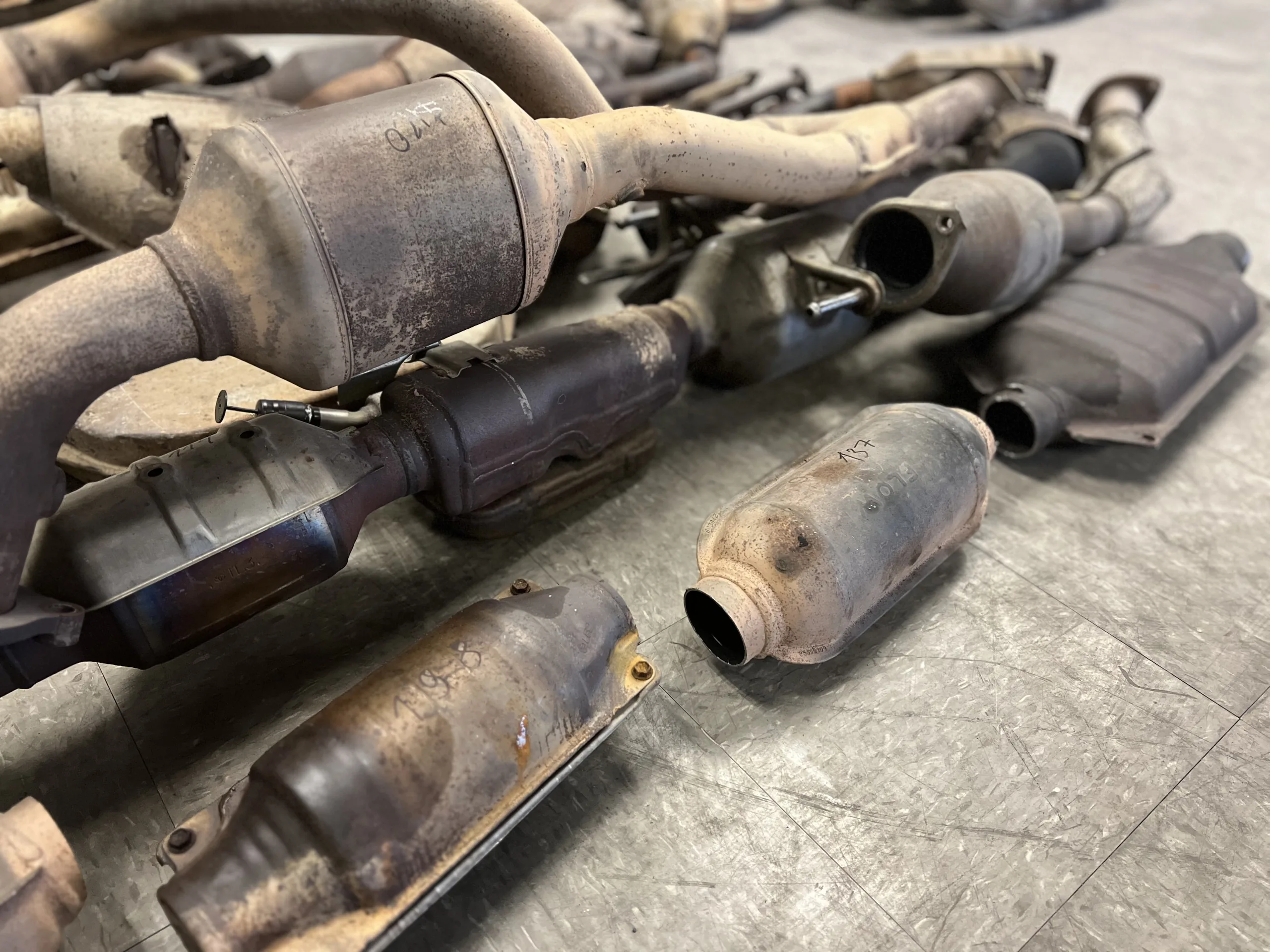
Metal content is the starting point. Different vehicles, engines and emission standards call for different metal loadings, and original units are usually loaded differently from aftermarket replacements. Two converters that look identical can therefore carry very different amounts of metal, which is why serious buyers identify a unit by its code before they price it.
Condition matters because the metal sits on the internal honeycomb. A unit with an intact core keeps its recoverable metal; one with a cracked, melted or emptied core has lost some or all of it. Completeness matters for the same reason, and loose steel, pipe sections and dirt add weight without adding value.
| Factor | How it affects the offer | What you can do |
|---|---|---|
| Metal content | The main driver – more recoverable platinum, palladium and rhodium means a higher offer | Identify the unit by its code; ask how content is measured |
| Metal prices | Move daily and carry every quote with them | Treat any offer as valid against that day’s prices |
| Condition | A damaged or emptied core loses recoverable metal | Keep units intact and dry |
| Original or aftermarket | Aftermarket units can carry different loadings | Tell the buyer, and sort them separately |
| Pricing method and charges | Returns, treatment and refining charges change the net payout | Get the formula and charges in writing |
Source: Recohub settlement practice.
Why metal content matters more than size
The concentration of metal in a spent converter is far higher than most sellers expect. A 2023 review in the journal Crystals reports that spent auto-catalysts contain 2,000-15,000 grams of platinum-group metals per ton, compared with 2-10 grams per ton in natural ores. That is why recyclers compete for converter material, and why a precise identification of each unit matters so much.
In absolute terms the amounts are small. A Thermo Fisher Scientific article on converter recycling notes that most recycled converters in the US hold recoverable platinum-group metals ranging from 1-2 grams for a small car to 12-15 grams for a big truck. A few grams, multiplied across a lot and priced against current markets, is what turns a pile of scrap exhaust parts into a meaningful settlement.
Inside the catalyst
Three metals, one converter: platinum, palladium and rhodium at a glance
All three metals sit in the coated core of a converter. Here is what each one does, what they have in common, and why rhodium is the hardest to price.
Platinum
Palladium
Rhodium
Shared by all three
All three come mainly from the same few countries and are recycled at similar rates, but rhodium has no LBMA benchmark. Ask every buyer which rhodium price its offer uses.
Source: Royal Society of Chemistry periodic table (supply risk and recycling data from the British Geological Survey); LBMA.
Original and aftermarket units
Original equipment units are fitted by the vehicle maker and built to meet that vehicle’s emission approval. Aftermarket units are replacements made by other manufacturers, and their metal loading can differ from the original they replace. Neither type is automatically worthless or automatically valuable, but mixing them in one batch makes any estimate less reliable. Sort them separately, tell the buyer which is which, and expect each group to be valued on its own content.
What is a catalyst, and why is the auto catalyst the valuable part?
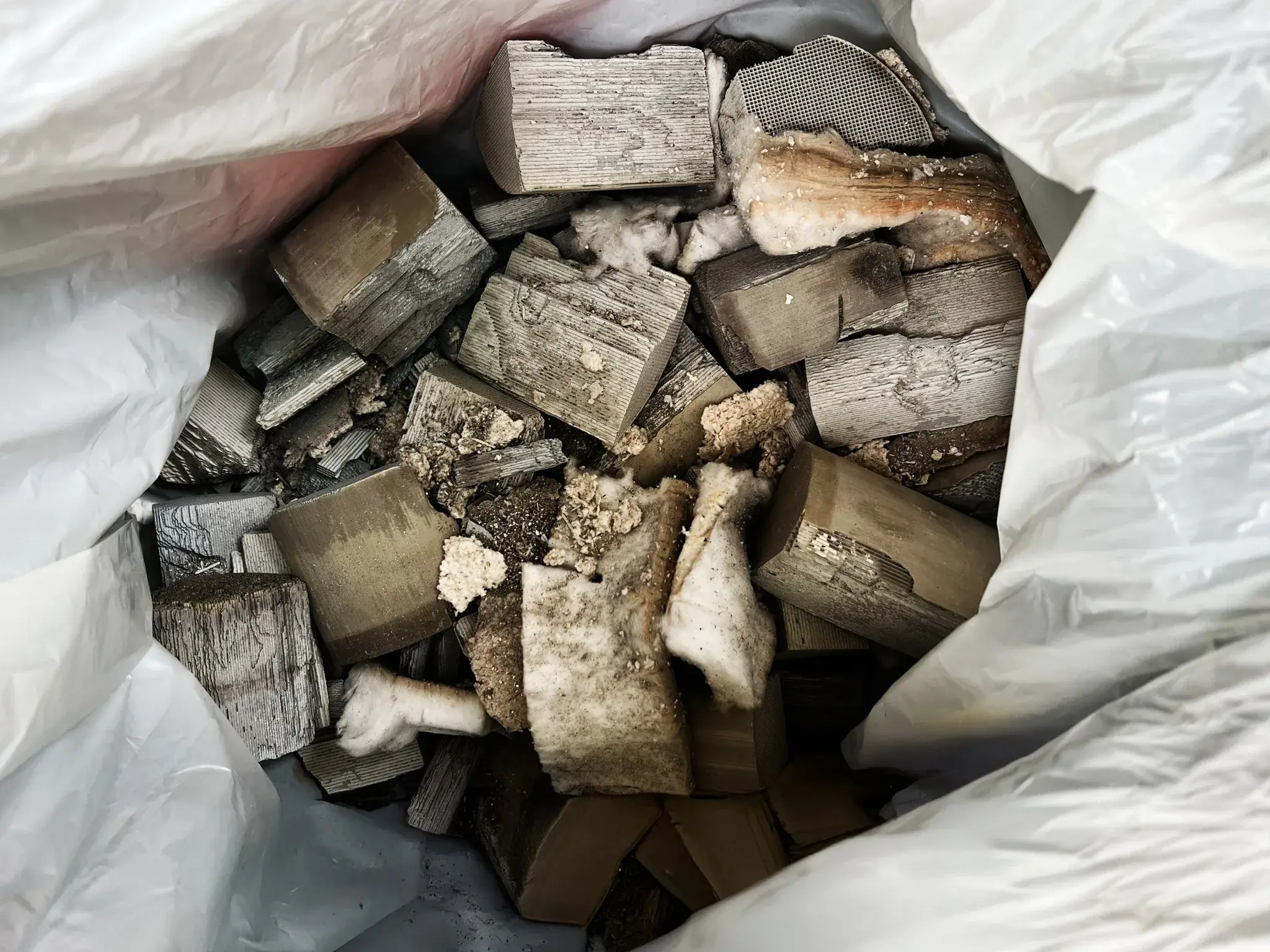
A catalyst is a material that speeds up a chemical reaction without being used up. In a vehicle, the auto catalyst is the coated ceramic or metal-foil honeycomb inside the converter, and the coating carries the platinum, palladium and rhodium that clean the exhaust. When a recycler talks about catalyst material, this is what it means: not the steel shell, the heat shield or the pipes, but the coated core inside.
This distinction drives the whole valuation. The steel around the auto catalyst is worth roughly the same as any other steel scrap. The catalyst itself is where almost all of the value sits, which is why recyclers decan units, mill the catalyst and assay that material rather than weighing whole converters.
What is inside the catalytic converter?
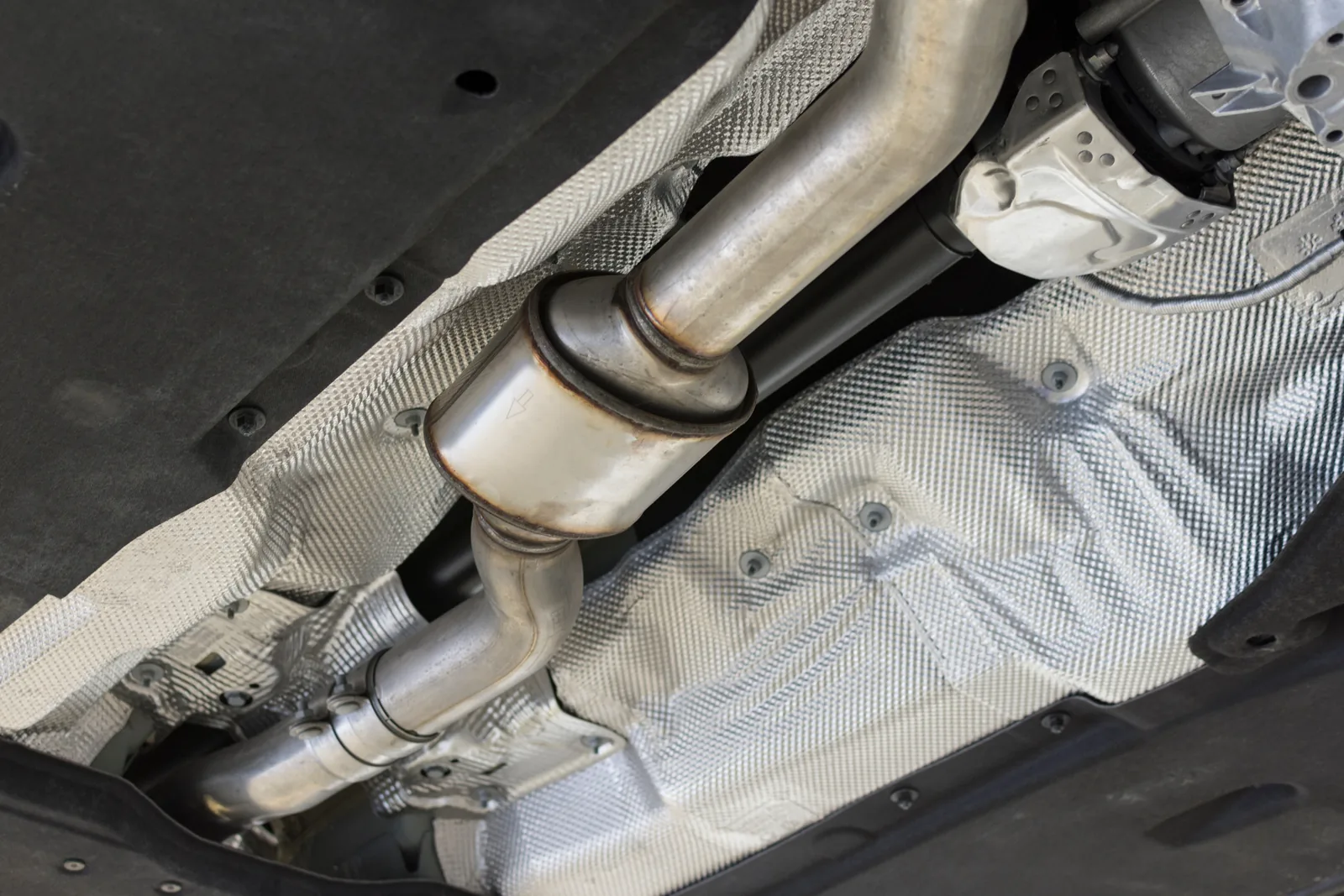
Inside the catalytic converter you will find three main layers: a stainless steel shell, a honeycomb substrate made of ceramic or metal foil, and a thin washcoat on that substrate that holds the precious metals. Gasoline engines use three-way converters that handle carbon monoxide, hydrocarbons and nitrogen oxides, while diesels use oxidation catalysts, particulate filters and other after-treatment parts. Each type carries a different metal mix, so it pays to keep them in separate batches before anything is sampled.
How is a catalytic converter price calculated?
A catalytic converter price is calculated in one of two ways: as a per-piece estimate based on the unit’s code or type, or as an assay-based settlement based on the metal measured in the material. Per-piece pricing is quick and suits small sellers. Assay-based settlement takes longer but pays on what is actually there, which makes it the standard for larger lots.
| Method | How it works | Best for | Main limitation |
|---|---|---|---|
| Per-piece quote | A figure per unit, based on code, type or category | Single units and small, sorted batches | Builds in a margin for the buyer’s uncertainty |
| Price sheet | A published list of typical figures by code or model | Checking whether a quote is in range | Lags behind live metal prices and ignores condition |
| Assay-based settlement | Lab analysis of milled, homogenized catalyst, priced against current metal prices | Larger lots and regular suppliers | Takes longer and depends on good sampling |
Source: Recohub settlement practice.
Price sheets and per-piece quotes
A price sheet groups converters by code or model and shows a typical figure for each. It is useful for one thing: knowing whether a unit is likely to sit at the lower or higher end before you contact a buyer. It cannot account for the condition of your specific unit, whether it is original or aftermarket, or how metal prices have moved since the sheet was published. Recohub’s guide on how to read a used-unit price sheet explains what to check before you rely on one.
Assay-based settlement, step by step
An assay-based settlement follows the same path every time. The material is decanned, milled and blended, and a representative sample is analyzed. Handheld X-ray fluorescence (XRF) is useful for screening, but settlement usually relies on a lab method such as inductively coupled plasma (ICP) analysis of homogenized material. The lab reports platinum, palladium and rhodium in grams per ton, and the settlement then follows a simple formula:
- Correct the shipped weight for moisture to get dry tons.
- Multiply each metal’s assay (g/t) by dry tons to get gross grams.
- Apply the agreed return percentage for each metal to get payable grams.
- Price the payable grams against current metal prices.
- Subtract the agreed treatment, refining and sampling charges.
Each step can be checked line by line, which is what makes this method transparent. For worked examples, including how rhodium content and moisture change the result, see Recohub’s guide on how assay results become a settlement.
What charges come off a settlement?
The gross value of the metal is not what you receive. A settlement usually deducts some or all of the following, and each should be defined in writing before you ship:
- Returns: the percentage of each metal credited to you, reflecting recovery in refining.
- Treatment and refining charges: fixed or per-unit fees for processing the material.
- Sampling and assay charges: fees for milling, splitting and laboratory work.
- Moisture: removed up front, so wet material pays on less weight than you shipped.
- Logistics: transport and handling, if the buyer arranges them.
Two offers can start from the same assay and still end with different payouts, because one buyer bundles charges into lower return percentages while another lists them separately. Compare the final net figure, not the headline rate.
How to read an assay report
An assay report lists platinum, palladium and rhodium as concentrations, usually in grams per ton (g/t), which is the same as parts per million (ppm). Check four things before you compare results. Are the figures on a dry basis? What moisture percentage was measured? How was the sample prepared and split? And does the report state an uncertainty range? Results that look low are often a sampling or moisture question rather than a metal question, so ask before you assume the lab got it wrong.
When an assay makes sense
An assay adds cost and time, so it is not the right tool for every sale. It pays off when the lot is large enough that a small difference in measured metal outweighs the sampling and laboratory charges, when the material is mixed enough that per-piece grading would be guesswork, or when you supply regularly and want results you can track over time. For a handful of identified units, a well-explained per-piece offer is often the better deal.
How do metal markets move the price?
Every offer follows the market for platinum, palladium and rhodium, and that market can move sharply. The World Platinum Investment Council reported in April 2026 that individual platinum-group metal prices had risen by between 50% for palladium and 100% for platinum over the previous twelve months.
The same analysis describes recycling as price elastic: when prices rise, more spent converters come out of storage and into the recycling chain. The council expected recycling supply to grow by 10% in 2026, after a 10% increase in 2025, and noted that the UAE has developed into a reasonably sized aggregation hub for automotive recycling. For sellers in the Gulf and South Asia, that means competition for well-prepared material is real.
Where the metal prices come from
Buyers price platinum and palladium against published benchmark prices rather than a figure they choose themselves. The LBMA platinum and palladium prices are set twice daily in US dollars, and from 1 July 2026 they are administered by ICE Benchmark Administration. When you compare offers, ask which day’s prices each one uses; a gap between two quotes is sometimes nothing more than a gap between two dates.
Should you wait for a better price?
Timing can help, but it is not a strategy on its own. Prices can move down as well as up, stored units take space and attract theft, and nobody can reliably call the top of the market. A balanced approach works better for most sellers: sell a baseline volume regularly to keep cash moving, and hold back a modest share of high-grade material only if your storage and risk tolerance allow it.
How much is a catalytic converter worth?
A catalytic converter is worth the value of its recoverable metal at current prices, less the cost of recovering it. That is why no honest buyer can give a reliable figure for a specific unit without identifying it first. Two units from similar vehicles can differ widely, and the same unit can be worth noticeably more or less from one month to the next as metal prices move.
Location also shapes the offer, because logistics, local competition and access to refiners differ by market. Recohub’s 2026 value guide for the Middle East and South Asia shows how buyers in those regions price the same metal content.
Why online value claims vary so much
Search for converter values online and you will find figures that differ by a wide margin for what looks like the same unit. Most of that spread has simple causes: lists published at different metal prices, original and aftermarket units mixed under one heading, damaged units priced as if intact, and per-piece figures quoted without the charges that come off later. Treat any single online number as a rough indicator, and judge a buyer by how it explains its figure for your material, not by the highest number it advertises.
Replacement cost is not scrap value
Sellers often confuse two very different numbers. The cost of a new replacement combines the part, the labor to fit it and the margin of whoever sells it. The scrap value of an old unit depends only on its recoverable metal and the buyer’s terms. A high replacement bill does not mean a high scrap value. Recohub’s breakdown of how parts, labor and metal prices combine explains where each figure comes from.
How do you sell a catalytic converter for the best price?
You get the best price by selling to a buyer that pays on measured metal content, and by preparing your material so that measurement is fair. For most sellers, the process looks like this:
- Identify each unit. Photograph the code on the shell and note the vehicle it came from.
- Keep units intact. Do not cut, crack or empty them, and remove loose pipe and brackets.
- Sort by type. Keep gasoline three-way units, diesel units, particulate filters and damaged housings in separate batches.
- Control moisture. Store material under cover and avoid shipping wet loads.
- Compare buyers on terms. Ask how the unit is identified or sampled, which charges apply, and when you will be paid.
- Agree the settlement in writing. Confirm the pricing basis, returns, charges, payment timing and dispute process before you ship.
For a broader look at the selling routes, from a single drop-off to a contracted supply relationship, see Recohub’s guide to the main ways to sell a unit.
Single units or a full lot?
If you only have one or two units, a per-piece quote from a buyer that identifies the code is usually the practical choice, because an assay costs more than it would add. Once you collect units regularly, grouping them into sorted lots changes the economics: the lot can be sampled and assayed as a whole, handling and shipping costs fall per unit, and the result reflects the real balance between lighter and richer units far better than any per-piece grid.
Which buyers should you compare?
Local scrap yards are quick and convenient but often price per piece or by weight. Garages and exhaust shops may buy the units they remove, usually to resell. Online and mail-in buyers quote from photos or codes. Specialist recyclers identify, sample and settle on metal content, and handle anything from a single unit to a container. The right choice depends on your volume, but the further a buyer is from measuring the metal, the more margin it has to build into the price.
What should a fair offer include?
A fair offer tells you how the unit or lot was identified, how the metal content was assessed, which day’s metal prices it uses, how long it is valid, which charges apply, and when and how you will be paid. It should also say what happens if a final assay differs from an estimate. If a buyer can only give you a number, you do not yet have an offer you can compare.
When will you be paid?
Payment timing depends on the pricing method. A per-piece sale is usually settled soon after the units are received and checked. An assay-based settlement can only be finalized once the material has been milled, sampled and analyzed, so it takes longer, and some contracts offer a provisional payment in the meantime. Whichever route you choose, agree the payment date, the method and what triggers it before you ship, and make sure the payment leaves a clear record.
From shipment to payment: what you should receive at each step
An assay-based sale follows the same six steps every time. Each one should leave you with a document you can check and keep.
If any document is missing, ask for it before you agree the settlement. Keep all six together for every lot, so you can compare buyers over time.
Source: Recohub settlement practice.
Preparing a lot for sampling
For larger lots, sampling is where value is won or lost. A small, unrepresentative sample can miss the variation between units, and wet material can distort both weight and results. Ask the buyer to explain its sampling protocol in plain language, request a sealed reference sample, and keep simple records of weights, moisture and assays for each lot. Over a few shipments, those records show which buyers treat your material fairly.
Provenance and theft checks
Because converters are a frequent theft target, reputable buyers ask where material came from, and that question protects you as much as them. Keep records that link units to their source, such as workshop job cards, fleet maintenance logs or vehicle disposal records, and expect a buyer to verify the identity of whoever sells to it. A buyer that asks no questions at all is a risk, however attractive its first offer looks, because material with an unclear origin can be held, disputed or reported long after it has left your yard.
Paperwork that speeds up payment
Clear documents shorten the time between delivery and payment, and they build trust over repeated shipments. At minimum, prepare a packing list with lot types and estimated weights, a record of where the material came from, such as fleet maintenance, scrapped vehicles or workshop removals, and any compliance documents your jurisdiction requires for moving or exporting the material. For catalyst material, tracking the source of each batch also helps you benchmark average results over time.
Which mistakes lower the payout most often?
Most lost value comes from a handful of avoidable mistakes:
- Selling a mixed, unsorted pallet on one bulk price. The buyer prices the uncertainty, and you pay for it.
- Cutting or emptying units. This loses metal, removes codes and raises questions about where the material came from.
- Shipping wet material. Moisture deductions and distorted results both cost money.
- Relying on an old price sheet. Metal prices move faster than published lists.
- Agreeing terms verbally. Returns, charges and payment timing that are not written down are the most common source of disputes.
- Never checking results. Without your own records of weights, moisture and assays, you cannot tell whether a buyer treats your material fairly.
None of these takes much effort to fix, and together they often make a larger difference than chasing a slightly higher headline rate.
Why does catalytic converter recycling matter beyond the price?
Catalytic converter recycling returns platinum, palladium and rhodium to industry without new mining. According to the Royal Society of Chemistry, catalytic converters for cars, trucks and buses account for about half of annual platinum demand, and platinum’s recycling rate is above 30%. The same source rates platinum’s supply risk at 7.6 out of 10, based on British Geological Survey data, which shows how much recovered metal matters to supply.
There is a practical benefit for sellers too. Clean, documented, well-sorted material moves faster, attracts fewer disputes and builds the kind of track record that earns better terms over time. A fair price and a responsible process are not in conflict; with the right partner, you get both.
Conclusion
Every scrap offer comes down to the same chain: the metal in the unit, the price of that metal on the day, and the terms the buyer applies. Understand that chain and you can read any quote, compare buyers fairly and choose the right selling route for your volume. Identify your units, keep them intact and sorted, control moisture, and insist on clear settlement terms in writing.
When you are ready to sell, Recohub works with garages, dismantlers, yards and fleets across India, Bangladesh, Sri Lanka, Lebanon, Israel, Iraq and the UAE, and accepts shipped units with insured logistics. Start with Recohub’s recycling service to get your material assessed.
FAQ
What decides the scrap price of a catalytic converter?
The scrap price depends on how much platinum, palladium and rhodium the unit contains, the current prices of those metals, the condition of the unit, and the buyer’s pricing method and charges. Size and appearance matter only because they hint at metal content.
Why do two similar-looking converters get different offers?
Converters that look alike can carry very different metal loadings, depending on the vehicle, engine, emission standard and whether the unit is original or aftermarket. Condition also matters, because a damaged or emptied core loses recoverable metal.
What is the difference between a per-piece quote and an assay-based settlement?
A per-piece quote is an estimate based on the unit’s code or type, and it builds in a margin for the buyer’s uncertainty. An assay-based settlement measures the metal in milled, homogenized material and prices it against current metal prices, so it pays on what is actually there.
Can I rely on a catalytic converter price sheet?
Use a price sheet as a reference, not as an offer. It shows typical figures by code or model, but it cannot reflect the condition of your unit and it lags behind live metal prices. Always ask how a buyer reached its figure for your material.
How do metal prices affect what I am paid?
Every offer follows the market for platinum, palladium and rhodium. The World Platinum Investment Council reported that platinum-group metal prices rose between 50% and 100% in the twelve months to April 2026, so the same unit can be worth noticeably more or less from one month to the next.
Should I cut open a converter before selling it?
No. Cutting the shell or emptying the core removes identifying features and can lose recoverable metal, which lowers the offer. Keep units intact and let the recycler decan and process them.
How can I get the best price for a large lot?
Sort units by type, keep them intact and dry, and sell to a buyer that settles on a lab assay. Agree the sampling method, return percentages, charges and payment timing in writing before you ship, and keep a sealed reference sample for important lots.
Does Recohub accept shipped converters?
Yes. Recohub accepts shipped converters and guides sellers through insured logistics, working with sellers across India, Bangladesh, Sri Lanka, Lebanon, Israel, Iraq and the UAE.